20.5 million barrels of diesel fuel to be released from EU strategic reserves
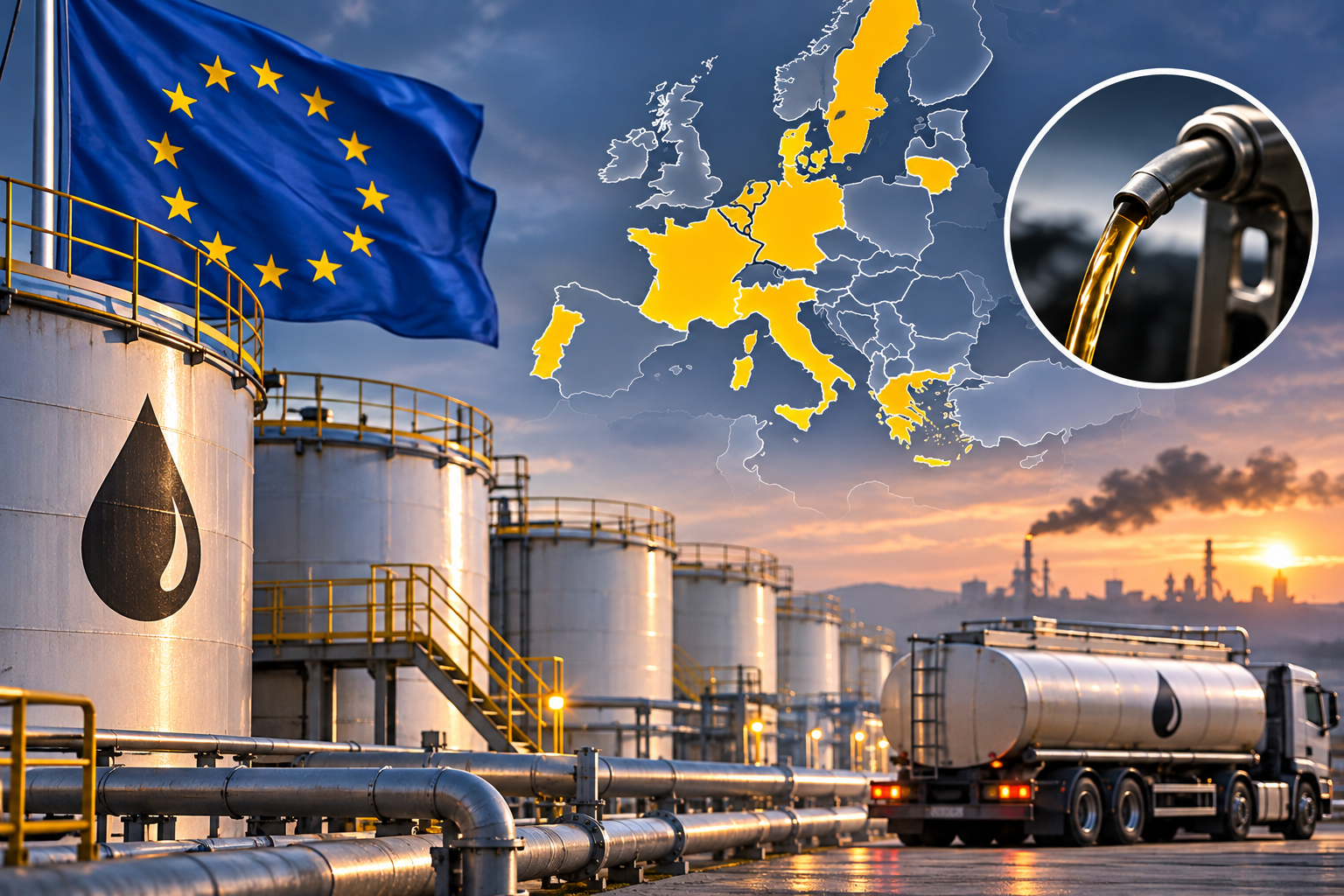
Eleven EU countries have pledged to release 20.5 million barrels of diesel from strategic reserves by the end of January 2027.
The reason for the decision is instability in the Middle East and concerns about fuel supplies in winter, writes Euronews.
The gist in brief
- 11 EU countries will release 20.5 million barrels of diesel from reserves by the end of January 2027.
- The initiative was announced by French Energy Minister Roland Lescure at a meeting of EU energy ministers in Luxembourg on October 29.
- The European Commission says no physical shortage is expected, but the agency's expert group calls diesel "still in deficit."
- Progress will be reviewed at a meeting of EU energy ministers on December 10.
Who will release how much
The commitment was undertaken by Belgium, Denmark, France, Germany, Greece, Italy, Lithuania, Luxembourg, the Netherlands, Portugal and Sweden. These are the EU countries that are members of the International Energy Agency (IEA), and the decision is recorded in their joint declaration. The initiative followed a statement by G7 leaders on energy security and the IEA's call for urgent action.
Why diesel specifically
Diesel fuel is needed for road and freight transport, agriculture and industry, so disruptions to it quickly affect prices. Pressure on the market is being created by the protracted war in the Middle East and attacks on oil refineries in the Persian Gulf countries. The European Commission's expert group on oil market monitoring calls diesel "still in deficit," but the European Commission itself claims that no physical shortage is expected. EU Energy Commissioner Dan Jørgensen warned that a sharp rise in prices will ultimately leave the most vulnerable without fuel.
What is demanded of Brussels
The countries are asking the European Commission to collect data monthly on released volumes, product types and delivery timelines, and to coordinate further measures if the situation worsens. In addition, they ask to ensure the operation of European plants that produce diesel and aviation fuel. The European Commission recently began a strategic dialogue with oil refiners, and their association FuelsEurope called for protecting the industry's competitiveness and creating conditions for investment in modernizing plants.
What about oil and refining in Kazakhstan
Oil reserves are concentrated in the Middle East: according to Eni, there are 870.9 billion barrels there, or 48.3% of world reserves, while Kazakhstan has about 29.8 billion barrels. At the same time, about 80% of the oil produced in Kazakhstan goes abroad, and refining is still limited: the Ministry of Energy plans to increase capacity from 18 to 39 million tonnes per year, of which up to 29.2 million tonnes at existing plants and up to 10 million tonnes at a new complex by 2033.
Part of the refining is accounted for by mini-refineries: more than 30 such plants are registered in the country, and 22 are operating. A check based on open data revealed debts and frozen accounts at many of them, but 10 companies showed none of the checked signs of problems.
Author's conclusion
The European diesel crisis shows that the bottleneck now is not only raw materials but also refining. Oil can be bought, but there is not enough diesel made from it, because plants face disruptions and attacks. Reserves buy time until winter but do not solve the problem: 20.5 million barrels is a one-off measure, and analysts, as Euronews notes, consider it temporary. For Kazakhstan, which exports about 80% of its oil abroad, this is an argument in favor of the plan to increase refining to 39 million tonnes: a country that sells raw materials depends on others' plants and others' prices.
Comments ()