Cooling towers for the Balkhash NPP — a technical detail costing millions of cubic meters of water
While Kazakhstan debates the timeline and cost of its first nuclear plant, engineers are deciding how to cool the reactors. It’s not about safety, but cooling towers whose type will determine how much water the plant draws from Lake Balkhash.
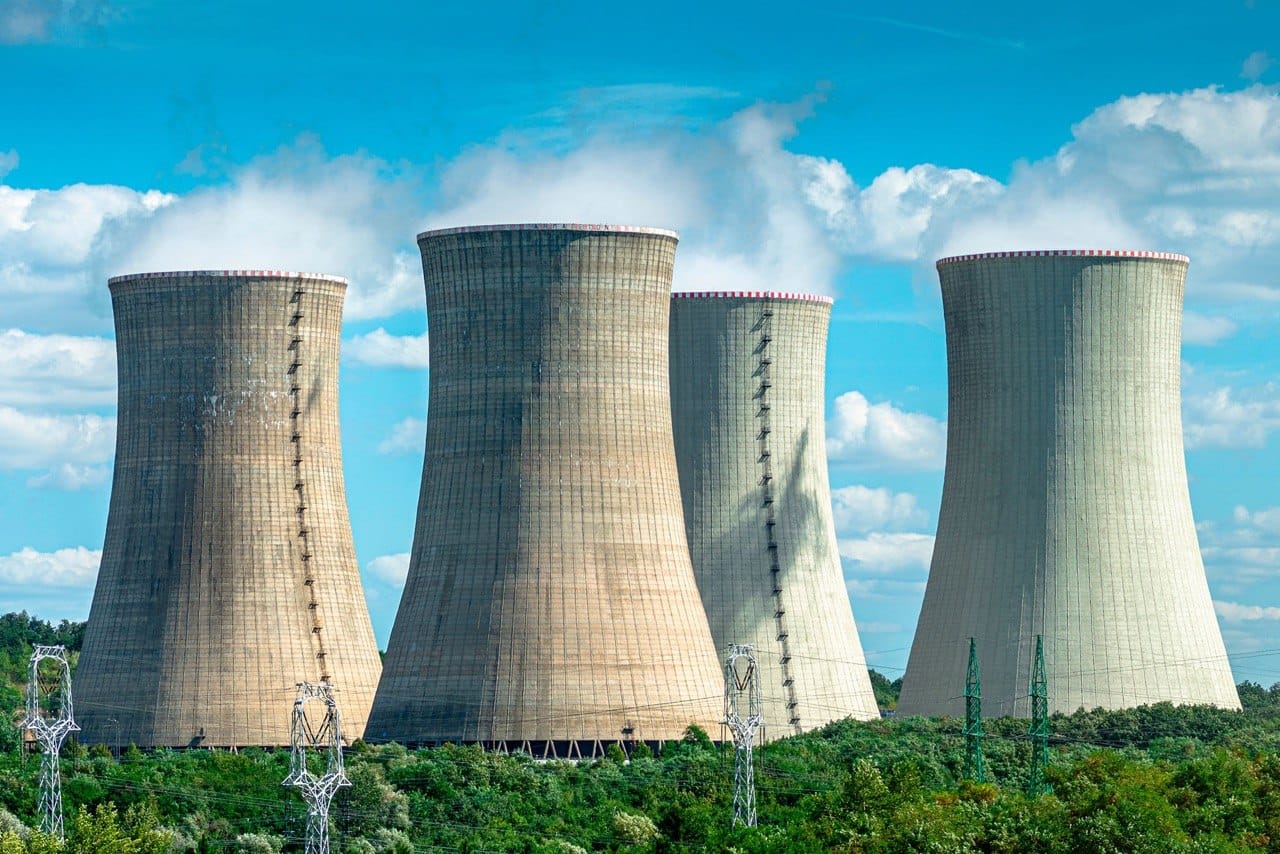
While Kazakhstan discusses the timeline and cost of its first nuclear power plant, engineers are solving a problem that will determine the fate of an entire lake: how to cool the reactors. The issue is not nuclear safety, but the mundane towers with steam — cooling towers, the type of which will determine how much water the plant will take from Lake Balkhash. The difference between the "wet" and "dry" options is measured in tens of millions of cubic meters per year.
The Gist
- The "Balkhash" NPP with VVER-1200 reactors and a total capacity of 2.4 GW is planned to be launched in 2035–2036.
- Wet or dry cooling towers are being considered for condenser cooling — the choice has not yet been made.
- With wet cooling towers, irretrievable water losses due to evaporation will amount to about 60 million m³ per year.
- In parallel, a Master Plan for preserving the Balkhash ecosystem is being prepared with the participation of French specialists; the document is expected by the end of 2026.
The Tower Mistaken for a Smokestack
Giant concrete structures emitting white clouds are often mistaken for smokestacks, although nothing burns inside them. The white plume is steam formed when warm, moist air is cooled. These towers acquired their modern hyperboloid shape back in 1918 thanks to Dutch engineer Frederik van Iterson: the narrowing in the middle allows for thinner walls without losing strength and wind resistance. This century-old technology is the basis of the cooling system currently being designed for Kazakhstan's first nuclear power plant.
How a Nuclear Reactor is Cooled
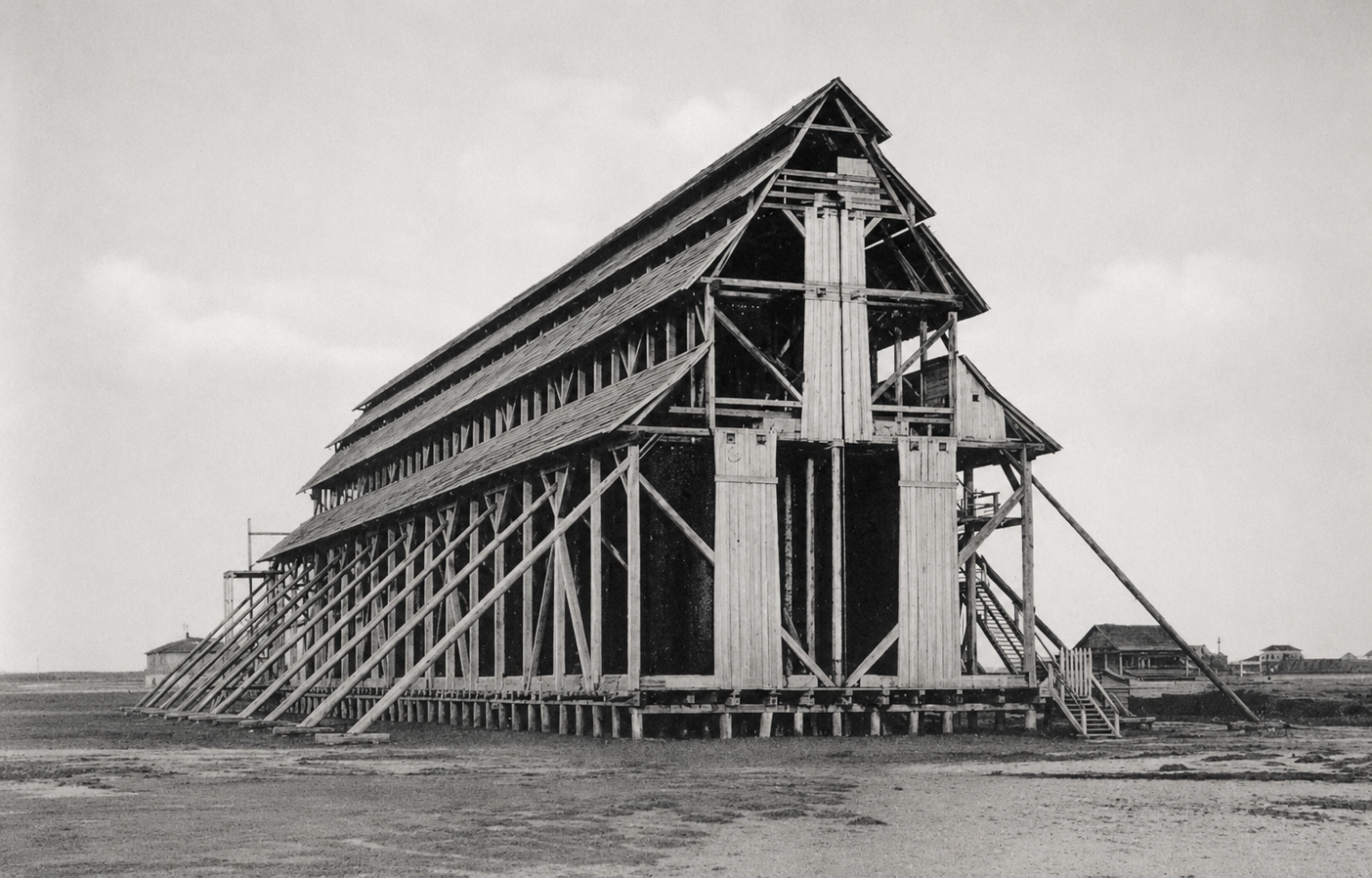
The VVER-1200 reactor planned for the Balkhash plant operates with two circuits. The first transfers heat from the core to the steam generator and is completely isolated from the external environment. In the second circuit, water turns into steam, spins the turbine, and then this steam must be cooled in the condenser — this is where external water from the lake is needed. Essentially, the scheme repeats the principle of a conventional natural-draft evaporative cooling tower: heated water is sprayed over the fill, part of it evaporates, carrying away heat, and the warm, moist air rises through the top of the tower, turning into those white clouds at the outlet.
Wet or Dry Option for Balkhash
The design and estimate documentation for the plant is not yet complete, and the choice between wet and dry cooling towers remains open. Deputy Chairman of the Atomic Energy Agency of Kazakhstan Asset Makhametov confirmed that the water used for cooling does not physically contact the radioactive circuit and cannot be contaminated. However, the volumes the plant will consume depend precisely on the type of cooling tower. The wet scheme is cheaper and simpler, but it irretrievably loses water to evaporation. A dry cooling tower works almost like a car radiator — water flows through tubes and dissipates heat through their walls, with almost no consumption, but such a system is more expensive and could increase the final project cost, which is already estimated at $16.5 billion.
How Much Water is the Lake Prepared to Give Up
If wet cooling towers are chosen for the two power units, irretrievable losses will amount to about 60 million m³ per year — this is water that will escape into the atmosphere through evaporation and not return to the lake. For comparison, the world record for size belongs to a cooling tower in Hohhot, China, with a height of 228 meters and a base diameter of 197 meters — structures of this scale can handle comparable volumes of water and air. For Balkhash, whose water balance is already under pressure from climate change and transboundary runoff from China, even tens of millions of cubic meters become a subject of separate calculations, not a side detail of the project.
Who is Monitoring the Lake in Parallel with the Construction
While engineers choose the cooling type, a separate group of specialists is working on the Master Plan for preserving the Balkhash ecosystem — jointly with the French Development Agency and the French Bureau of Geological and Mining Research. Experts have already assessed the state of agriculture in the lake basin, hydrology, the contribution of glacial runoff, and the interaction of surface and groundwater. The final document, which will serve as the scientific basis for long-term decisions on the region's water resources, is planned to be completed by the end of 2026 — earlier than the first concrete for the power units, scheduled for 2029, is poured.
Water-Saving Technologies Already Exist
Engineers around the world are looking for ways to reduce water loss in cooling towers. Researchers at the Massachusetts Institute of Technology have proposed capturing moisture from steam using an electric field: tiny droplets are given a charge, after which they are attracted to a metal mesh and flow back into the reservoir. For a water-scarce region like southern and southeastern Kazakhstan, such developments are not an abstract innovation, but a potential argument in favor of a more water-efficient cooling scheme for the future NPP.
Author's Conclusion
The choice between a wet and dry cooling tower for the Balkhash plant is a decision that will extend far beyond engineering documentation. It will determine whether the water balance of the lake, already under the scrutiny of international experts, remains stable over the coming decades, or whether nuclear power will add another item of water consumption for Balkhash. The final option will become known as the design work progresses, but it is already clear: the price of a kilowatt in southern Kazakhstan will be measured not only in money, but also in cubic meters.
Comments ()