Iran allocates land to Kazakhstan near the Strait of Hormuz
Kazakhstan has come close to securing its own port foothold in the Middle East.
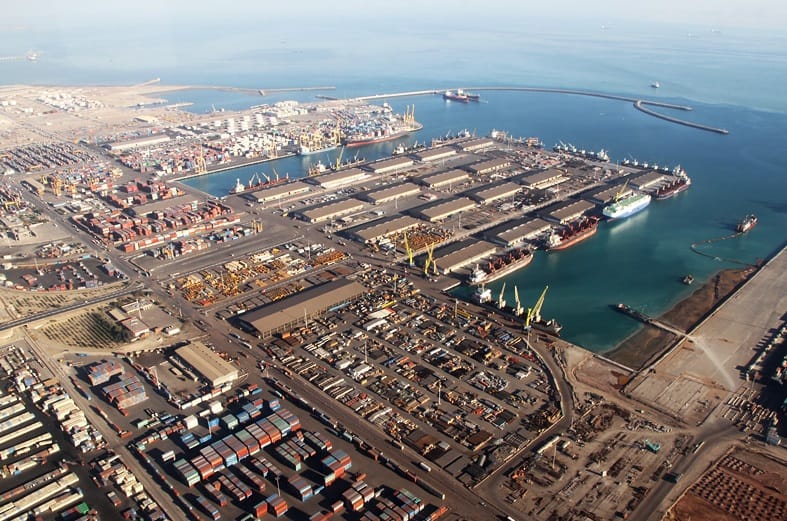
The Iranian side has finalized the allocation of a land plot to the Kazakh side in the Shahid Rajaee port in Bandar Abbas — at the entrance to the Strait of Hormuz, through which about 20% of global oil transit passes. As reported by the Government of the Republic of Kazakhstan, the agreement was reached during negotiations between Deputy Prime Minister — Minister of National Economy of the Republic of Kazakhstan Serik Zhumangarin and Iran's Minister of Roads and Urban Development Farzaneh Sadegh on June 16, 2026, in Astana.
In Brief
- Iran has finalized the allocation of a land plot to Kazakhstan in the Shahid Rajaee port (Bandar Abbas) — a strategic point near the Strait of Hormuz. The transfer will take place after the completion of necessary procedures.
- Iran also confirmed its readiness to provide Kazakhstan with opportunities in the Chabahar port, which offers direct access to the markets of South and Southeast Asia. The Zahedan-Chabahar railway is more than 90% complete and will be launched in the coming months.
- Trade turnover between the two countries at the end of 2025 grew by 26.4% and reached $430.2 million. The parties are targeting a goal of $3 billion.
- Freight volume along the North-South corridor in 2025 increased by 12% to 3.5 million tons, while rail transport between the countries grew by 69%.
A Foothold at Hormuz
The Shahid Rajaee port in Bandar Abbas is Iran's largest container port and one of the key hubs in the Persian Gulf, located directly at the Strait of Hormuz. For Kazakhstan, which has no direct access to the open sea, obtaining a land plot here means a fundamentally new level of logistical presence — its own cargo transshipment point on the route to the markets of the Middle East, Africa, and beyond.
Until now, Kazakhstani cargo has passed through foreign infrastructure on transit terms. A dedicated plot in Shahid Rajaee represents a shift from tenant to operator, albeit on a small scale initially.
Chabahar as a Second Beachhead
In parallel, Iran confirmed its readiness to open opportunities for Kazakhstan in the Chabahar port — a fundamentally different point in terms of its logic. Unlike Shahid Rajaee, Chabahar opens directly onto the Indian Ocean, bypassing the Strait of Hormuz, and provides direct access to the markets of India, Pakistan, and Southeast Asia.
A key factor is the completion of the Zahedan-Chabahar railway line, which is more than 90% finished. After its launch in the coming months, the port will be integrated into the international railway network connecting the Indian Ocean, Central Asia, and Europe. For Kazakhstani exporters of grain, metals, and petroleum products, this opens new delivery routes without changing transport modes.
The North-South Corridor Gains Momentum
The meeting took place in the context of a large-scale reconfiguration of Eurasian logistics. The North-South corridor, linking Russia, Kazakhstan, Iran, and further the Persian Gulf, is recording steady growth: 3.5 million tons were transported by the end of 2025, an increase of 12% compared to the previous year. Rail transport between Kazakhstan and Iran over the same period grew by 69%.
Serik Zhumangarin proposed developing a joint roadmap for modernizing transport infrastructure to increase the corridor's capacity to 20 million tons per year — nearly a sixfold increase from current levels. An additional impetus should come from the signing of a four-party tariff agreement between Kazakhstan, Russia, Turkmenistan, and Iran.
Significance for Kazakhstan
Kazakhstani expert Kirill Pavlov believes that this agreement is no less significant for the country than the signing of an agreement between Iran and the United States.
"This is very cool — that very 'access to the sea' will be realized, and given the lifting of sanctions, interesting opportunities for oil swaps arise. Perhaps even for metallurgy and processing. There might be nuclear energy issues behind this, but ultimately, we have good potential for the oil sector, logistics, manufacturing, and even the agro-industrial complex.
Now the main thing is to properly configure our foothold in the Middle East," writes Kirill Pavlov.
Reciprocity as a Principle
The agreements are symmetrical in nature. In response, Kazakhstan confirmed its readiness to consider providing Iranian companies with port areas, berths, and terminals in the ports of Aktau and Kuryk for the development of Caspian logistics. Thus, this is not a one-off concession, but a mutual integration into each other's infrastructure — a model that creates long-term interdependence and incentives for both sides.
Author's Conclusion
Obtaining land in Shahid Rajaee is not a diplomatic protocol but an infrastructural breakthrough. Kazakhstan is, for the first time, gaining a physical presence at one of the most strategically significant maritime passages on the planet. Combined with the prospect of operating in Chabahar, the country is establishing a dual port beachhead on the Iranian coast — and this changes the logic of all Central Asian transit.
#analytics #export-import #InternationalCooperation #Logistics #TransportCorridors #NorthSouth #Iran #Ports
Comments ()