$550 million in losses and 420,000 trees to be cut down — the outcome of Del Monte's bankruptcy
After Del Monte Foods’ bankruptcy, Central California farmers must destroy ~420,000 peach trees across 3,000 acres.
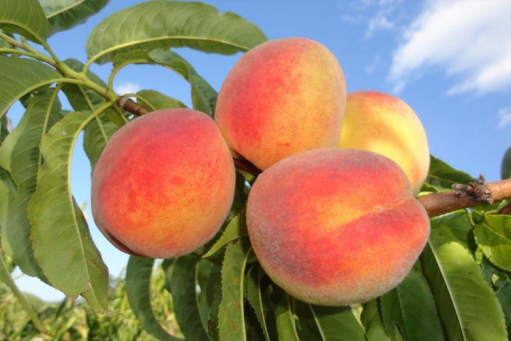
The closure of Del Monte processing plants left producers without a sales market and voided long-term contracts worth more than $550 million. The U.S. Department of Agriculture allocated $9 million to cover the costs of tree removal, reports INDEPENDENT. For Kazakhstan, where fruit growing and fruit processing are developing under the dominance of a few large buyers, this is a story with a direct practical lesson.
The gist of it
- Del Monte Foods, which operated for nearly 140 years, closed its canneries in Modesto and Hughson (California) in April 2026 after filing for Chapter 11 bankruptcy. The plants processed more than 30% of all California clingstone peaches.
- Without a buyer, farmers were left with 100 million pounds of peaches and no market. Many had been working under 20-year contracts with Del Monte — and had no alternative buyers.
- The USDA allocated $9 million for the removal of up to 420,000 trees: destroying 50,000 tons of peaches will allow farmers to avoid additional losses of another $30 million.
- Pacific Coast Producers acquired some of Del Monte's assets and agreed to purchase about a third of the farmers' harvest — but not the entire volume.
- The situation is compounded by the general crisis in American agriculture: tariffs have raised production costs, the closure of the Strait of Hormuz has increased fertilizer prices, and droughts are reducing yields.
How a 140-year-old company went bankrupt
Del Monte Foods — one of the most recognizable brands in the American canning industry — filed for bankruptcy back in July 2025. The reason was a long-term decline in demand for canned fruits and vegetables: consumers in the US and Europe are steadily switching to fresh and chilled products, bypassing canned goods. The company's revenue had been shrinking for years, its debt burden was growing — and ultimately the model proved unviable.
Assets were sold off piecemeal: Pacific Coast Producers, Conagra, and other market players took over individual brands and product lines. But the production infrastructure — the plants in Modesto and Hughson — no one bought. In April 2026, they were closed forever.
The monopsony trap: when one buyer is too few
The California story clearly demonstrates the risk of monopsony in the agricultural sector: a situation where producers depend on one or a few large buyers. The clingstone peach is a crop grown exclusively for canning: it is too soft for fresh transport. Its only buyer in the region — Del Monte — shut down, and farmers found themselves in a literal dead end: the harvest is there, the market is not, the trees live for 20 years, and alternative crops cannot be grown in a single season.
Congressman Mike Thompson accurately articulated the essence of the tragedy: "When a processing plant closes, and 55,000 acres of fruit orchards suddenly have nowhere to go, a family farm simply can't survive that. This funding is a critical step to ensure that these important, generational businesses can stay afloat."
Kazakhstan context
Kazakhstan is actively developing fruit and vegetable growing, especially in the south of the country — in the Almaty, Turkestan, and Zhambyl regions. The state is stimulating the construction of fruit storage facilities and greenhouses, and preferential lending covers the processing of agricultural products. However, the structural vulnerability highlighted by the American case is fully present in Kazakhstan: a significant portion of horticulturists work with a limited circle of buyers — retail chains, procurement companies, or exporters.
The closure of a single processing plant or the departure of a large buyer can put a farmer in the same trap as the California peach producers. The recently adopted law on preferential lending for agriculture, which emphasizes the construction of fruit storage and processing facilities, is a step in the right direction. But in parallel, it is necessary to build diversity in sales channels: export markets, cooperative structures, direct contracts with chains — so that the disappearance of one buyer does not mean the destruction of an entire industry.
Author's conclusion
The story of Del Monte is a story of how a long-term contract with a single buyer turns into long-term dependency, not long-term sustainability. For Kazakhstan's agricultural sector, where fruit growing is just gaining scale and processing infrastructure is being built from scratch, this warning is worth heeding in advance — while the peach trees have yet to be planted.


Comments ()