A three-megawatt solar station was built in Tajik Isfara under a Korean grant
A 3 MW solar power plant has been built in Shurab, Isfara, Sughd region, Tajikistan. The project was funded by a grant from the South Korean government.
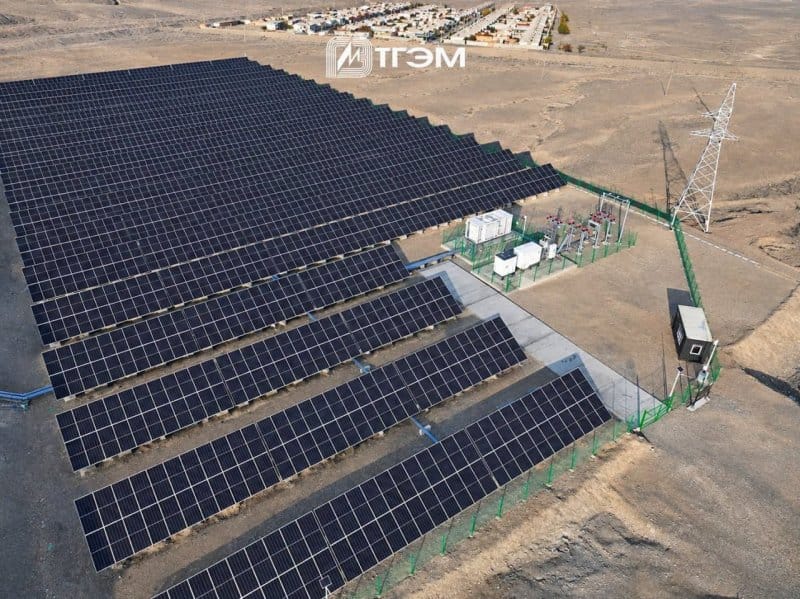
According to its design capacity, the station can provide electricity to up to 1,000 households, reports Khovar.
The gist in brief
- The station in Shurab has a capacity of 3 MW and an energy storage system of 500 kWh.
- The money was allocated by the government of the Republic of Korea with the assistance of the Korea Institute for Advancement of Technology (KIAT), and the customer was Hanmaum Energy.
- The station was built by OJSC "TGEM"; on a 4 ha plot there are 4,752 bifacial panels.
- The cost and annual output are not stated in the report.
What was built in Shurab
The station occupies a plot of 4 ha. It has 4,752 bifacial photovoltaic panels installed, that is, panels that generate current on both sides. Electricity is converted by 10 string inverters distributed across the site. To feed energy into the grid, a complete transformer substation at 0.8/35 kV with a total capacity of 4.5 MW has been installed.
The station is equipped with an energy storage system with a capacity of 500 kWh. The operation of the complex can be controlled remotely, so, as the report says, the main processes are monitored without permanent staff on site.
Who paid and who built
The construction and installation work was carried out by the open joint-stock company "TGEM". The project is part of the program for the development of renewable energy sources in Tajikistan. It was financed through a grant from the government of the Republic of Korea with the assistance of KIAT. The customer was Hanmaum Energy Co., Ltd.
When the station was commissioned
Khovar's report appeared on November 3, and the text itself says only that the project has been implemented, without specifying the commissioning. Earlier, "Asia-Plus" wrote about this: according to its data, the stations in Shurab and in the village of Rozh in the Gorno-Badakhshan Autonomous Region were commissioned at an online ceremony on September 27 with the participation of President Emomali Rahmon. Each of them has a capacity of 3 MW. According to these data, the overall implementation and delivery of both projects was ensured by the company "Pamir Energy".
The station in Shurab, as stated there as well, will increase the reliability of electricity supply to the industrial town of Shurob in Isfara.
What is missing from the reports
Neither Khovar nor "Asia-Plus" names the cost of the project. It is also not stated how much electricity the station produces per year: the estimate of one thousand households refers to the design capacity.
What is happening with solar energy in Central Asia
The Isfara station is small compared to other projects in the region. In Tajikistan, a 250 MW station was commissioned in the Sughd region: it occupies 793 ha and will be able to cover about 40% of the region's electricity needs. At the same time, in Dushanbe, instructions were given to resolve the issue of installing solar panels at all enterprises in the city; the capacity and timelines are not stated.
In Uzbekistan, solar panels are also being installed by private owners: from January to September 2026, they were paid 642.1 billion soums for surplus electricity transferred to the grid.
In Kazakhstan, solar stations are being built together with storage systems. In Kyzylorda, construction has begun on the region's first station with an energy storage system; currently, 11 solar stations with a total capacity of 151 MW operate in the region. The Development Bank of Kazakhstan approved a loan of about 54.5 billion tenge for the first phase of solar projects with a capacity of 1 GW, including stations for "Kazatomprom" and KEGOC. And the law on energy storage systems is still under consideration.
Author's conclusion
The station is small: 3 MW and a storage system of 500 kWh, and the estimate of one thousand households is based on design capacity, not actual output. According to official data, its task is to increase the reliability of electricity supply to the industrial settlement of Shurob. How much energy the station will produce per year and how much the project cost are not stated in open reports.



Comments ()