About 30 types of subsidies remain in the agro-industrial complex instead of 54
The Ministry of Agriculture has cut the number of subsidies in the agro-industrial complex from 54 to about 30, Vice Minister Azat Sultanov told reporters during a press tour.
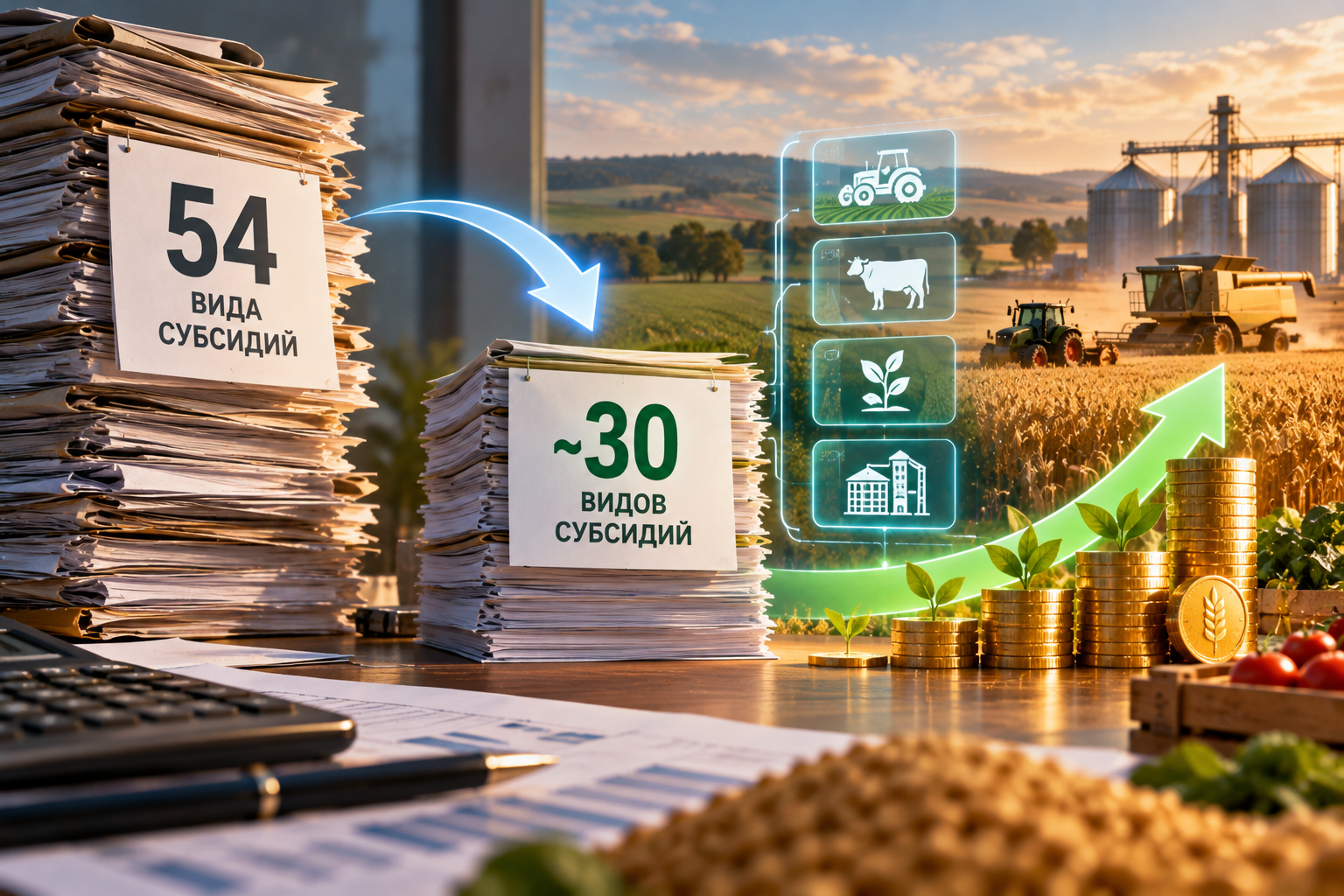
The freed-up funds will remain in the sector and go toward more effective support measures. At the same time, the total volume of budget support for agriculture is not being reduced, Kazinform reports.
The essence in brief
- The number of subsidy types in the agro-industrial complex has gone from 54 to about 30; those with questions about effectiveness and high corruption risks are being revised.
- 588 billion tenge is earmarked for subsidizing the agro-industrial complex in 2026; debts to farmers for 2023-2025 in the main regions have been settled.
- Farmers are now given credit immediately at 5-6%; previously they borrowed at 23-24% and waited for a subsidy.
- About 850 billion tenge is earmarked for preferential lending, and 350 billion tenge for preferential leasing.
What was cut and why
The ministry is revising primarily those types of subsidies whose effectiveness raises questions or where corruption risks are high.
"The overall budget for agriculture does not change," stated Sultanov.
The saved money will go to other measures, for example support for agricultural raw materials that have actually been delivered for processing. The vice-minister cited milk, corn and sugar beet as examples: the subsidy will be paid after the producer has handed the raw material to the processor, it has been processed, and the finished product has been sold.
Which subsidies are being abandoned
Support for certain measures in selection and breeding work has been revised. There, the recipient often reported on themselves, and this was not cross-checked in any way, explained Sultanov, so the risks of misuse of funds are high. Subsidies for renting breeding rams and bulls to improve herd genetics were also cut: it was difficult for the state to verify how the animals were used and whether they produced results.
The third area is solar panels for watering pastures. Here, as the vice-minister said, violations had previously been identified, criminal cases were opened, and it was difficult to verify whether the equipment actually operated at the wells. In the summer, a verdict was handed down in the Almaty region in a case of illegally obtaining subsidies and issuing fictitious invoices: the damage to the state exceeded 251 million tenge.
How lending is changing
At the same time, the mechanism of preferential financing for farmers is changing. About 850 billion tenge is earmarked for preferential lending, including for sowing and harvesting work under the "Kең dala" program and for replenishing the working capital of processing enterprises. Another 350 billion tenge was allocated for preferential leasing, of which about 300 billion tenge has already been used.
The main change is that the farmer no longer needs to take out a commercial loan at a high rate and wait for the state to subsidize part of the interest.
"Previously, loans were obtained at 23-24% and people waited for a subsidy," explained Sultanov.
Now the farmer receives a loan immediately at 5-6%, and the rate reduction is already a matter between the state and the bank; the farmer is not involved in it.
What about subsidy debts
588 billion tenge is earmarked for subsidizing the agro-industrial complex in 2026. A significant part went to repaying obligations for previous years. In the main agricultural regions, all debts to farmers for 2023-2025 have been settled. The needs of 2026 will be covered from the 2027 budget, which Parliament is currently considering.
What else is changing in state support
Control over support is being tightened in other areas as well. The Baqylauda system checks whether recipients of state support comply with the conditions, and deputy Murat Yrgybaev (Auyl faction) is asking Deputy Prime Minister Serik Zhumangarin to postpone its launch for farmers until 2028. He believes that the requirements for increasing the number of employees and taxes do not take into account the specifics of the sector.
At the same time, the Prime Minister instructed the Ministry of Agriculture to accelerate the creation of a unified digital platform for the agro-industrial complex in order to assign support automatically, based on digital profiles of farms. And the public council for the development of the agro-industrial complex proposes evaluating state support by returns: out of 245 projects financed under preferential lending, 150 are operating.
The Auyl faction, in turn, links the possible disruption of livestock projects to the fact that the price of livestock in state programs is 20-30% below market, and asks for the methodology to be revised.
Author's conclusion
Support is shifting from subsidies to loans: a farmer who paid 23-24% and waited for compensation now borrows money at 5-6%. And the number of subsidy types has become almost half as many, with the cuts falling on the areas where it was hardest to verify results.
Comments ()