About half a million liters of oil leaked during repair of the JANAF pipeline in Croatia
About 500,000 liters of crude oil leaked on November 6 from the JANAF pipeline between Sisak and Slavonski Brod. During repairs, a work machine struck the pipeline equipment, causing the pipe to crack.
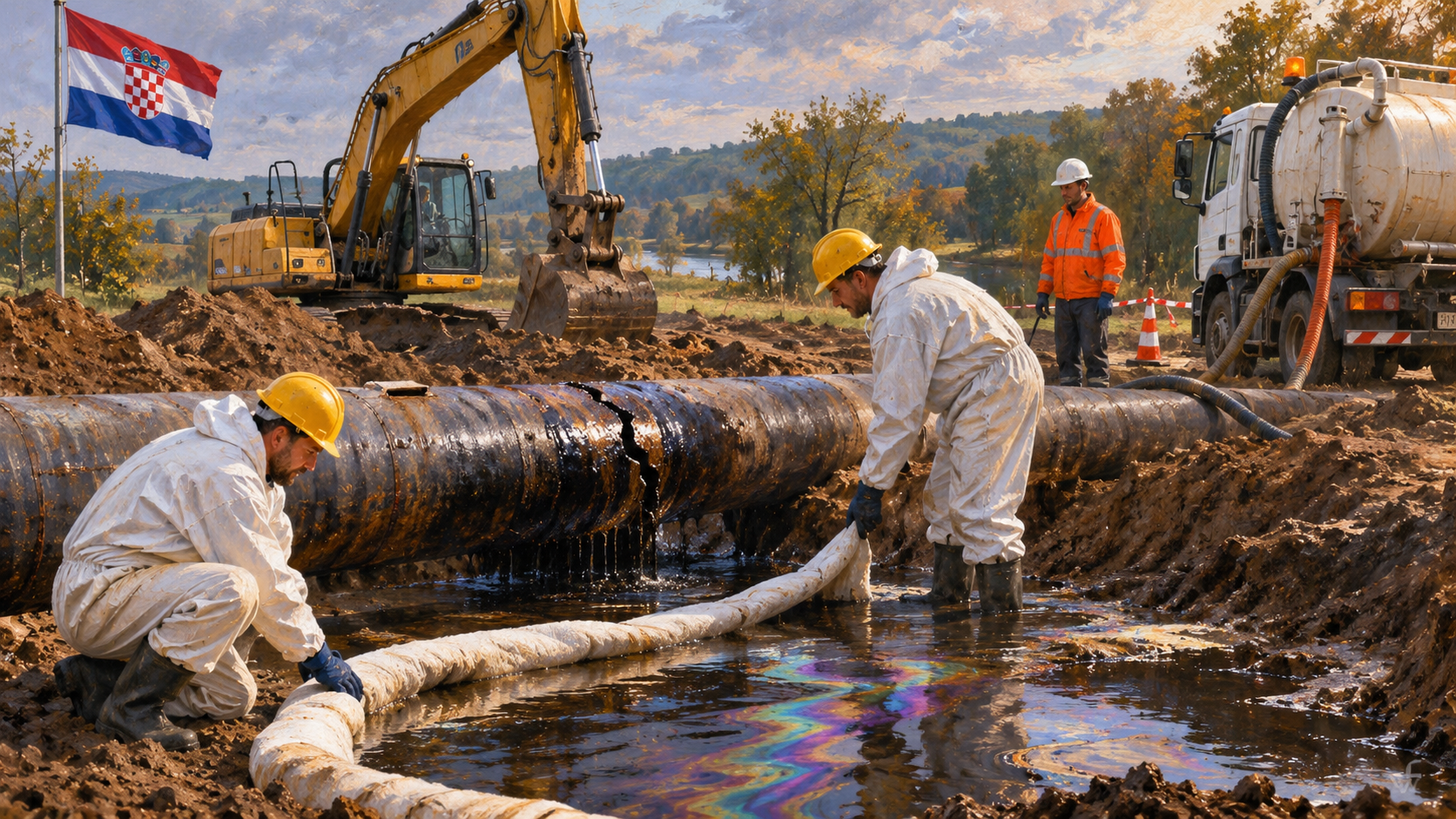
The leak has been stopped, about 200,000 liters of oil have been collected, and according to the operator and authorities, there is no threat to water or residents. This is reported in a piece by N1 Hrvatska.
The gist in brief
- The accident occurred on November 6 at the 88th kilometer of the pipeline near the village of Prvča, close to Nova Gradiška.
- About 6,000 m² of agricultural land and about 600 m² of slopes and the bed of the dry Mašićki stream have been contaminated; about 200,000 liters of oil have been collected.
- Between 10 and more than 15 people sought medical help due to the smell of oil; all were sent home.
- JANAF expects the cleanup to take about 10 days; when pumping will resume has not been reported.
What happened
JANAF operates the Croatian section of the Adriatic pipeline, which carries oil including for the Hungarian MOL group. On Friday, November 6, repair work was underway on the Sisak–Slavonski Brod section near the village of Prvča. It was being carried out by an external contractor. A work vehicle struck equipment on the pipeline, and a crack about 50 cm long formed in the pipe. Oil leaked onto a field and into the dry bed of the stream.
Pumping was stopped by closing the Okucani and Luzani block stations. The damage at the accident site was temporarily patched on Saturday.
What about the people and the water
According to the mayor of Nova Gradiška, Sabina Vlaović, more than 15 people sought emergency medical help with headaches, difficulty breathing, and nausea. The Institute of Public Health of Brod-Posavina County cites about ten people, mostly employees of a single café or restaurant: some were given oxygen and an IV drip. No one was hospitalized. JANAF acknowledges that residents are alarmed by the smell of oil and says it is technically impossible to prevent its spread.
According to the Croatian service Hrvatske vode, about 6,000 m² of agricultural land and about 600 m² of slopes and the bed of the Mašićki stream have been contaminated. No contamination of surface or groundwater has been recorded so far, and the water supply is not at risk. Well owners are advised to have their water tested.
How the aftermath is being addressed
Oil collection continues, and it is being returned to the JANAF system. The contaminated soil will then be removed and replaced, and samples will be taken by an independent laboratory. Earthen barriers are being built to protect watercourses. Hrvatske vode plans to clean the stream bed before the rainfall expected in the middle of the week. JANAF expects to fully eliminate the consequences in about 10 days.
What remains unclear
JANAF has not said when oil pumping will resume or whether the accident affected supplies along this route. The exact scale of the environmental damage has not yet been established. Liability will be determined later, including the contractor's role.
Author's conclusion
The main question now is not the volume of the leak, but whether they will manage to remove the oil from the stream bed before the rainfall in the middle of the week. So far the water and groundwater are clean, but rain could change the situation, so the coming days will show whether the damage will be limited to the soil and the field.

Comments ()