Algeria conducts cleanup of French nuclear test site in the Sahara without Paris's help
Algeria has launched a second cleanup operation at the former French nuclear test site in the In Ekker area in the south of the country.
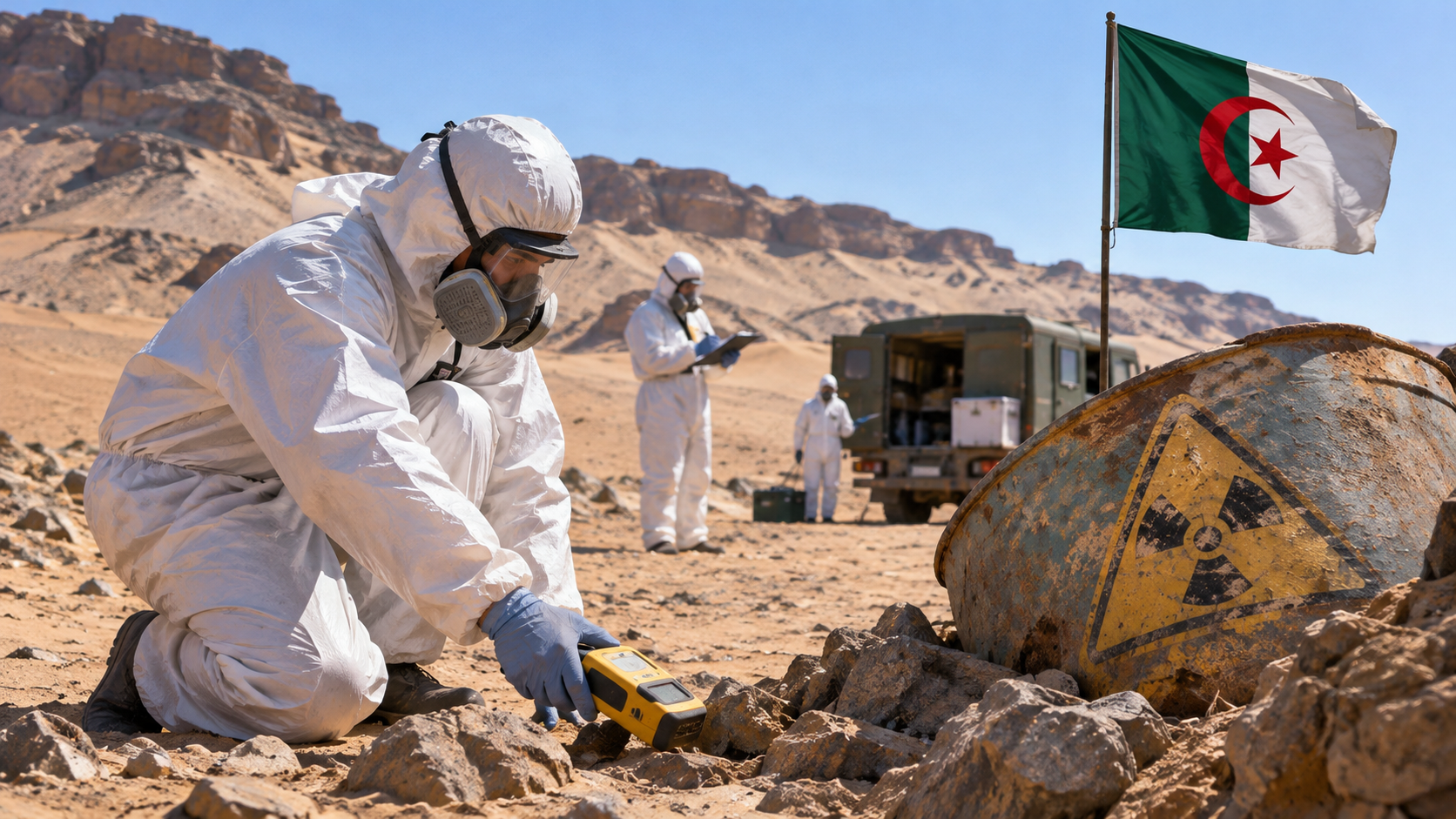
Work at the "Beryl E2" site is being carried out by national forces, and the Algerian Ministry of Defense says that France is not handing over archives and burial maps, writes Algeria Press Service.
The gist in brief
- The second operation began on November 1, 2026 at the "Beryl E2" site in the In Ekker area of Tamanrasset Province.
- The work is being carried out "with national material and human resources" and is controlled by the Algerian Ministry of National Defense.
- Radioactive waste is being collected and placed in concrete containers; the first partial operation started in February 2026.
- According to Algeria, France is not providing maps and registries that could be used to locate the waste burial sites.
What is known about the second operation
The Algerian Ministry of Defense reported that the work began on November 1, the 72nd anniversary of the start of the 1954 Algerian Revolution, on the territory of the 6th Military District. The "Beryl E2" site belongs to an underground test tunnel in the In Ekker area. Specialists must determine the boundaries of radioactive zones, collect the waste and place it in concrete containers. The operation is controlled by the Ministry of Defense together with the national agency for the rehabilitation of former French nuclear test sites in the south of the country. The ministry called the task "a real challenge for national competencies" and stated that the work is proceeding in accordance with international standards for marking radioactive zones, collecting and storing waste, as reported by TSA.
What happened before this
France conducted 17 nuclear tests in Algeria: 13 underground and 4 atmospheric; the first took place on February 13, 1960 in the Reggane area, when the country was still under French administration. The first partial cleanup operation started in February 2026 at Taurirt-Tan-Afella near In Ekker, as reported on February 14: specialists set up a decontamination camp where waste is collected and stored in concrete containers.
Why Algeria speaks of a problem with documents
The Ministry of Defense claims that France refuses to hand over test registries and maps and does not take responsibility. According to the ministry, the absence of maps makes it harder to determine exactly where the waste is buried in In Ekker and Reggane. France's position on this report is not included in the Ministry of Defense materials.
What remains unknown
Algeria has not stated the volume of waste to be extracted or the timeline for completing the cleanup. It has also not reported what share of the contaminated areas has already been treated.
What is happening with the radioactive legacy in Kazakhstan and Central Asia
Kazakhstan has completed the marking of the boundaries of the Semipalatinsk nuclear safety zone: of the more than 18,000 sq km of surveyed territory, about 8,300 sq km retain radiation risks, while about 10,000 sq km have been recognized as safe. Scientists at the National Nuclear Center believe that current contamination of the test site remains localized. Kazakhstan has also taken the lead of the CIS regional council on radioactive waste management. In neighboring countries, remediation is proceeding unevenly: Kyrgyzstan has completed work at the tailings of former uranium mines in Too-Moyun and Kyzyl-Zhar, while remediation of Tajikistan's largest uranium tailings dump will begin no earlier than mid-2028.
Author's conclusion
Algeria decided not to wait for the transfer of documents and began cleanup piece by piece, site by site: first Taurirt-Tan-Afella, now "Beryl E2." This approach makes it possible to remove waste where the location is known, but without maps there remains a risk of missing burial sites. The issue of documents, rather than cleanup technology, remains the main subject of dispute with Paris.
Comments ()