Agrarian forecast for 2024
A new report from the Climate Prediction Center/NCEP/NWS forecasts El Niño to turn neutral by June, with increased odds of transitioning to La Niña in June-August (49%) or July-September (69%). What does this mean in practice?
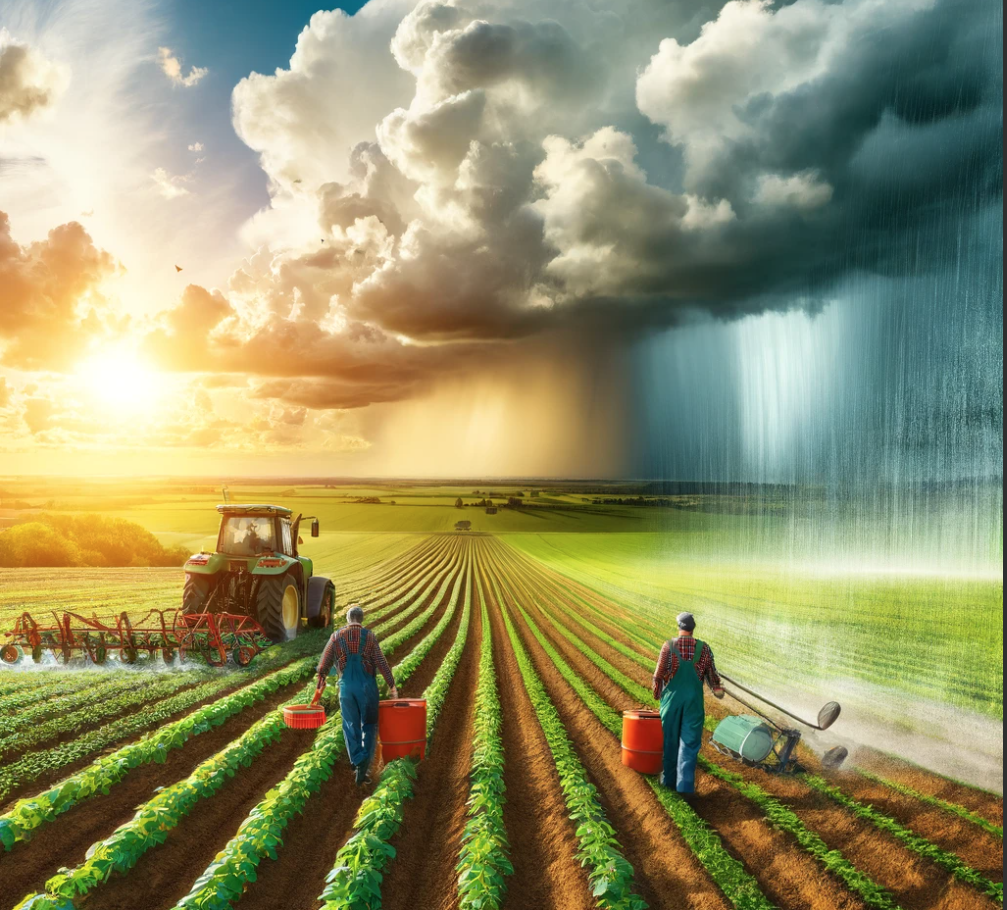
Olzhas Bektenov expects farmers to fulfill their reciprocal obligations — compliance with agricultural technologies and timely application of fertilizers and plant protection products. Meanwhile, drought forecasts are softening, but only in the short term.
The Prime Minister insists that farmers strictly follow the rules of agricultural technology, fertilize fields on time, and protect plants.
The head of government announced the amounts of financing and support measures:
“140 billion tenge have been allocated to ensure spring field work. The forward purchase program has been continued: 40 billion tenge are provided for it this year. On my instructions, an additional volume of diesel fuel has been allocated. Fertilizers from domestic plants are being shipped on an installment basis.”
Bektenov also instructed to increase fertilizer production volumes.
Earlier, Minister of Agriculture Aidarbek Saparov reported that the grain seed fund is 99% secured. If they did this using commodity grain from elevators, it will be interesting to see.
Now it is necessary to closely monitor the varieties and their ripening.
A fresh report from the Climate Prediction Center/NCEP/NWS has been released, forecasting that El Niño will transition to neutral as early as June. In addition, the probability of El Niño transitioning to La Niña has increased to 49% in June-August and 69% in July-September.
What does this mean in practical terms?
The effects of La Niña can vary from year to year, but often lead to cooler-than-normal summers in North America and warmer winters in Northern Europe and Northern Asia.
Most likely, this summer will be cooler in northern Kazakhstan. Precipitation may be above average, but not significantly so.
During the dominance of La Niña, wheat yields tend to decrease, while during the dominance of El Niño, they tend to increase.
In Kazakhstan, wheat production is more vulnerable to droughts due to insufficient snow contribution to soil moisture. From 1992 to 2015, declines in wheat yields in Kazakhstan were associated with droughts that were more often linked to La Niña events than to El Niño events.
This year, there is soil moisture recharge, and risks for crop producers have significantly decreased. Indeed, if agricultural technologies are applied on time, the land is worked properly, and nutrition and protection are ensured, there are chances.
But questions arise for 2025 — what will the next winter be like? If La Niña persists and there is little snow, it will be bad.
This year, the north, apparently, has washed away its sins with floods and will get a mild summer.
Comments ()