Another 800 MW hydropower plant is planned between Rogun and Nurek
Tajikistan is preparing a new project on the Vakhsh River: the Khutalon hydropower plant, also known as Shurob.
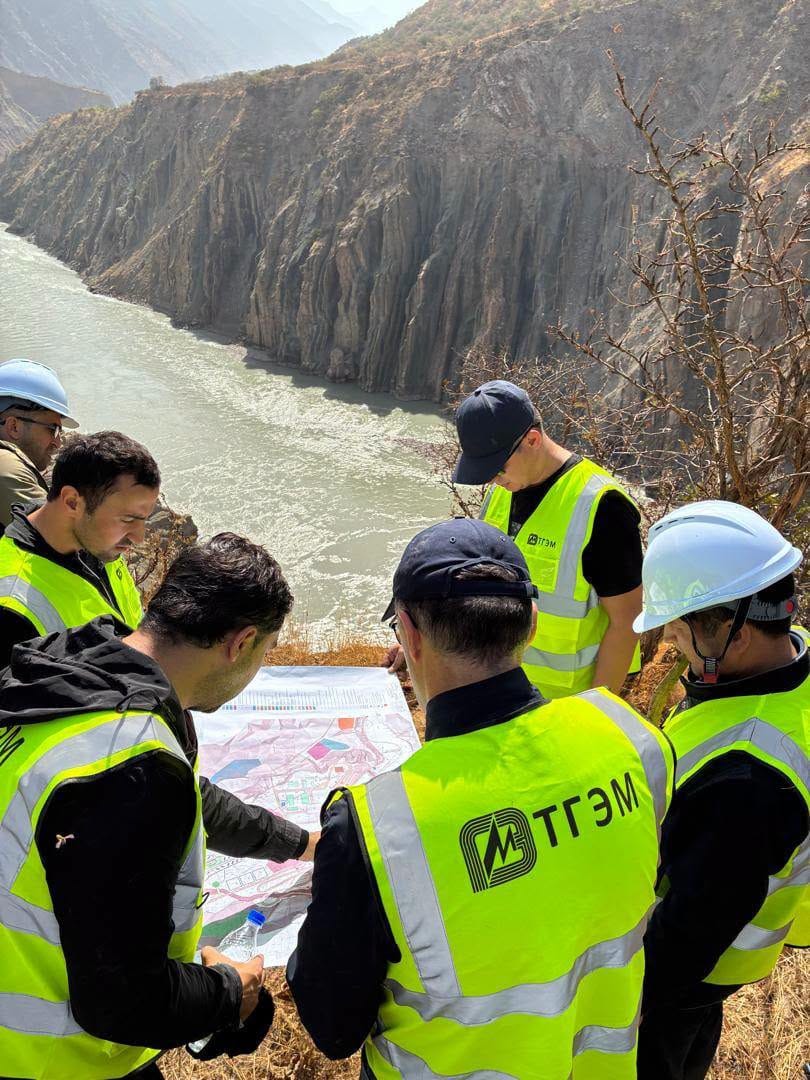
The Minister of Energy and Water Resources, Daler Juma, inspected the site of the future station, writes Avesta.tj. The timeline, cost, and sources of financing have not yet been announced.
The essence in brief
- On October 4, the Minister of Energy and Water Resources of Tajikistan, Daler Juma, inspected the sites for the dam, the machine hall, and other main structures of the Khutalon (Shurob) hydropower plant.
- According to the preliminary feasibility study, the station's capacity will be 800 MW, with average annual generation of more than 2.5 billion kWh.
- The hydropower plant will be located on the Vakhsh between the Rogun hydropower plant under construction upstream and the Nurek hydropower plant downstream.
- Rogun itself is not yet completed: finishing it requires 6.4 billion dollars, and the launch of the third unit has been postponed to September 2027.
A new stage of the Vakhsh cascade
The minister's visit was reported by the press service of the Ministry of Energy and Water Resources of Tajikistan. Daler Juma reviewed the sites where the dam, the machine hall, and other main structures of the station are expected to be built. According to the ministry, the project will help increase the generating capacity of the energy system and ensure "more efficient use of hydropower resources."
The project is not new. Tajikistan announced the preparation of a feasibility study for the Shurob hydropower plant back in 2022. In the ministry's materials from that time, the station's capacity was stated at 850 MW; now it is given as 800 MW. For comparison, after completion of construction, the Rogun hydropower plant will generate more than 17 billion kWh per year, that is, almost seven times more than is planned for Khutalon.
Rogun is still not completed
The new project is appearing when the country's main construction site is still far from completion. In January, Daler Juma reported that construction work at the Rogun hydropower plant was almost 60% complete. The dam has reached a height of 151 meters out of the planned 335. Since their launch, the two temporary units have generated 9.9 billion kWh of electricity.
The third unit was initially planned to be commissioned in September 2025, but the launch was postponed to September 2027. It is with this unit that President Emomali Rahmon associates the country's full energy independence, and the complete completion of the station's construction is expected by the end of 2031. Since 2008, more than 48.1 billion somoni from the budget and other sources have been allocated to Rogun. Completion requires another 6.4 billion dollars, so Dushanbe is increasingly relying on a coalition of international partners coordinated by the World Bank. In January, Daler Juma spoke about negotiations for an additional 1.7 billion dollars. In July, the World Bank approved a 300 million dollar grant for the second stage of construction of the Rogun hydropower plant in addition to the 350 million dollars allocated in December 2024.
Water and neighbors
The Vakhsh is the main tributary of the Amu Darya, so any water management projects on it traditionally attract the attention of downstream countries, primarily Uzbekistan and Turkmenistan. This was especially acute in the disputes around Rogun. Khutalon fits into the existing cascade between two reservoirs, so the flow regime downstream will most likely still be determined by Rogun and Nurek. Only a full feasibility study and environmental assessment, which have not yet been published, will show how much the new station will change the water balance.
Author's conclusion
For now, Khutalon is a site, preliminary figures, and general wording about capacity growth. The ministry did not report on the cost, contractors, or sources of money. For Tajikistan, which is simultaneously seeking billions to complete Rogun, financing the new project will become the main question. At the same time, the station's location is advantageous: the water regulated by Rogun will pass through the turbines of another station before entering the Nurek reservoir. But turning this advantage into real kilowatt-hours will be possible no earlier than it becomes clear who will build it and with what money.

Comments ()