At the UN conference in Yerevan, first results of biodiversity protection are being summarized
The 17th Conference of the Parties to the UN Convention on Biological Diversity (COP17) is being held in Yerevan from 19 to 30 October.
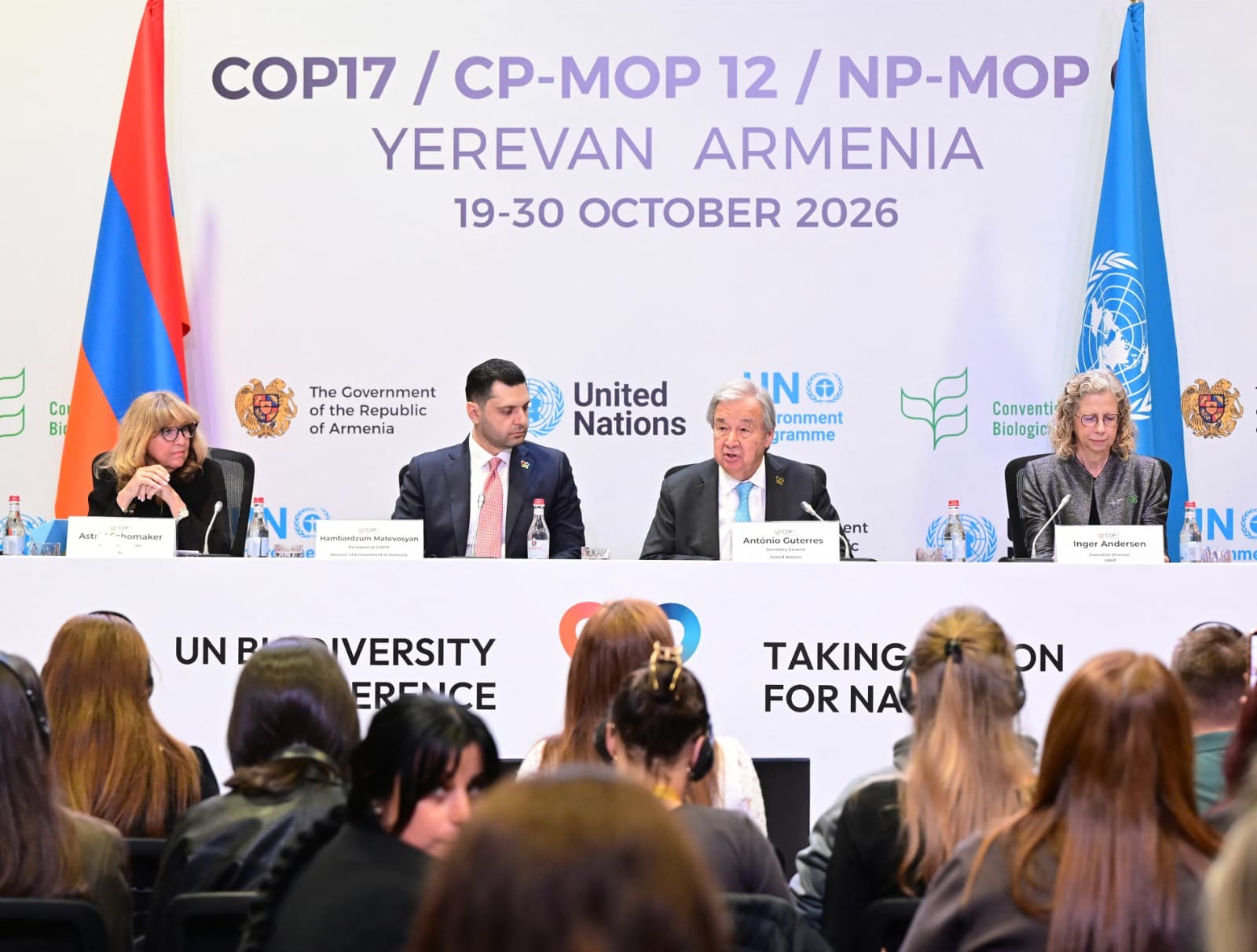
Countries are assessing for the first time how they are meeting the goals agreed at the end of 2022 to protect nature. According to the results of the preliminary meeting in Nairobi, they are behind schedule on all 23 goals, The Guardian writes.
The essence in brief
- COP17 is taking place in Yerevan from October 19 to 30; this is the first assessment of progress on the goals agreed in Montreal in 2022.
- Countries have fallen behind schedule on each of the 23 goals agreed in Montreal.
- The Cali Fund, which is supposed to attract money from private companies, has received pledges of $10,656, with $7,085 paid in, while the target is $1 billion per year.
- According to one estimate, 27.5% of land is already under protection against a target of 30%, while reform of harmful subsidies worth $500 billion has barely advanced.
What the conference is about
Every two years, countries that have signed the UN Convention on Biological Diversity hold a summit. The convention is one of three created at the Earth Summit in Rio in 1992, along with the conventions on climate change and on combating desertification. It covers nature conservation, its sustainable use, and the fair distribution of benefits from genetic resources.
In Yerevan, the main focus will be on this decade's goals: protecting 30% of land and sea, reforming environmentally harmful subsidies worth $500 billion, and restoring 30% of degraded ecosystems. According to The Guardian, since 1992 governments have never once achieved any of the UN's nature goals.
What has already been done
Before the conference, countries met in Nairobi and acknowledged that they are behind schedule on each of the 23 goals. In Yerevan, environment ministers must decide what to do about this.
Progress is not uniform. According to one estimate, governments are close to the 30% target for land: 27.5% of terrestrial areas have already been placed under protection in the form of reserves, national parks, and other zones. But what matters is not only the number but also the effective management of areas that ecosystems especially need: swamps, tropical forests, meadows, and coral reefs. Reform of harmful subsidies, that is, tax breaks for companies extracting fossil fuels and state support for clearing forests for farmland, is barely moving.
Money and the Cali Fund
The main obstacle, according to The Guardian, is financing. The US does not participate in the convention but was a major sponsor of conservation programs through USAID, and the Trump administration sharply cut these expenditures. The UK and other European countries have also cut funding. Norway and Sweden have already made their contributions, while Japan, according to Brian O'Donnell, director of the "Campaign for Nature," stands out as a major economy without substantial contributions.
Since 2022, the volume of private money for biodiversity conservation has also declined. The Cali Fund was created in 2025 to attract companies that benefit from nature's genetic resources. By the start of COP17, $10,656 had been pledged to it, and $7,085 had been received into the account, against a target of $1 billion per year.
What complicates the negotiations
The previous conference, COP16 in Cali (Colombia), ended in chaos without a clear agreement on key issues, and another round of negotiations in Rome was required. Yerevan's agenda is also packed: Fauna & Flora global policy director Catherine Weller warned that negotiators risk not having time to discuss everything. WWF head of multilateral policy Guido Broekhoven called the conference a "genuinely important opportunity" to seriously adjust course.
What this means for Kazakhstan
Kassym-Jomart Tokayev arrived in Yerevan for the Leaders' Summit on October 16, where he also met with Armenian Prime Minister Nikol Pashinyan and UN Secretary-General António Guterres.
The topic of biodiversity is already on Kazakhstan's agenda. In September, five Caspian countries agreed on an interstate program to save the Caspian: the main topics cited were the rapid drop in sea level and the threat to its biodiversity, and Tokayev's initiative was included in the ministers' final statement. In the FAO report on forest degradation, Central Asia's floodplain forests are named among the most affected: they have shrunk by 90%. In Kazakhstan, tugai forests are being restored in the Ili Delta and in the south of Balkhash, with 25,500 hectares restored so far out of 200,000 planned.
Protected areas are also affected by legislative changes: on October 14, the Government changed the rules for reserving land for specially protected natural areas. The resolution came into force on October 16, and the decision on reservation is made by the local executive body.
Author's conclusion
The Yerevan conference is the first check of what countries promised in 2022, and by early assessments the results so far are modest. Some goals, such as land protection, are approaching completion, others have barely moved, and the nearly empty Cali Fund shows how difficult it is to attract money. The conference's decisions will be known after October 30.


Comments ()