Canada is shifting from wheat to oilseed crops.
Wheat acreage will drop by 0.6M acres to 26.4M, while canola expands by 0.7M, highlighting Canada’s shift to high-yield oilseeds. Lower pulse output opens niches for Kazakh ag.
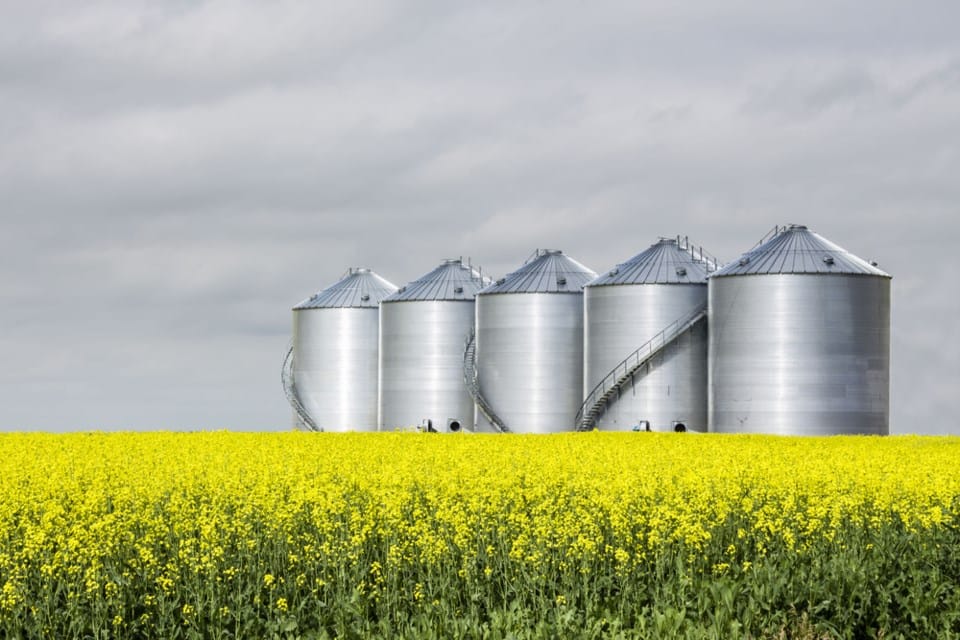
Canadian farmers in the 2026 season plan to reduce wheat plantings, favoring oilseeds, particularly canola. These structural changes in one of the world's largest agricultural powers could create new conditions for exporters from Central Asia on the global market.
The Gist
- Wheat plantings will decrease by 0.6 million acres, reaching an average of 26.4 million acres.
- Canola acreage will increase by 0.7 million acres, highlighting Canada's bet on high-yield oilseeds.
- Reduced production of pulses (lentils and peas) opens additional niches for Kazakhstani farmers.
- The threat of drought in North America remains the main risk factor, which could trigger shortages and price increases.
Reshaping Crop Acreage
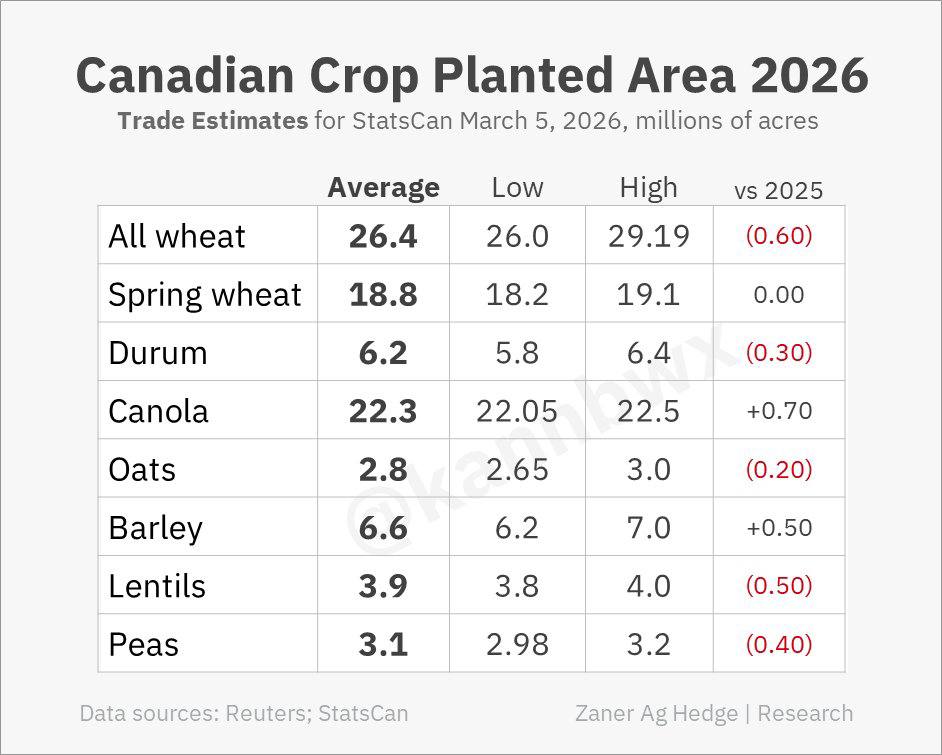
According to preliminary trade estimates for StatsCan, in 2026 Canadian farmers plan a significant reconfiguration of their crop mix. The total area under wheat will be 26.4 million acres, which is 0.6 million less than last year's figures. Notably, the most significant reduction will affect durum wheat (Durum) — acreage under it will decrease by 0.3 million acres.
At the same time, canola (Canadian rapeseed varieties) is showing robust growth. It is expected that 22.3 million acres will be allocated to this crop (+0.7 million from the 2025 level). Interest in barley has also been recorded, with acreage increasing by 0.5 million acres.
Global Implications and Prospects for Kazakhstan
For Kazakhstan and Central Asian countries, which are direct competitors of Canada in durum wheat and pulses, such news serves as an important indicator. The reduction in acreage under lentils (by 0.5 million acres) and peas (by 0.4 million acres) in Canada could ease pressure on global prices, giving an advantage to Kazakhstani exporters.
However, experts urge attention not only to acreage but also to weather conditions. In several regions of Kazakhstan, the probability of drought remains high. In a context where global oilseed stocks remain volatile, the climate factor in Central Asia could become a catalyst for a serious shortage.
Author's Conclusion
Canada's shift in focus towards oilseeds confirms the global trend of crop diversification. For market participants in Kazakhstan, this is a signal to strengthen positions in segments temporarily vacated by Canadian producers — primarily in the production of durum wheat and lentils. The key factor of the spring season will be whether drought forecasts for the Northern Hemisphere prove accurate.

Comments ()