Central Asia gas ring idea estimated at $5 billion
Kazakh energy expert Askar Ismailov at a Tashkent forum proposed uniting the gas transmission systems of Kazakhstan, Kyrgyzstan, Tajikistan, Turkmenistan and Uzbekistan into a single "gas ring" of over 3,000 km of new and upgraded pipelines.
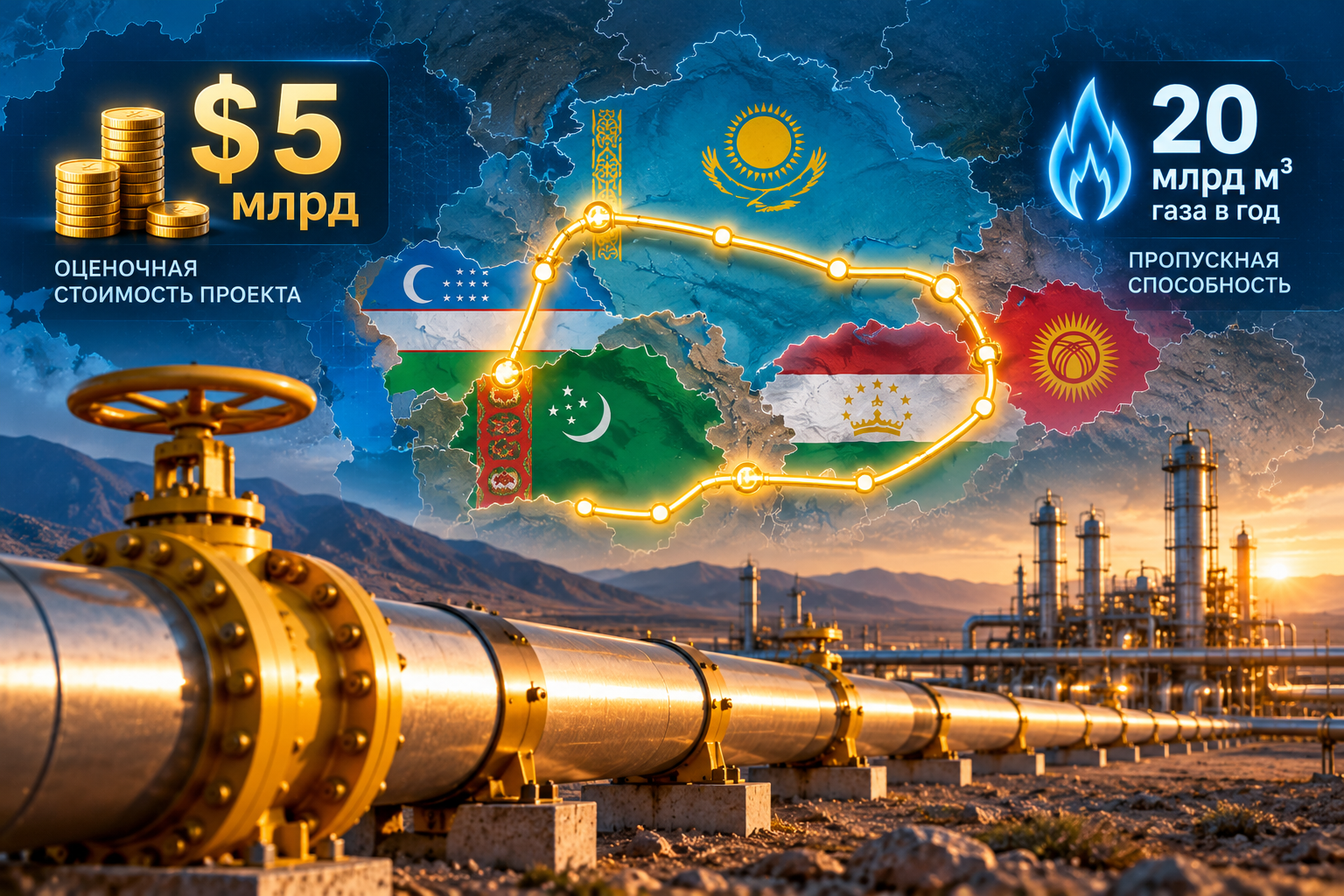
The project cost is estimated at about $5 billion, and the capacity at about 20 billion cubic meters of gas per year, Euronews reports. The idea was discussed at the second Central Asian Oil and Gas Forum in Tashkent; financing and intergovernmental agreements have not yet been approved.
The essence in brief
- The proposal is to link the gas systems of the five countries of the region into a single ring of more than 3 thousand km of pipelines.
- Cost is about $5 billion: $2 billion for new construction and $3 billion for modernization and digitalization.
- According to Ismailov's estimate, the network will be able to transport about 20 billion cubic meters of gas per year.
- The project is being promoted by the Geneva-based organization Global Gas Centre; Uzbekneftegaz has shown interest; no construction timeline has been announced.
What is proposed
New and modernized gas pipelines are to link the region's existing pipelines: about $2 billion is earmarked for new construction, and about $3 billion for modernization and digitalization. Ismailov, by his own account, estimates the network's capacity at about 20 billion cubic meters per year. These figures remain estimates by the project's supporters.
Among the possible advantages, discussion participants cite reliability of supply. Global Gas Centre Director Valerie Ducrot said the project "will increase the reliability of supply for all these countries." Assylbek Zhakiyaev of PetroCouncil Kazakhstan spoke about possible winter reverse supplies, that is, supplying gas in the opposite direction, to Uzbekistan, Kyrgyzstan and Tajikistan. Such a regime is still only being discussed.
Who is promoting the project
Ismailov first presented the idea at the first Central Asian Oil and Gas Forum in 2025 and advises Global Gas Centre, a non-profit organization from Geneva that is promoting the project. In May, Global Gas Centre signed a memorandum with the authorities of Karakalpakstan. Uzbekneftegaz showed interest after preliminary negotiations; possible investors from China and the Middle East are also being discussed.
Why the region's countries need this
Kazakhstan produces gas, but the main resource base is in the west, far from major population centers. Uzbekistan is a major producer and consumer, and demand there rises in winter. Gas production in January-August 2026 amounted to 24.2 billion cubic meters, which is 16.3% less than a year earlier, and the authorities reported five new fields discovered since the beginning of the year. Turkmenistan has significant reserves, and the ring could give it new regional buyers.
Kyrgyzstan depends on imported gas. Tajikistan generates electricity mainly at hydroelectric power plants but imports gas: in the first half of 2026 it received 126.4 million cubic meters from Uzbekistan.
What this means for Kazakhstan
For Kazakhstan the issue is twofold. Uzbekistan covers its gas deficit with imports from Russia and Turkmenistan, and the possible volume of Russian gas transit through Kazakhstan in 2025 was estimated at up to 7.3 billion cubic meters. Within the country, gas is also distributed unevenly: over ten years the gasification rate rose from 43% to 64%; the western regions are almost fully gasified, while the North Kazakhstan, Pavlodar and Abai regions have no gas.
Author's conclusion
The gas ring remains so far an initiative of its supporters rather than a decision by governments: the cost and capacity are their estimates, and there is no construction timeline. For the project to move into practical implementation, the consent of five countries and investors are needed, and Uzbekneftegaz's interest and the memorandum with Karakalpakstan are so far only first steps.
Comments ()