Colombia adopts first-ever law on nuclear energy
Colombia’s Congress unanimously passed the country’s first law on peaceful nuclear technology use.
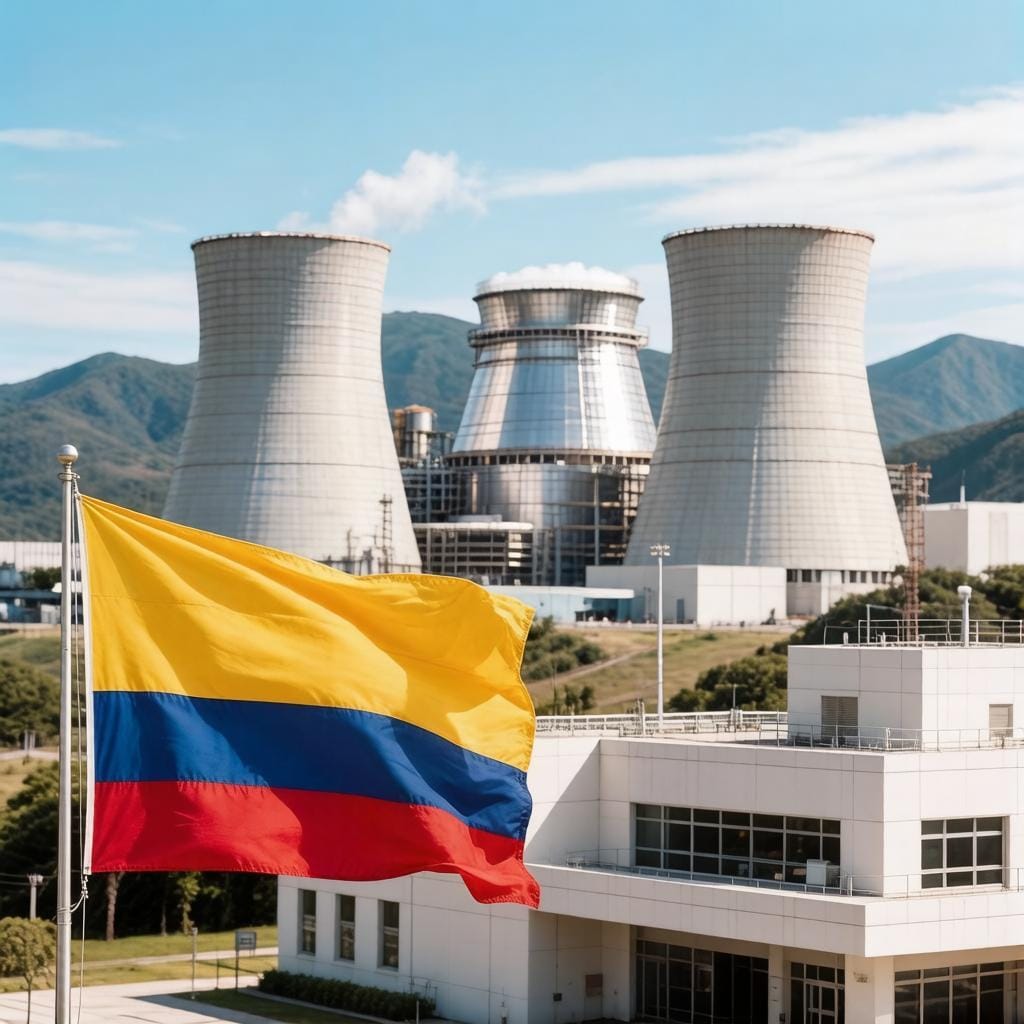
The document creates a legal framework for the development of nuclear medicine, science, and energy, establishes an independent regulator, and paves the way for the construction of nuclear power plants starting in 2035, writes the publication Atomic Energy 2.0. For Kazakhstan, which adopted its own nuclear law back in 2015 and approved NPP construction via a referendum in 2024, the Colombian precedent serves as a reminder that the nuclear renaissance is already encompassing Latin America.
The Gist in Brief
- Colombia's Congress passed a law on the peaceful use of nuclear technologies with unanimous support in all four parliamentary readings — the first such document in the country's history.
- The law establishes the National Agency for Nuclear Safety (ANSN) — the first independent body responsible for regulation, licensing, and inspections in the nuclear sphere.
- It opens the path to domestic production of radiopharmaceuticals — previously, Colombia was entirely dependent on their costly import. These drugs are used for diagnosing and treating oncological diseases.
- The law creates an institutional basis for assessing the feasibility of building an NPP. According to the National Energy Plan, Colombia is considering nuclear generation starting in 2035.
- Colombia's nuclear sector already creates about 45,000 jobs and contributes 0.25% of GDP (~$3.6 billion annually). According to expert estimates, these figures could double within five years.
Why Unanimity Matters More Than the Law Itself
Adopting nuclear legislation is a politically sensitive step in any country. Latin America has historically been wary of nuclear energy: the Treaty of Tlatelolco of 1967 made the region a nuclear-weapon-free zone, and this context long hindered even peaceful nuclear programs.
Unanimity in all four readings of the Colombian parliament is not merely a formal result. It is a political signal: the country is consolidating its acceptance of nuclear technologies as a tool for development, not as a threat.
Deputy María del Mar Pizarro, one of the bill's authors, put it directly: "Today we are passing a historic law. Four debates and four unanimous votes show that Colombia is moving towards sovereignty in radiopharmaceuticals and nuclear technologies for peaceful purposes. This law will allow us to strengthen our scientific potential, reduce external dependence, and place innovation at the service of life and national development."
Three Directions of the New Law
The document covers three fundamentally different areas, united by nuclear technologies.
First — medicine. Colombia gains a legal framework for producing its own radiopharmaceuticals, used in positron emission tomography and radiation therapy for oncological diseases. Dependence on imports of these drugs meant high prices and logistical risks — domestic production will reduce both factors.
Second — regulation. The creation of the ANSN — an independent nuclear regulator — is not a bureaucratic structure, but a prerequisite for any serious nuclear project: without a supervisory body recognized by the international community, it is impossible to receive international technical assistance or attract foreign technology suppliers.
Third — energy. The institutional basis for assessing NPP construction opens the next planning phase: feasibility studies, site selection, negotiations with potential partners. The 2035 horizon is realistic provided that regulatory and project work begins immediately.
The Kazakhstan Context
Kazakhstan went through this path ten years earlier: the law on atomic energy was adopted in 2015, and in October 2024, citizens voted in a referendum to build an NPP. Negotiations on technology and the contractor are ongoing.
The Colombian precedent is interesting from another angle: a Latin American country without its own uranium resources or traditions of nuclear energy is betting on nuclear technologies right now — at a time of a global nuclear renaissance. This is yet another indicator that Kazakhstan, with its uranium reserves and referendum in favor of an NPP, is moving in line with the global trend, not against it.
Author's Conclusion
Colombia adopted a nuclear law unanimously — and this speaks louder than any declarations. Nuclear technologies are ceasing to be a politically toxic topic, even in regions with historically anti-nuclear sentiments. The global nuclear renaissance is becoming a reality not on paper, but in parliamentary votes — from Canada to Colombia, from Estonia to Kazakhstan.

Comments ()