Share of nuclear power in global generation falls to lowest level since early 1980s
Global nuclear power output hit a record 2,812 TWh in 2025, but nuclear's share of world electricity generation fell to 8.9%.
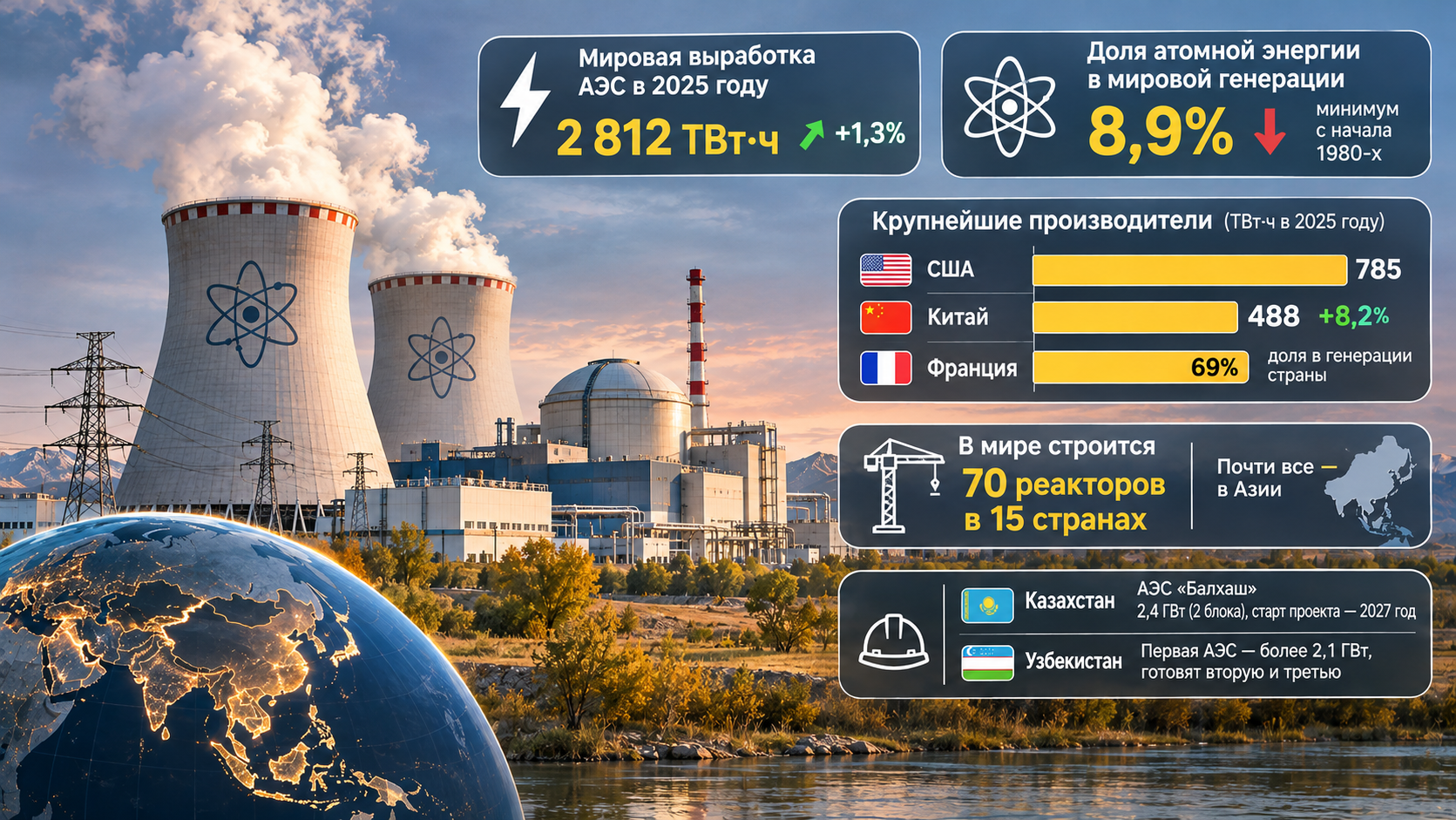
This is the lowest figure since the early 1980s. This is stated in the report by the energy analytics center Ember Global Electricity Review 2026.
The essence in brief
- Global nuclear power generation grew by 1.3% (by 35 TWh) to a record 2,812 TWh, which is less than the growth in 2023-2024.
- The share of nuclear energy in global generation was 8.9%, the minimum since the early 1980s.
- The largest producer is the USA (785 TWh), followed by China (488 TWh) with an increase of 37 TWh, or 8.2%.
- In France, nuclear plants provided 69% of electricity, the maximum among countries.
What Ember data showed
Global nuclear power generation in 2025 grew by 1.3% and reached 2,812 TWh. The average annual growth in 2015-2024 was 1.0%, and the increase in 2025 turned out to be lower than in 2023 and 2024. At the same time, total electricity generation in the world grew faster, so the share of nuclear power in the global balance decreased to 8.9%.
Who leads and who grows
The USA remains the largest producer: 785 TWh in 2025 versus 782 TWh a year earlier, growth of 0.4%. China moved into second place with 488 TWh and showed the most noticeable increase among countries: plus 37 TWh, or 8.2%. In France, generation grew by 11.6 TWh, and the share of nuclear energy in the country's electricity reached 69%. Russia added 2.9 TWh (growth of 1.4%), its nuclear plants provide 18% of electricity. In Japan, generation grew by 9.2 TWh, or 10.8%, and nuclear energy provided 9.1% of generation.
Where generation is declining
In Taiwan, nuclear generation fell by 8.9 TWh, the sixth consecutive year of decline. Belgium lost 7 TWh due to the closure of reactors.
How many reactors are being built now
70 reactors are under construction in 15 countries worldwide, almost all of them in Asia. The reactors being built in China, Russia and South Korea are mostly large.
What is happening with nuclear energy in Central Asia
In Central Asia, nuclear energy is not yet being generated: there are no operating nuclear power plants in the region. But two countries are already building or preparing stations.
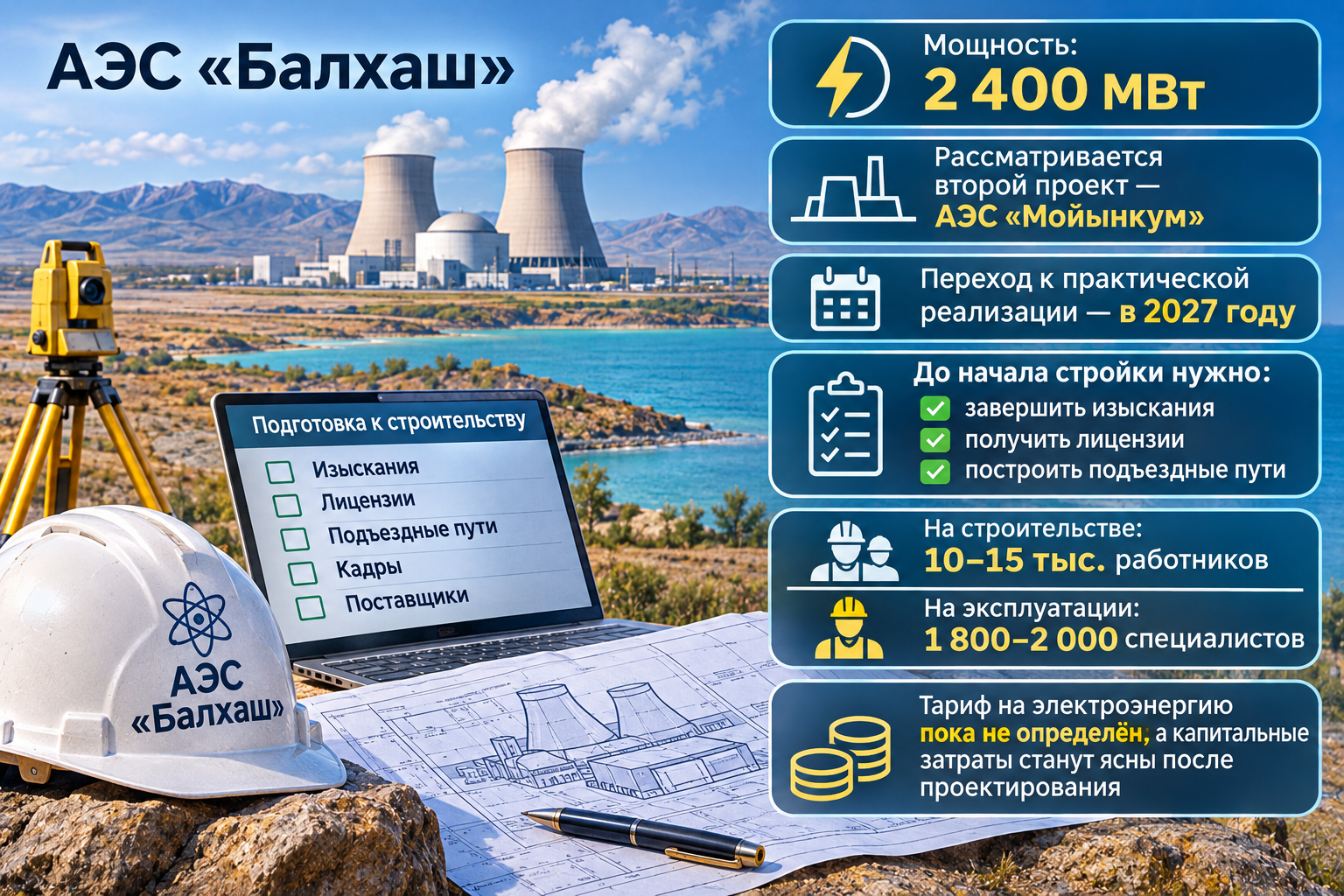
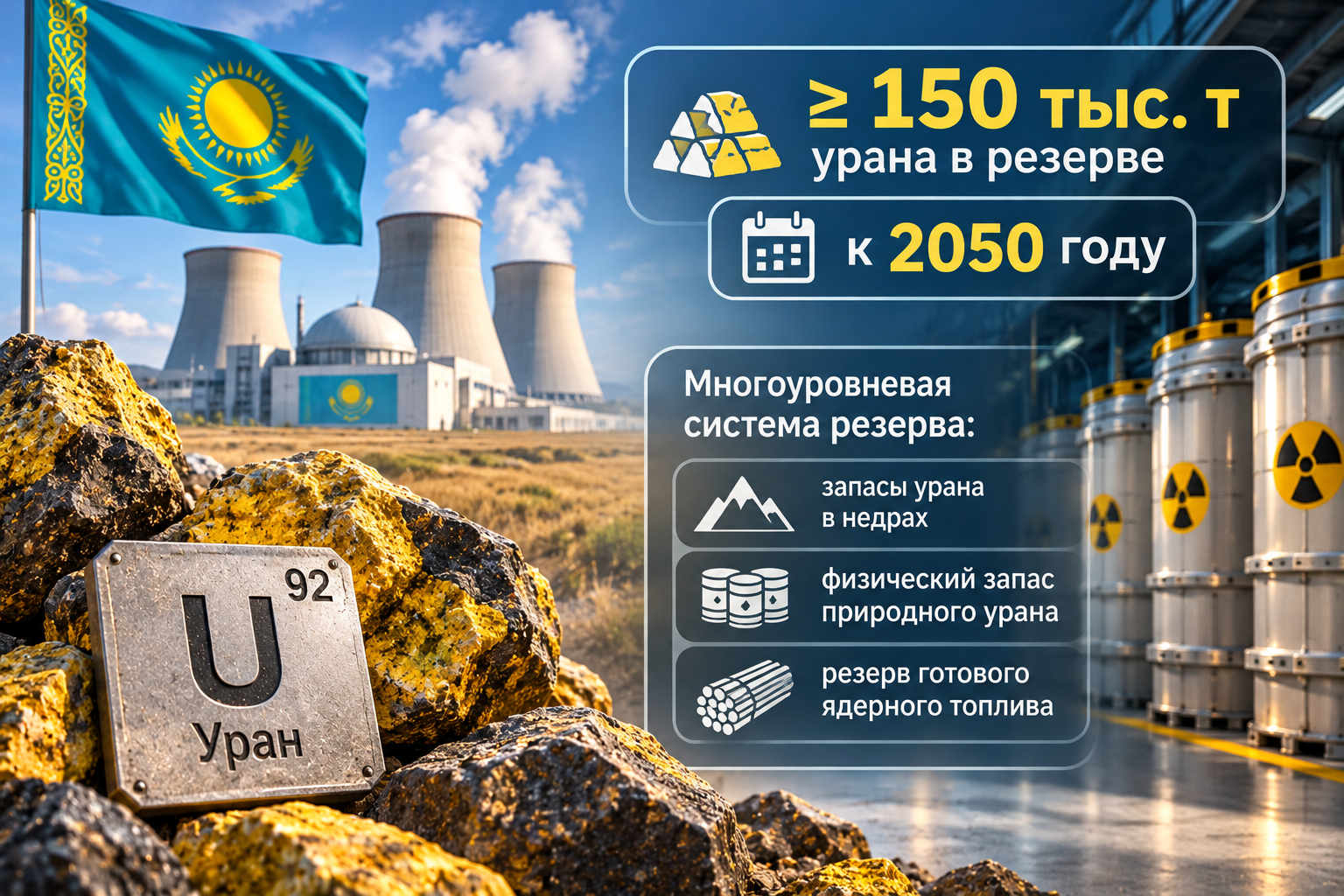
The first Balhash NPP in Kazakhstan is being designed and built by Atomstroyexport: the contract was signed on September 3 at the Eastern Economic Forum in Vladivostok. The IAEA mission in Astana is reviewing the country's report on the readiness of nuclear infrastructure: the station consisting of two VVER-1200 units with a capacity of 2.4 GW is estimated at $16.4 billion, 85% of this amount will be covered by a Russian export loan. Before construction begins, surveys must be completed, licenses obtained and access roads built: according to the head of KAES Yernat Berdigulov, the project should move to practical implementation in 2027. Construction will require 10-15 thousand people, and operation of the station will require 1,800-2,000 specialists. By 2050, for future NPPs the country plans to create a uranium reserve of at least 150 thousand tons. In Uzbekistan, the first station is being built in the Jizzakh region with Rosatom, with a total capacity exceeding 2.1 GW, and Shavkat Mirziyoyev in August announced the imminent preparation of a second NPP, and in October stated that the country is considering building a second and third.
Author's conclusion
The record generation and the falling share in one report are explained simply: nuclear energy is growing at 1.3% per year, while total global generation is growing faster. The main increase comes from China, while in Europe and Taiwan generation is shrinking due to the closure of reactors, so the record is held by a few countries. Kazakhstan and Uzbekistan are entering this market when the share of nuclear power in the world is already at a minimum, and in the first global reports with their stations, the figures will appear only after the units are launched. For both countries, this is a long-term bet: construction will not keep pace with global dynamics, but the station itself covers the need for stable baseload generation, which is why it is being built.
Comments ()