Digital veterinarian detects diseases in cows 24/7
AI technology developed by Kazakhstan-born Marat Dusenov could transform livestock health monitoring.
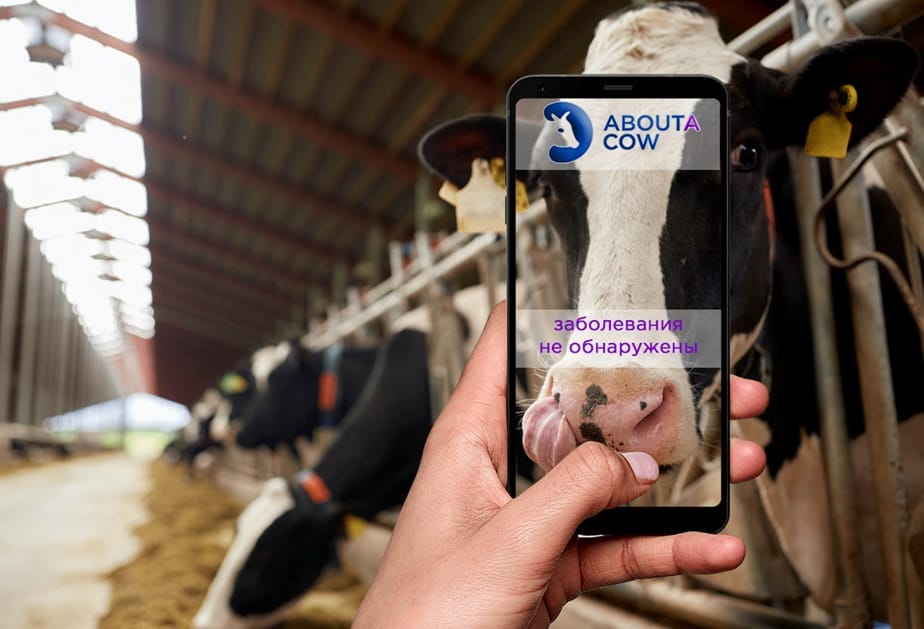
An artificial intelligence technology developed by Kazakhstan-born Marat Dusenov could change the approach to monitoring the health of farm animals. The startup VETAI, implemented on the basis of a supercomputer at Tomsk State University, has created a computer vision system that analyzes video streams from farms 24/7 and detects signs of disease in cattle before a human can notice them. The project became one of the winners of the international "Gravity" award.
the gist in short
- The VETAI startup has developed AI for automatic health monitoring of cows via video.
- The system detects signs of lameness, mastitis, stress, and other diseases at early stages.
- It uses ordinary cameras without sensors or chips on the animals.
- The technology could reduce the cost of digitalizing livestock farms in Kazakhstan.
How the digital veterinarian works
The author of the project is a master's student at Tomsk State University, Marat Dusaev. His startup VETAI is developing an artificial intelligence system that continuously analyzes animal behavior on farms using surveillance cameras.
The algorithms track motor activity, gait characteristics, body position, and other behavioral parameters. Based on this data, the system can detect signs of lameness, mastitis, bedsores, stress, and reduced activity, which may indicate health problems in the animal.
Neural networks instead of sensors
One of the key features of the development is the rejection of special sensors and wearable devices. Unlike many existing solutions, VETAI uses only video surveillance, which helps reduce the cost of implementing the technology.
Modern neural network models YOLOv8, HRNet, and ConvNext are used to train the system, while processing large data arrays is carried out using the computing power of the Tomsk State University supercomputer. This improves the accuracy of recognizing behavioral deviations and speeds up information analysis.
What this means for livestock farming in Kazakhstan
For Kazakhstan, the technology is of practical interest amid growing investments in dairy and meat farming. Large farms face the need to monitor the condition of hundreds and thousands of animals simultaneously, while a shortage of qualified specialists remains one of the systemic problems of the industry.
The use of computer vision systems allows part of the veterinary monitoring to be transferred to automatic mode. Early detection of diseases helps reduce treatment costs, lower productivity losses, and prevent the spread of diseases within the herd.
Technology trials
The next stage of the project's development will be practical testing of the solution. In June, the system is scheduled to undergo trials at the "Tatarstan" agricultural firm with the support of the Ministry of Agriculture of the Republic of Tatarstan. The results obtained will allow assessing the technology's effectiveness in real production conditions and determining the prospects for its scaling.
Author's conclusion
The development by Marat Dusaev shows that the digitalization of livestock farming is gradually moving from experiments to applied solutions. If the technology proves its effectiveness during trials, it could become a sought-after tool for livestock complexes in Kazakhstan, where increasing productivity and reducing losses directly affect the competitiveness of the industry.



Comments ()