Drones for dispersing beneficial insects — a Kazakh invention or a regional trend
The Kazakh Ministry of Agriculture unveiled BioDrop — drones that disperse capsules with beneficial insects across fields to combat pests.
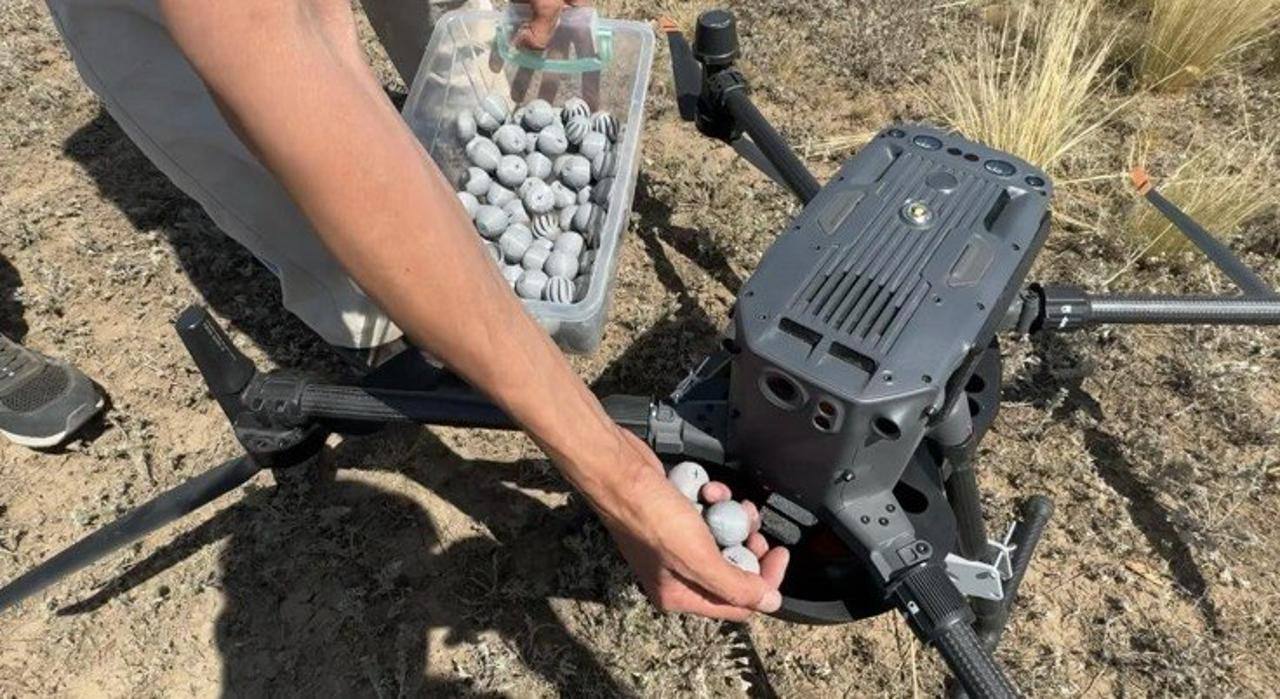
The press release reads like an independent breakthrough of Kazakh science. But the claimed uniqueness of the development raises questions if one looks at what was happening in neighboring countries literally in the same weeks.
The gist in brief
- The Kazakh Research Institute of Plant Protection and Quarantine named after Zh. Zhiembayev has developed the BioDrop technology — biodegradable capsules with entomophages (Trichogramma and Habrobracon), a dosing device, and a UAV for distributing them across the field.
- According to field trial data, on day 14 the biological efficacy of BioDrop was 81–83% versus 70–73% with manual release, while the work itself takes 10–15 minutes instead of 1–1.5 hours.
- The technology is already being used on four farms in Kazakhstan.
- Just a few weeks earlier, Kazan's KNRTU-KAI patented a nearly identical technology — a UAV-mounted dispenser for releasing the same entomophages, including Trichogramma, with a claimed yield increase of 20% or more.
The technology is not new — it has simply reached the fields
Releasing entomophages with drones is not the invention of a specific institute but part of an industry trend that agricultural drone market experts describe as a transition "from trials to commercial application." The very idea of replacing manual release of biological plant protection agents with automated aerial distribution is being discussed and tested in different countries in parallel — not because someone copied it from someone else, but because the combination of already existing technologies (cheap copter drones, dosing mechanisms, biodegradable capsules) has simultaneously become accessible to multiple research groups.
A nearly synchronous patent in Russia
The most telling detail is timing. The Kazakh press release about the "innovative" BioDrop technology was published in early September 2026. And back in July–August of the same year, Kazan's KNRTU-KAI had already patented a method of releasing entomophages using a drone in strictly defined zones — with the same hopper-dispenser principle, the same insect species (Trichogramma), and even a claimed economic effect (yield increase of 20% or more). Neither the Kazakh nor the Tatarstan press release mentions the other — both are presented as independent breakthroughs, although technically they describe the same engineering principle, implemented almost simultaneously in two countries.
There are figures, but little context
The press release cites specific percentages — 81–83% versus 70–73%, an increase of 10–11 percentage points. That is already more than just general words. But behind these figures there is neither a sample size, nor the number of experimental replications, nor an indication of the specific crop and pest on which the trials were conducted, nor data on the statistical significance of the difference. "Field trials have shown" is a formulation that could mean either a serious multi-year experiment or a single demonstration plot. Without these details, 10–11 percentage points remain a figure that can be neither verified nor disputed.
The scale of adoption remains unclear
The phrase "already being used on four farms" sounds like confirmation of practical applicability, but it does not convey the actual scale — whether these are four demonstration plots of a few hectares each or full-scale commercial application over significant areas. No economic calculation is provided either: how much one drone flight with capsules costs compared to manual labor, whether the equipment pays off at the typical size of a Kazakh farm, and whether the UAV system is affordable for a medium-sized farm rather than just a large agroholding.
Author's conclusion
The technology of automated entomophage release probably works and indeed can accelerate biological crop protection — the principle is beyond doubt, and some of the cited figures look plausible. The question is not whether BioDrop works, but rather the wording of the press release: a regional adaptation of an already existing idea, developing almost simultaneously in several CIS countries, is presented as an independent Kazakh achievement — without mentioning that similar developments are being patented and tested by neighbors at the same time. For the reader, this is the difference between "our scientists found an application for a common technological trend in their own country" and "our scientists invented something unique" — and the press release clearly chooses the second, more impressive but less accurate formulation. A similar story of tailoring wording to fit attractive statistics has already happened with the NAOEC reporting on "gross seed harvest" — a term that does not exist in agronomy — as well as with a string of school "scientific breakthroughs" that upon closer inspection turned out to be ChatGPT prompts and AliExpress parts. It seems the gap between headline and content is not a rare exception but a systemic feature of how Kazakh science and agriculture are presented in the public sphere.


Comments ()