Electricity must provide 35% of global energy consumption by 2035: this goal was discussed at the UN summit
Turkey, hosting UN climate talks COP31, has proposed raising the share of electricity to 35% by 2035.
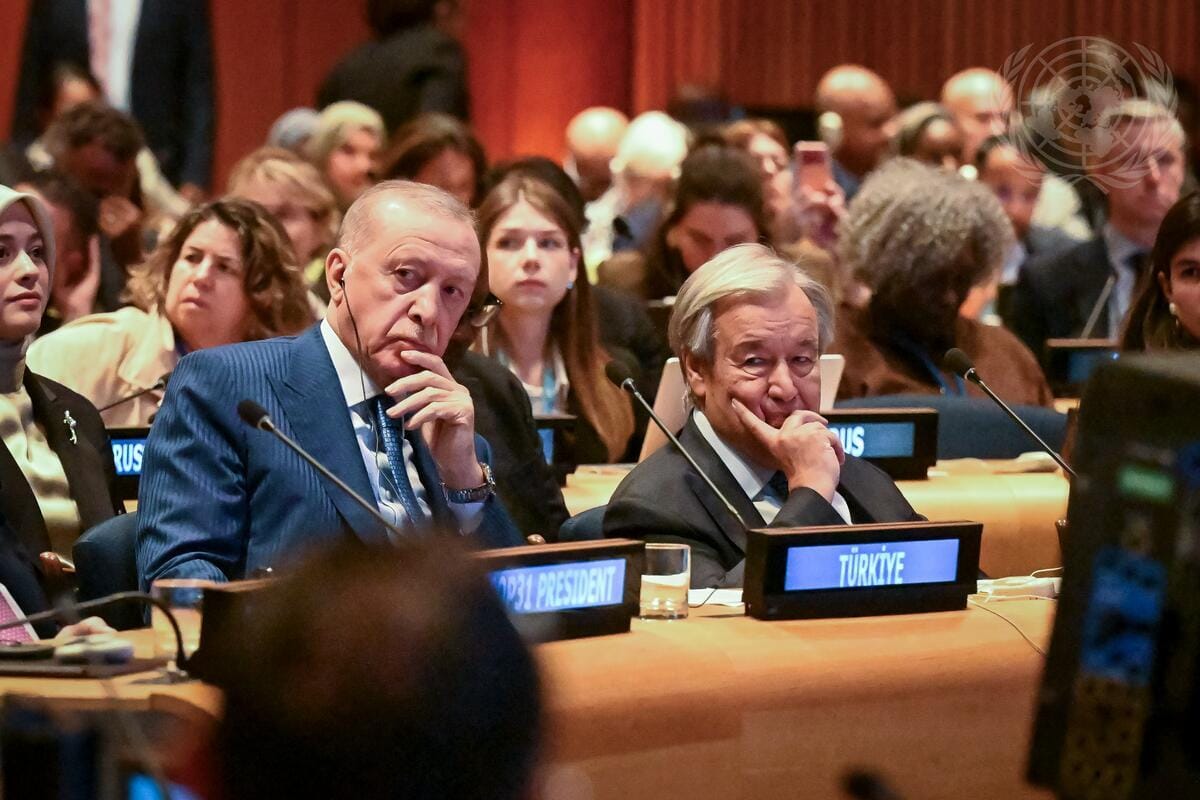
Today, electricity provides only 23% of the energy consumed in the world. The rest is mainly fuel that is burned directly: gasoline in engines, gas in boilers, coal in factories, Climate Home News reports.
The gist in brief
- At the UN summit on September 23, António Guterres called on all countries to present convincing national roadmaps for phasing out the production and consumption of coal, oil, and gas with clear timelines; according to him, the "Group of Twenty," which accounts for 80% of global emissions, should lead.
- Turkey, which is hosting the UN climate conference COP31 in Antalya in November, put forward a voluntary goal: to increase the share of electricity in energy consumption from 23% to 35% by 2035; the head of the International Energy Agency (IEA), Fatih Birol, said that such a goal would send a strong signal to investors.
- Ursula von der Leyen stated that by accelerating electrification, Europe could reduce its bill for importing fossil fuels by €260 billion per year.
- The UN launched a support mechanism for six countries with critical minerals - Guinea, Indonesia, Madagascar, Nigeria, Zambia, and Zimbabwe - so that added value remains in the country of extraction; Kazakhstan is not on the list.
- After the August floods, Nepal estimates losses of up to $5 billion - about 15% of GDP.
A call without obligations
Guterres recalled that against the backdrop of a "super El Niño" ( we examined this phenomenon) and rising fossil fuel prices due to the conflict in the Middle East, dependence on oil and gas only reinforces vulnerability.
"We are the first generation with the tools to end the fossil fuel era," he said.
But the call has no enforcement mechanism. An attempt to agree on a global roadmap at COP30 in Belém failed, and Brazil will instead prepare a voluntary report for COP31. Governments already agreed at COP28 in 2023 to gradually move away from fossil fuels in energy systems, but they cannot agree on how to do it: according to Climate Home News, large producer countries are hindering this. A separate example of a national roadmap is Germany's roadmap to 2045.
35% by 2035: the goal and the arguments
Turkish President Recep Tayyip Erdoğan called for making COP31 a "conference of implementation," but clarified: expecting all countries to move at the same pace is unrealistic, and ambitions need to be brought closer to capabilities. The goal is voluntary and has been named one of the key goals of COP31. Simply put, the point is for more cars, heating, and production to run on electricity rather than directly burned fuel.
Arguments in its favor came from two sides. Birol said that the closure of the Strait of Hormuz amid tensions between the US and Iran forced countries to reconsider energy sources and partners, and in many cases, if not all, they choose clean energy. According to him, for the first time in years, the goals of security, price, and environmental friendliness have come close together. Von der Leyen added that the closure of the strait showed Europe the cost of dependence on fossil fuel imports, and that to double the share of electricity by 2040, the bloc needs storage, grid flexibility, and accelerated connection of new generation to them. According to her, Europe already gets 70% of its electricity from clean sources.
Money: adaptation funding is being requested in advance
Nepal's Foreign Minister Shishir Khanal said that the August floods were "not just a local tragedy, but a warning to the world about what may come next."
According to Climate Home News, about 1,500 people died and about 6,000 more are missing; preliminary losses are estimated at $5 billion, roughly 15% of GDP or a third of the annual budget. Nepal is asking for the promise to double adaptation financing to be fulfilled and for the loss and damage fund, which currently holds only a few hundred million dollars, to be filled.
Pacific island states say the same thing and ask for simplified access to money. Australia contributed $100 million to the Pacific Resilience Facility, whose goal is $1.5 billion; so far $180 million has been raised against an interim target of $500 million by COP31.
Minerals: not only extraction, but also added value
A separate announcement concerns countries whose resource base is needed for the energy transition. Six states will receive special assistance to turn mineral wealth into industrial development, jobs, and income, with added value remaining in place. Zambia's foreign minister said the country wants not just to produce more, but to create more value at home. The head of the Natural Resource Governance Institute, Suneeta Kaimal, noted that the mechanism will work if it is defined by the countries themselves: then they can move "from rule takers to rule makers."
Why this matters for Kazakhstan
Kazakhstan is not among the six countries, but the logic of the mechanism coincides with what the country itself says about critical minerals: the goal is not to export raw materials, but primary processing and localization. The test of these words remains practice: at Boguty, for example, concentrate is obtained from ore, and the next link - APT production - is still only being designed.
The Strait of Hormuz works in two directions for Kazakhstan. On the one hand, supply instability, according to Bloomberg, strengthened Kazakhstan's negotiating position in talks on extending the Tengiz contract. On the other hand, the same factor, according to Birol, is pushing buyers toward electrification. It turns out that the same crisis works for Kazakhstan in two different directions.
For comparison with Guterres's call: of the 26.3 GW of new capacity that Kazakhstan plans to commission by 2035, thermal, predominantly coal generation accounts for 10.5 GW, while renewable sources account for 8.4 GW.
Author's conclusion
The summit produced more words and goals than obligations: the 35% target is voluntary, roadmaps remain a request, and money for adaptation is still noticeably less than losses, as Nepal's example shows: the loss and damage fund has a few hundred million dollars, while the losses of one country are estimated at $5 billion. The most concrete outcome is the support mechanism for countries with critical minerals: for the first time, it turns the long-standing idea that resources should provide added value within the country into a program with named participants. For Kazakhstan, this is more of a benchmark than a guide to action, but it is precisely by this that one should measure whether anything besides extraction remains in the country.
Comments ()