From virgin land to artificial intelligence: how Kazakhstan's agriculture is changing
Over seven decades, Kazakhstan’s agriculture evolved from massive virgin land development to AI, digital platforms, and autonomous machinery.

If in the middle of the last century the main driver of growth was new acreage, today data, precision agriculture and intelligent management systems are becoming increasingly important. This shift reflects not only the development of technology but also a change in the very philosophy of agricultural production. El.kz examines the path from virgin lands to AI in the country's agriculture.
In a Nutshell
· The development of virgin lands turned Kazakhstan into one of the largest grain-producing regions of the USSR.
· After gaining independence, the agricultural sector underwent a massive transformation.
· Today, the industry is betting on digitalization, precision agriculture, drones, and artificial intelligence.
· New technologies make it possible to increase efficiency without expanding acreage.
· The next stage of development is the transition to smart agriculture.
From Developing New Lands to Increasing Efficiency
The campaign to develop virgin lands, launched in 1954, became one of the largest agricultural projects of the 20th century. New state farms, grain elevators, roads, and settlements appeared in Kazakhstan, and the republic turned into one of the main grain producers in the Soviet Union. However, the extensive development model also had a downside: over time, problems of soil erosion, dependence on weather conditions, and declining soil fertility emerged.
After gaining independence, the agricultural sector faced different tasks — increasing productivity, modernizing equipment, and introducing modern technologies.
Why the Focus is on Artificial Intelligence Today
While expanding acreage was once the main way to increase yields, the potential for extensive growth is now nearly exhausted.
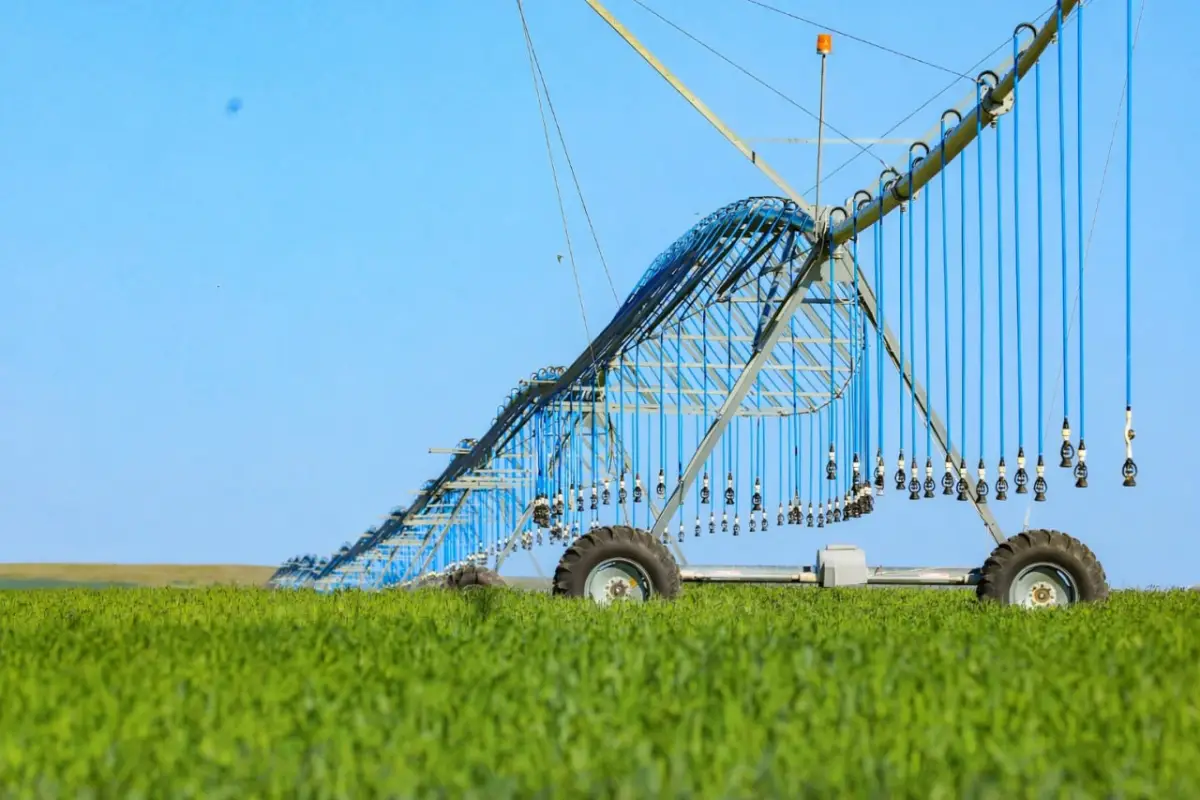
Modern digital technologies make it possible to obtain more output from each hectare through precise fertilizer application, automated irrigation, satellite crop monitoring, the use of drones, and artificial intelligence systems that analyze plant health and predict yields.
In effect, agriculture is gradually turning into an industry where the key resource is not only land and machinery but also data.
Kazakhstan is Already Taking the First Steps
The transition to digital agriculture is already becoming part of state policy and scientific projects.
Previously, Hunn.kz reported on the creation of a demonstration park in Atyrau, the AIKO–AOGU Zero-Carbon Smart Agriculture Demonstration Park, which plans to combine solar energy, artificial intelligence, digital resource management, water-saving technologies, and automated crop cultivation systems. This project shows that smart technologies are gradually moving from the experimental stage to practical application.
Furthermore, the editorial team has previously written about digital solutions in livestock farming, including artificial intelligence systems for the early detection of diseases in cattle. All of this indicates that digitalization is covering virtually all areas of the agro-industrial complex.
What This Means for Kazakhstan
The history of the country's agriculture shows that each new era of industry development was associated with the introduction of new approaches. If in the middle of the last century the main task was to develop new lands, today the key factor is increasing the efficiency of using existing resources.
In the context of climate change, water scarcity, and rising production costs, it is digital technologies that make it possible to increase yields, reduce costs, and use land, water, and fertilizers more rationally.
Author's Conclusion
The path from virgin lands to artificial intelligence is not just a history of technological development. It reflects a change in the very approach to agriculture. If success was once determined by the number of hectares plowed, now it is increasingly determined by the quality of data, the precision of decisions, and the ability to effectively manage every field and every farm. It is this transition that will likely become the main factor in the competitiveness of Kazakhstan's agro-industrial complex in the coming decades.

Comments ()