Greenhouses around Tashkent asked to stop using solid fuel by December 1
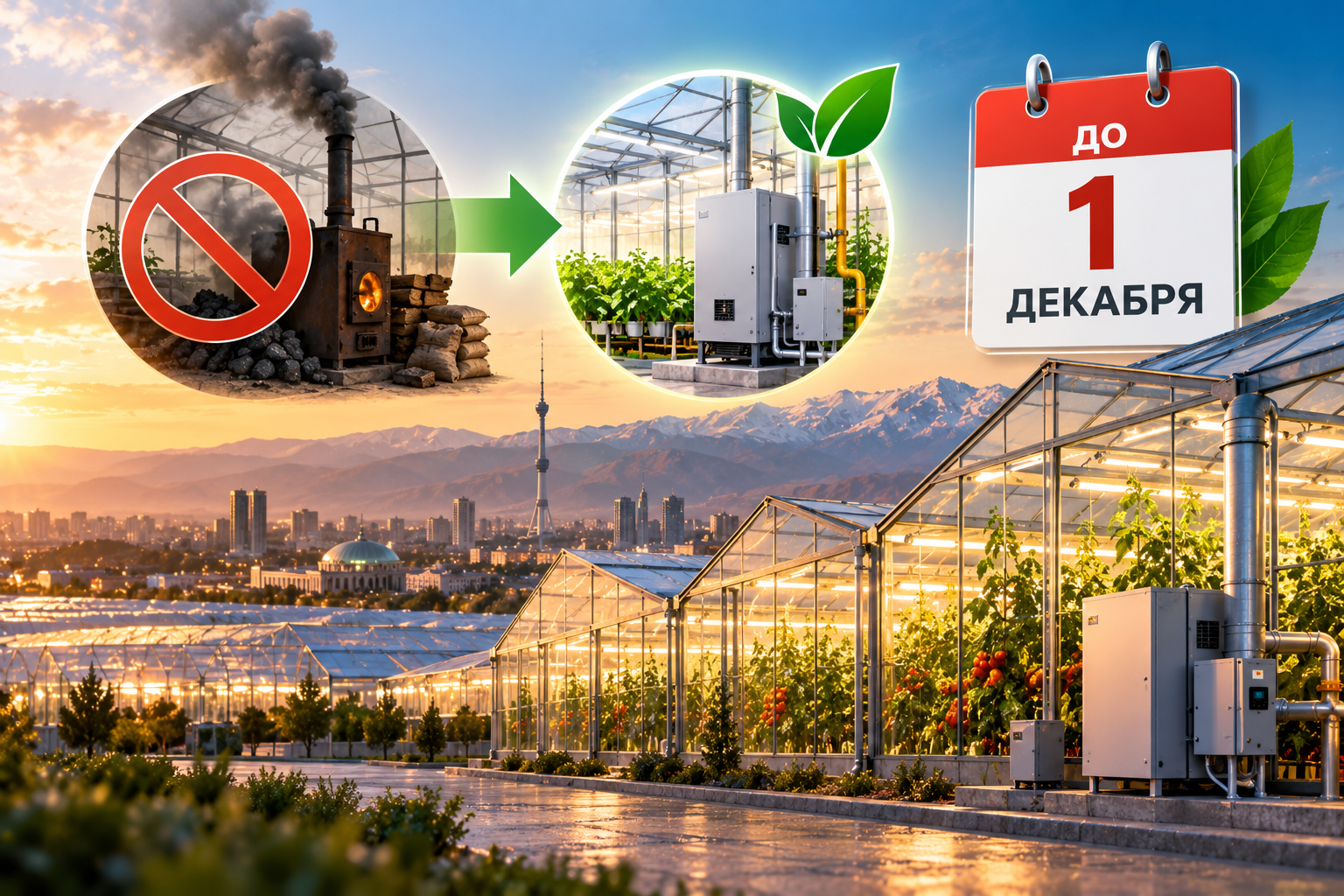
Tashkent and five nearby districts may get a special environmental regime for greenhouses: farms using solid fuel must switch to gas, electricity or other approved sources by December 1.
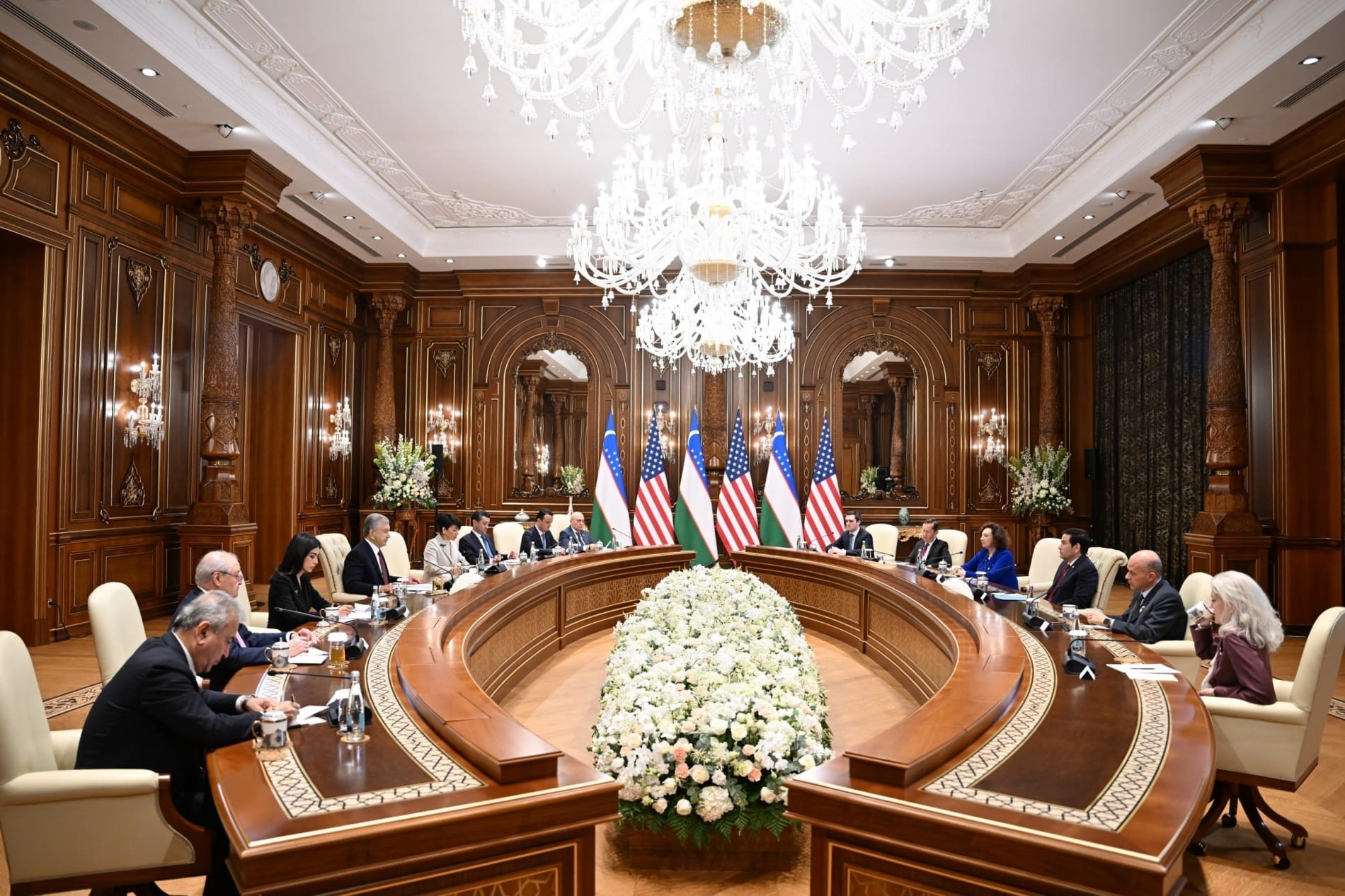
The measures were presented to the President of Uzbekistan Shavkat Mirziyoyev. Some of the greenhouses are proposed to be moved out of the capital region to the "Surkhon-Agro" free economic zone, the press service of the head of state reports .
The gist in brief
- For greenhouses in Tashkent and five districts, a special environmental regime is proposed, with a transition away from solid fuel by December 1.
- Continuous environmental monitoring runs from October 15 to March 15, with data transmitted online, and violators may have their operations halted.
- For farms, subsidies of up to 50 million soums per hectare and preferential loans of up to 3 billion soums for seven years are proposed.
- In the "Surkhon-Agro" zone, 940 ha have been allocated, and in 2027 they aim to attract $100 million in investment.
What is proposed
The context is as follows: last year a special commission conducted an inventory of greenhouses in Tashkent and adjacent territories and helped some farms switch to environmentally clean energy sources. But individual farms still use coal. In autumn and winter, due to weakened wind and temperature inversion, that is, when cold air near the ground prevents smoke from dispersing, greenhouse emissions can accumulate in the capital and its surroundings.
Natural gas, electricity, geothermal and solar energy, as well as secondary heat from thermal power plants, will be permitted for heating. Burning tires, plastic, bitumen, fuel oil, waste oils, and waste is prohibited. Solid fuel may be retained only for farms that meet strict requirements:
- enclosed fuel storage;
- automated boilers;
- efficient dust and gas cleaning equipment and a backup generator;
- safe collection of ash and slag;
- a chimney of standard height.
How they will monitor
From October 15 to March 15, continuous environmental monitoring will be carried out at greenhouses: the operation of dust and gas cleaning equipment, emission volumes, and types of fuel will be checked. Data from measuring instruments and video surveillance will be fed in real time to the information system of the National Committee on Ecology. Drones and members of the public will be involved in inspections. In the absence of cleaning equipment, exceedance of emission standards, or use of prohibited fuel, enforcement measures are applied, and if necessary the greenhouse's operation is halted.
What support is proposed
For farms, subsidies of up to 50 million soums per hectare and preferential loans of up to 3 billion soums for seven years have been proposed for the installation of environmentally friendly equipment. Costs for monitoring equipment will also be reduced.
For household greenhouses, it is proposed to reduce land and property taxes by 50% until 2030, exempt them from turnover tax, and compensate half of the electricity costs for energy-saving systems. Grants of up to 100 million soums for "green" energy sources and equipment are under consideration, as well as preferential loans of up to 300 million soums for new greenhouses and up to 150 million soums for modernization. In 50 mahallas specializing in greenhouse farming, they plan to create eco-safe greenhouses for families in need.
Separately, it was proposed to organize a specialized operator for the collection, treatment, and reuse of contaminated drainage and filtration water from greenhouses and to create infrastructure for this in the Akhangaran district.
Greenhouses in the regions
For the "Surkhon-Agro" free economic zone in the Sherabad district, 940 ha of land have been allocated and a master plan has been developed. In the zone, it is proposed to build greenhouses and agro-logistics facilities, including relocating there the greenhouses that are on the books of banks. For investors, zero land rent for five years and three-year benefits on payments for sewerage and groundwater have been established. Plots are proposed to be put up for auction with a starting price of 10% of the standard value, and for projects over $10 million and entrepreneurs who relocate greenhouses from Tashkent and the Tashkent region, 1%.
Participants in the zone are also proposed to be exempted for five years from land and property taxes and profit tax, and imported greenhouse equipment from customs duties. On 400 ha, they plan to build greenhouses and agro-logistics to sell to investors as ready-made projects. 220 billion soums need to be directed to infrastructure, 200 billion soums to project financing, and in 2027 they aim to attract $100 million in investment to the zone.
Responsible officials were instructed to prepare a digital map of greenhouses with sources and volumes of energy resource supplies and to develop measures to expand sales of greenhouse products in domestic and foreign markets.
What about the air in Kazakhstan
According to the IQAir ranking for 2025, Uzbekistan ranked 10th among the most polluted countries by fine particulate matter PM2.5 (38.1 µg/m³), and Kazakhstan 29th (23.4 µg/m³): four Central Asian countries entered the global top 30. Among Kazakhstani cities, Karaganda stands out in the ranking with 72.6 µg/m³. Emissions from stationary sources, that is, plants and thermal power plants, in 2025 amounted to 111.9 kg per resident, while ash emissions from thermal power plants increased by 34.6%.
In February, the Ministry of Ecology instructed akimats to develop atmospheric air protection rules for 2026-2028: gasification of the private sector with subsidies, a ban on solid fuel in public catering establishments and small boiler houses, and conversion of public transport and taxis to gas and electric traction. For Astana and Almaty, a roadmap for 2024-2026 is in effect.
Author's conclusion
The proposals address two tasks with different timelines: to clean the capital's air by winter and to move greenhouses out of the city. The first is tied to December 1, the second to 2027 and $100 million in investment in "Surkhon-Agro".
Comments ()