Is $10 billion and 35% enough for the Tengiz expansion? An economic observer's opinion
Economic columnist Dulat Tasymov argues that a one-off $10bn and raising KazMunayGas's stake from 20% to 35% is too little for extending the Tengiz contract, which expires in 2033.
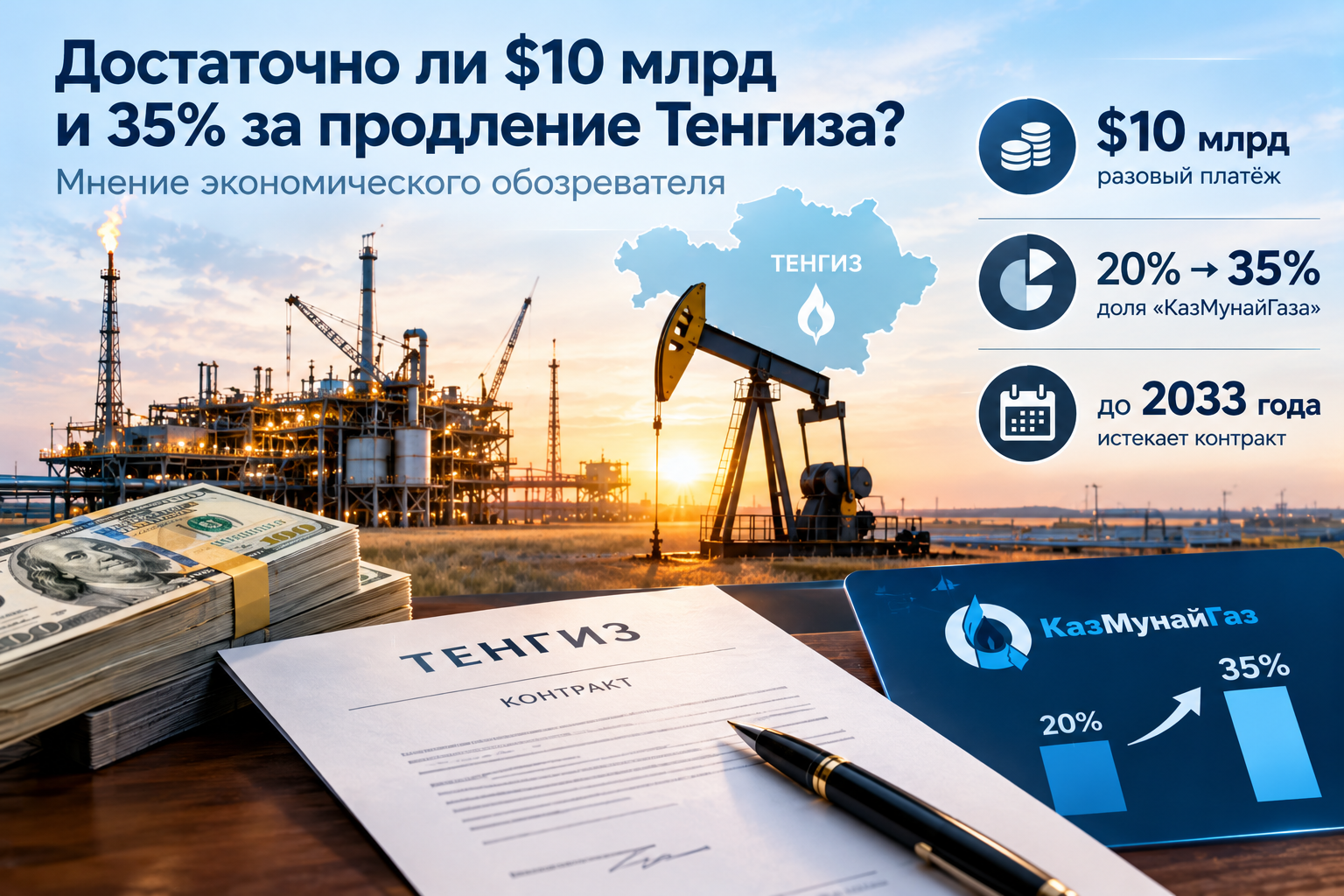
The journalist estimates the project's total cash flow at $8-10 billion per year, and that of the American partners, Chevron and ExxonMobil, at $6-7.5 billion per year, writes Exclusive.kz. Tasymov proposes reconsidering the very concept of the deal rather than bargaining over amounts.
The essence in brief
- Chevron, according to the author's estimate, receives about $4 billion in free cash flow in 2025 and about $5 billion in 2026 at an oil price of $60 per barrel.
- Increasing KazMunayGas's share from 20% to 35% through a buyout at market price would yield almost nothing, while a gratuitous transfer of 15% would bring $1.2-1.5 billion per year.
- About 18 million tonnes out of roughly 90 million tonnes of produced oil goes to the domestic market.
- Tasymov proposes mandating supplies to the domestic market of about 25% of production, that is, 10 million tonnes.
Why $10 billion looks modest
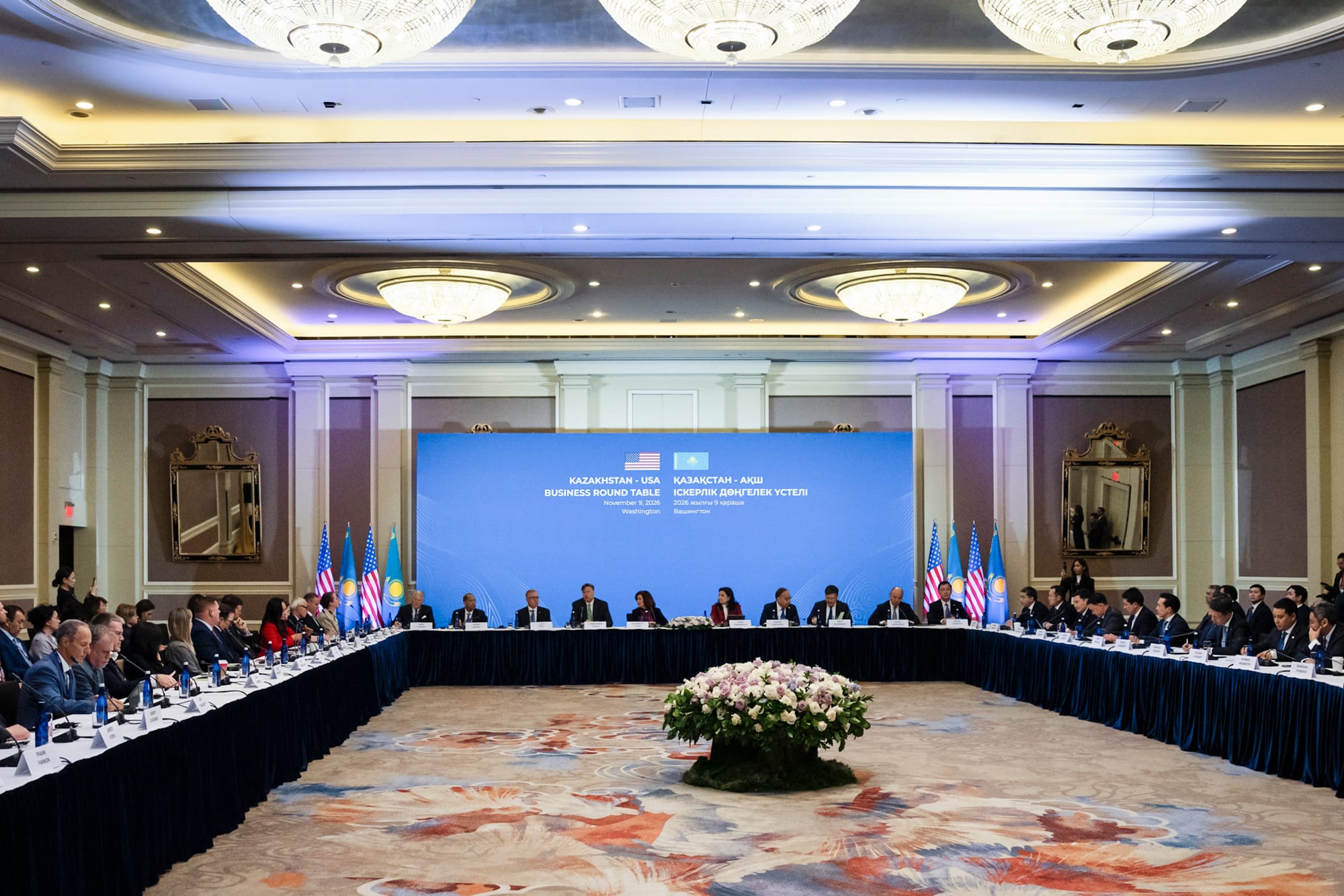
According to Bloomberg, Kazakhstan is ready to extend the contract but wants to receive about $10 billion and increase the state share from 20% to 35%. The shareholders of Tengizchevroil are Chevron (50%), ExxonMobil (25%), KazMunayGas (20%) and Lukoil (5%).
Tasymov recalls that the expansion project cost $49 billion. Chevron, by his estimate, receives about $4 billion in free cash flow in 2025 and about $5 billion in 2026 at a price of $60 per barrel, while ExxonMobil's income is half that. Together the American partners receive $6-7.5 billion per year, which is why he calls a $10 billion bonus a modest price for investors.
What is wrong with KazMunayGas's share
Increasing the share from 20% to 35% through a buyout at market price, according to Tasymov, would give the state almost no benefit. A real effect is possible only through a gratuitous transfer or at a discount: then 15% would bring KazMunayGas $1.2-1.5 billion per year given the project's total cash flow of $8-10 billion per year. Currently the company's share of Tengiz oil is about 8 million tonnes; after receiving 15% it would grow to approximately 14 million tonnes at a planned production of 40 million tonnes.
What is outdated in the 1993 contract
The 1993 agreement is structured as a joint venture rather than a production sharing agreement and, in the author's opinion, operates outside modern regulation: it has no export duties and no obligations for supplies to the domestic market. The contract also provides for rigid tax stabilization, whereas what is needed is a sliding scale and a revision of terms, for example, once every five years.
What role the domestic market plays
Out of roughly 90 million tonnes of oil that Kazakhstan produces, about 18 million tonnes goes to the domestic market. Refining capacity is planned to be increased from 18 to 39 million tonnes per year. A fourth refinery with a capacity of up to 10 million tonnes, according to Tasymov's estimate, costs $10-15 billion, and without Tengiz oil, about 10 million tonnes, it would be left without feedstock. Out of the 1.2 million tonnes of liquefied petroleum gas (LPG) that the project produces, 240 thousand tonnes goes to the domestic market.
In the new contract the author proposes to enshrine:
- mandatory supplies to the domestic market of about 25% of production, that is, 10 million tonnes;
- a pre-approved price formula and priority for the domestic market in case of fuel shortages;
- compensation of the price difference through tax offsets rather than direct subsidies;
- a mandatory share of Kazakh goods, works and services and the training of national personnel, so that by the end of the extension the asset can be managed independently or on equal terms with partners;
- publication of the key parameters of the contract and an independent audit of costs.
What risks the project has
More than 90% of Tengizchevroil's oil goes through the Caspian Pipeline Consortium (CPC), and the author calls this "a single point of risk." He proposes diversifying exports bypassing CPC and developing gas chemistry. Production in 2025 amounted to 39 million tonnes, and in the first half of 2026, due to accidents, it fell by 14.7% to 16.6 million tonnes. Lukoil, due to US sanctions, according to Tasymov, was looking for a buyer for its 5%.
Tengiz has also drawn the attention of environmentalists: in July 2026, an inspection by the ecology department of Atyrau region found waste accumulation without an environmental permit, which is a procedural violation rather than a spill.
The author's conclusion
Besides the $10 billion, there is a figure in the deal that Tasymov considers more important: about 10 million tonnes of Tengiz oil, without which a fourth refinery with a capacity of up to 10 million tonnes would be left without feedstock. It is against this figure, and not the one-time payment, that he proposes to verify the terms of the new contract.

Comments ()