Kazakhstan banned wheat imports for six months
Kazakhstan’s Agriculture Minister signed a six-month ban on wheat imports from all countries, including third states and EAEU partners.
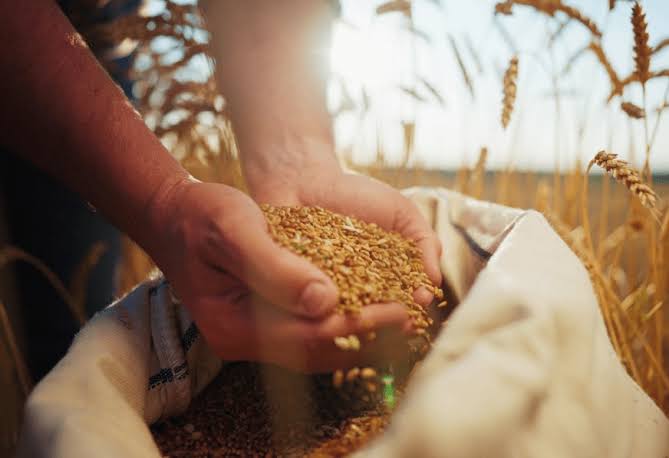
The document is dated July 11, 2026. The ban applies to all types of transport — road, rail, and water. An exception is made only for railway deliveries to poultry farms, grain processors, licensed elevators, and the Food Contract Corporation — but even they will not be able to sell the imported grain on the market.
The Gist
- A six-month ban has been imposed on the import of wheat (EAEU HS code: 1001) from third countries and EAEU countries by all modes of transport.
- Exception — import by railway transport to poultry farms, grain processing enterprises, licensed elevators, and JSC "NC "Food Contract Corporation".
- Wheat imported under the exception cannot be sold on either the domestic or foreign markets.
- The legal basis is the Law of the Republic of Kazakhstan "On National Security," the Law of the Republic of Kazakhstan "On Regulation of Trade Activities," and Article 29 of the EAEU Treaty, which allows for temporary protective measures in foreign trade.
- The measure was adopted against the backdrop of two record harvests of 27 million tons each in a row and the declared course towards transforming Kazakhstan into an agricultural hub of Central Asia.
Why the Ban — and Why Now
The ban is being introduced at a time when Kazakhstan is recording historically high grain harvests. Two consecutive seasons — 27 million tons each — have created a situation where importing wheat into the domestic market is not only redundant but also poses a direct threat to price stability for domestic producers. If cheaper imported grain — for example, from Russia or Kyrgyzstan — begins to arrive in significant volumes, Kazakh farmers will lose their market outlet at the very moment they need to sell their own harvest.
The reference to the Law "On National Security" as a legal basis is no coincidence. Food security is a component part of it under Kazakh legislation, and this opens the possibility for introducing restrictions that, under normal circumstances, would require more complex coordination procedures with the EAEU.
Article 29 of the EAEU: A Legal Mechanism for Market Protection
The ban is introduced based on Article 29 of the EAEU Treaty, which allows for temporary derogations from the free trade regime — including for the protection of the domestic market. This is not a violation of Eurasian agreements but a legitimate protective mechanism used by all union countries when necessary.
An important detail: the exception for railway deliveries to processors is retained, but with a strict condition — the imported wheat cannot enter the market. This means that enterprises dependent on certain varieties or technological characteristics of imported grain can continue operations — but they cannot use imports as a tool for commercial arbitrage.
Context: From Export Quotas to Import Bans
This is already the second restrictive trade decision in Kazakhstan's agro-industrial complex in a short period. In June 2026, a six-month limit on beef exports was introduced, amounting to 25 thousand tons — to saturate the domestic market and stimulate processing. Now, a ban on wheat imports.
Both decisions fit into a single logic: protecting the domestic producer and creating conditions for processing agricultural products with high added value within the country. This is exactly what President Tokayev spoke about at a meeting with Chinese tech companies — transforming Kazakhstan into an agricultural hub that sells not raw materials but finished products.
Author's Conclusion
The ban on wheat imports is a protective measure, logical under conditions of record harvests and agro-hub ambitions. Kazakhstan is consistently building a policy where the domestic market is saturated with domestic grain, processors receive guaranteed raw materials, and finished products, not raw materials, are exported. The six-month duration of the ban covers the critical period for selling the new harvest — precisely when Kazakh farmers must have the opportunity to sell their grain at a fair price.
Comments ()