Kazakhstan builds a full-cycle fertilizer production chain — from organics to export nitrogen.
Kazakhstan's fertilizer industry moves in two directions at once: tightening regulation of organic fertilizers and launching large-scale mineral production.
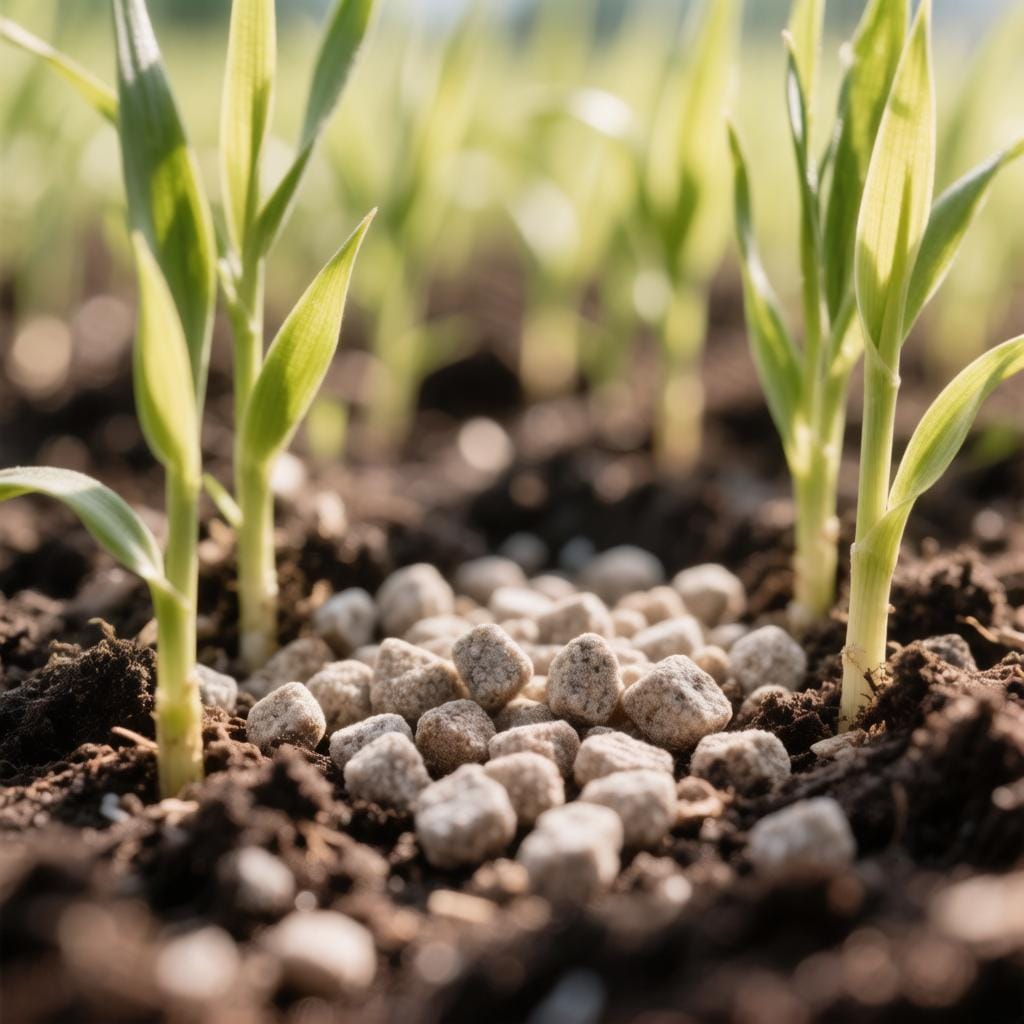
On the one hand, the country is introducing the first national safety standard for manure, poultry litter and vermicompost, and on the other, it is building plants that should transform Kazakhstan from an importer of nitrogen and potassium fertilizers into their exporter.
The gist in brief
- From January 1, 2027, a national standard for the production of organic fertilizers will take effect in Kazakhstan — unified requirements for the industrial processing of manure, poultry litter, composts, vermicompost and digestate from biogas plants, including standards for pathogens and heavy metals.
- By 2030, the KazAzot Prime chemical complex is expected to be commissioned in the Mangystau Region, producing 660 thousand tons of ammonia, 577.5 thousand tons of urea and 500 thousand tons of ammonium nitrate per year, including the country's first industrial production of urea.
- For the first time in Kazakhstan, the production of potassium fertilizers is also planned — the Qazaq Kalium project at the Satimola deposit with a capacity of 1.5 million tons per year, with confirmed potassium salt reserves exceeding 6.6 billion tons.
- Domestic fertilizer consumption is growing manifold — from 679 thousand tons in 2023 to a planned 2.3 million tons in 2026, but Kazakhstan still applies only 25–35 kg of fertilizers per hectare compared to the global average of 150–160 kg.
Organics: safety rules before growth
The new standard, developed within the framework of the technical regulation "Requirements for Fertilizer Safety," regulates the industrial processing of livestock waste — manure, poultry litter, composts, vermicompost, as well as digestate obtained from biogas plants. The document establishes technological standards for aerobic and vermicomposting, anaerobic fermentation in digesters, drying and granulation, as well as safety requirements for finished products: pathogenic microflora, including salmonella and helminth eggs, is not permitted in fertilizers, maximum permissible concentrations of lead, cadmium, mercury and arsenic are set, along with standards for background radiation. The standard logically continues an earlier reform — in the summer of 2026, the Senate adopted the Law "On Soil Protection," introducing a mandatory land passport and a unified soil monitoring system: quality control of the fertilizers themselves is a natural continuation of monitoring the condition of the soils to which these fertilizers are applied.
Nitrogen and potassium: a bid for exports
The Ministry of National Economy explained the logic behind the industry's development:
"The development of the industry matters for several areas of the economy at once. On the one hand, the availability of fertilizers directly affects crop yields and the efficiency of agricultural production. On the other hand, producing goods domestically allows for deeper processing of our own raw materials and exporting products with higher added value."
The KazAzot Prime complex will more than triple Kazakhstan's ammonia production capacity, with about 543 thousand tons of it going toward further processing into urea and ammonium nitrate domestically — it is precisely this approach, rather than simply exporting raw ammonia, that the ministry calls the project's key principle.
In parallel, the Qazaq Kalium potassium project will eliminate the country's complete dependence on imports:
"Today, potassium fertilizers are not produced in Kazakhstan, so the needs of the agricultural sector are covered through imports," the ministry noted, adding that even with domestic demand growing to 300 thousand tons per year, the market will consume only about 20% of the new enterprise's design capacity.
Domestic demand is still far from saturation
The growth in domestic fertilizer consumption is impressive: 679 thousand tons in 2023, 1.3 million tons in 2024, 1.8 million tons in 2025, and 2.3 million tons planned for 2026 — this corresponds to 73% of the scientifically substantiated needs of the agricultural sector. But even at this growth rate, Kazakhstan's fertilizer application intensity (25–35 kg per hectare) lags several times behind the global average of 150–160 kg — meaning the country's new industry has significant room for growth domestically, apart from its export ambitions. State support compensates farmers for up to 60% of the cost of mineral fertilizers, which should accelerate further expansion of their use.
The export route is already planned
It is telling that the issue of selling future output was addressed even before the plants were completed: the export potential of KazAzot Prime is estimated at approximately 470 thousand tons of urea and 98 thousand tons of ammonium nitrate annually, and agreements with leading international trading companies provide for coverage of up to 100% of this volume via the Trans-Caspian International Transport Route — the very Middle Corridor whose port and logistics infrastructure development we have already examined in relation to other Kazakhstani export goods.
Author's conclusion
The simultaneous launch of organic fertilizer regulation and the construction of mineral fertilizer plants is not a coincidence but two sides of the same objective: reducing Kazakhstan's agricultural sector's dependence on imports while simultaneously increasing the share of high-value-added products in exports. While the country applies several times less fertilizer per hectare than the global average, the new industry has room for growth even without considering export ambitions — meaning the success of projects like KazAzot Prime and Qazaq Kalium will depend not only on the ability to sell products abroad, but also on how quickly Kazakhstani farmers increase their consumption at home.

Comments ()