Kazakhstan chaired the CIS regional council on radioactive waste
In Kurchatov, former Soviet nuclear hub, a conference on final radioactive waste isolation was held July 21–23, 2026.
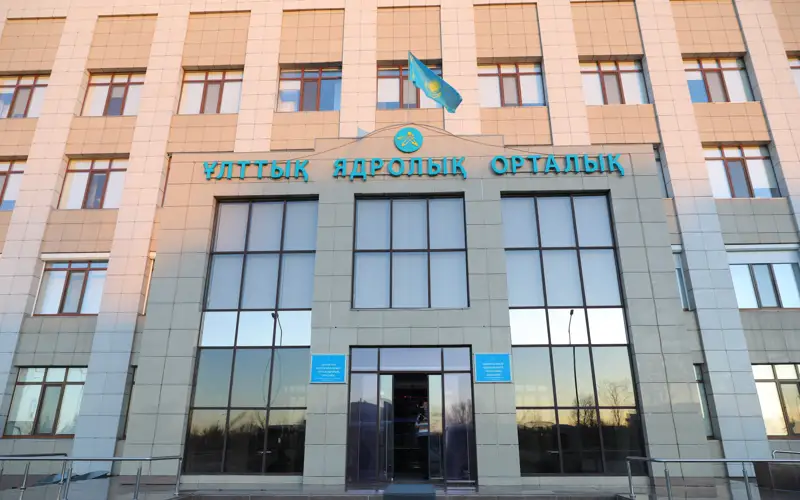
A Regional Competence Council for Radioactive Waste Management of the CIS Countries has been established on the basis of the National Nuclear Center of Kazakhstan, reports the Department of Economic Cooperation of the CIS Executive Committee. The initiative was put forward by the Kazakh side. For a country bearing one of the largest nuclear legacies of the Soviet era and planning the construction of a nuclear power plant, this is not just a diplomatic success — it is a strategic position in one of the most sensitive issues of the nuclear industry.
The Gist
- The Regional Competence Council for Radioactive Waste Management of the CIS Countries was established on the basis of the NNC RK in Kurchatov. The initiative of the Kazakh side was discussed back at the meeting of the CIS Commission on Atomic Energy on June 10, 2026 in Almaty.
- The conference was attended by representatives of Armenia, Belarus, Kazakhstan, Kyrgyzstan, Russia, Tajikistan, Uzbekistan, the CIS Executive Committee, and JSC "TVEL".
- On April 3, 2026, the CIS Economic Council approved the Main Directions of Cooperation of the CIS States in the Field of Radioactive Waste and Spent Nuclear Fuel Management for the period up to 2030.
- The CIS Interparliamentary Assembly adopted a Model Law "On Radioactive Waste Management" — a unified legal standard for the participating countries.
- The issue of nuclear legacy sites was discussed separately: a concept for interaction between CIS countries in eliminating radiation and environmental threats is being developed, including the compilation of a register and mechanisms to reduce environmental impact.
Kurchatov: A Symbolic Location for a Nuclear Forum
The choice of venue for the conference is no coincidence. Kurchatov is a city that grew up around the Semipalatinsk Test Site, where the USSR conducted more than 456 nuclear tests from 1949 to 1991. Today, it houses the National Nuclear Center of Kazakhstan, one of the leading nuclear research institutes in the post-Soviet space, with operating research reactors.
The fact that this particular city hosted the forum on radioactive waste management is an eloquent metaphor: Kazakhstan bears one of the largest nuclear legacies in the world on its territory and is assuming regional leadership in dealing with it.
What the Regional Competence Council Provides
The new body is designed to perform two functions. The first is to develop coordinated approaches among CIS countries to radioactive waste management: unified standards, best practices, and mutual recognition of safety assessments. The second is to promote the formation of sustainable national waste management systems and the rehabilitation of uranium legacy sites.
This is particularly relevant for Central Asian countries, which inherited tailings ponds, contaminated territories, and abandoned uranium facilities from the Soviet era. We have previously written about how Spanish scientists calculated for the first time that the dried-up bottom of the Aral Sea released 748 million tons of CO₂ — an illustration of how the Soviet environmental legacy continues to affect the region decades later.
Three Levels of Regulatory Work
The conference recorded progress at three levels of regulatory framework development.
At the strategy level: In April 2026, the CIS Economic Council approved the Main Directions of Cooperation in the Field of Radioactive Waste and Spent Nuclear Fuel Management until 2030 — a document developed with the direct participation of JSC "TVEL".
At the legislative level: The CIS Interparliamentary Assembly adopted the Model Law "On Radioactive Waste Management" — a standard normative act that member states can adapt to their national legal systems.
At the infrastructure level: A concept for interaction between CIS countries in eliminating radiation and environmental threats associated with nuclear legacy sites is being developed. This includes compiling a register of such sites, ranking them by threat level, and developing mechanisms to reduce environmental impact.
Context: The Nuclear Legacy as a Challenge for the Future NPP
For Kazakhstan, all of this is not abstract regional politics. The country is simultaneously working in two directions: eliminating its nuclear past and building its nuclear future.
This is why radioactive waste management issues take on a dual significance for Kazakhstan. On the one hand, there is the Soviet legacy: tailings ponds from uranium mines in several regions, contaminated territories of the former Semipalatinsk test site, and abandoned nuclear infrastructure facilities. On the other hand, there is the future NPP: any nuclear power plant generates spent nuclear fuel and radioactive waste, and the management system for these must be established before its launch.
We have previously written about how Lithuania announced a tender for €400 million to dismantle RBMK-1500 reactors — a clear illustration of how complex and costly work with nuclear legacy can be. For Kazakhstan, with its plans to build an NPP, it is important to integrate into regional competence systems right now, while the plant is still in the design phase.
Author's Conclusion
The creation of the Regional Competence Council for Radioactive Waste Management based at the NNC in Kurchatov is not a bureaucratic checkbox structure. It is Kazakhstan's bid for the role of a regional competence center in one of the most technically complex and politically sensitive areas of the nuclear industry. A country that has gone through the Semipalatinsk test site and possesses the world's largest uranium reserves has both the grounds and the practical experience for this.
Comments ()