Kazakhstan launched a unified digital water resources management system
The National Water Resources Information System (NISWR) is now in commercial operation, transforming the very foundation of water management decisions nationwide.
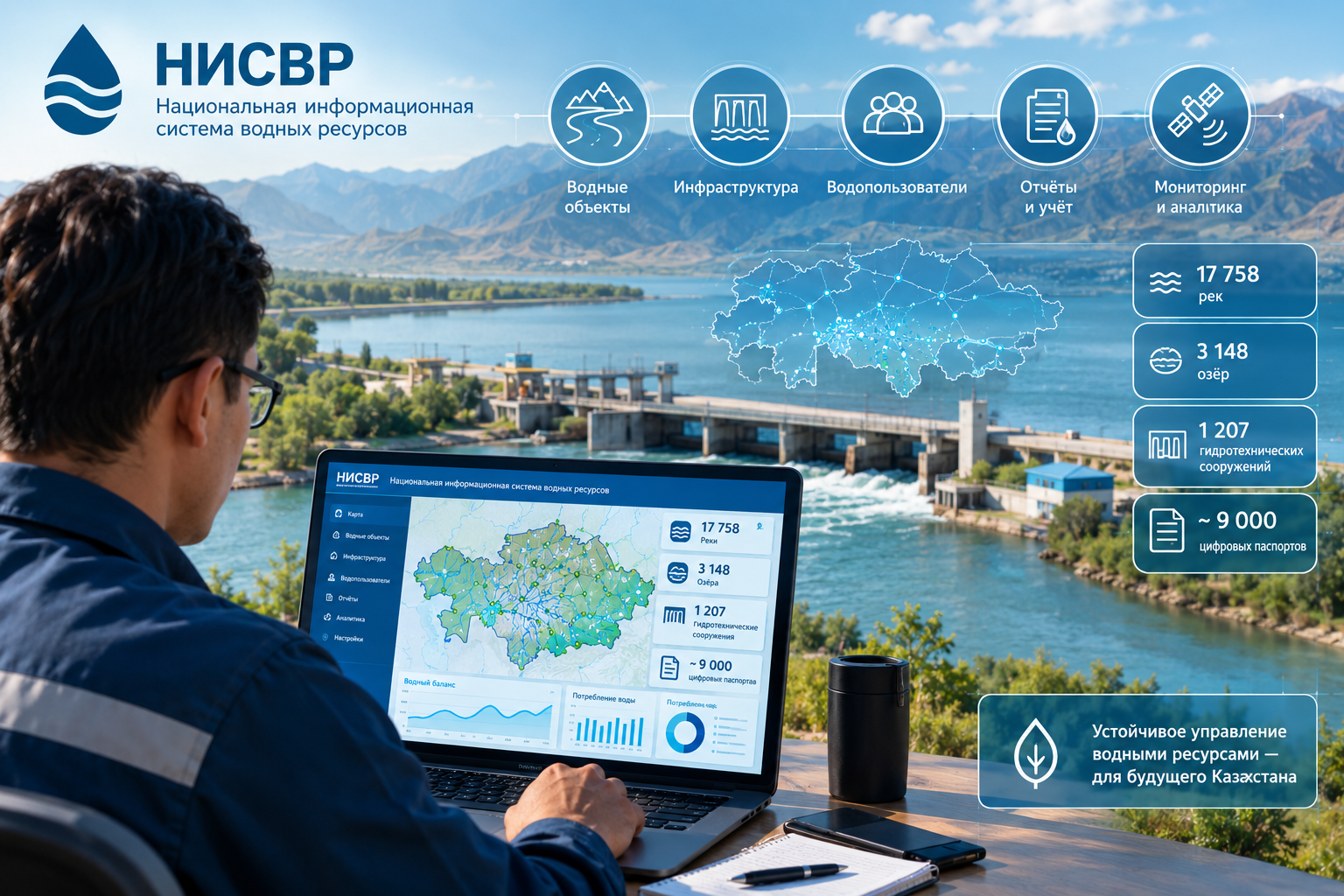
The system we have repeatedly mentioned in our materials as a project under development has finally become fully operational.
The gist in brief
- Kazakhstan has put the National Water Resources Information System (NWRIS) into commercial operation — the platform consolidates data on water bodies, infrastructure, water users, and groundwater into a single framework for managing the sector.
- The system has already digitized data on more than 23,000 water bodies: 17,758 rivers, 3,148 lakes, and 1,207 hydraulic structures, as well as about 9,000 digital passports of water management and hydraulic engineering facilities.
- Approximately 3,000 organizations and more than 4,000 users have been registered; over 2,200 primary water accounting reports and more than 1,300 2-TP reports have already been submitted through the system.
- In parallel, a system for early water consumption forecasting with electronic water supply contracts has been put into trial operation — since the start of the year, more than 29,000 such agreements have been concluded with farmers in electronic format.
Why a unified database is needed
Minister of Water Resources and Irrigation Nurzhan Nurzhigitov outlined the project's goal: "The implementation of NWRIS will make it possible to build a comprehensive, multi-level water resources management system for the sustainable development of the economy and ensuring the country's water security."
The ministry explained the logic more simply: the system's main task is to create a unified, reliable, and up-to-date database on water resources that should be used in preparing and making management decisions in the water management sector. Before such a platform emerged, data on rivers, lakes, hydraulic structures, and water users were scattered across different agencies and regional bodies — NWRIS brings all of this together into a single digital space for the first time.
What the system can do
The platform's functionality covers several areas simultaneously: maintaining the water balance, accounting for and analyzing water use, monitoring the condition of reservoirs, working with data on transboundary water bodies, and space-based monitoring. This is not just an electronic archive but a working tool — water use accounting data is already being received through the system in real time, including thousands of reports from water users. A separate practical element is the early water consumption forecasting system, which digitizes the conclusion of contracts for water supply through canals, online payment, and automated volume calculation: since the start of the year, more than 29,000 agreements with farmers have been signed this way.
Part of the water cluster we already know
The launch of NWRIS logically completes a whole series of stories we have covered this year. We have already reported that Kazakhstan held 38 negotiations with its neighbors on transboundary water, as a result of which the Shardara Reservoir received more water than expected, and also that the country has sent nearly 500 water sector specialists abroad for training since 2023. At the same time, five Central Asian countries, including Kazakhstan, have launched a program to restore the Amu Darya and Syr Darya basins with support from FAO and the Global Environment Facility, and at the international level the country has been promoting the idea of creating an International Water Organization under the UN for nearly a year — from the forum in Ashgabat to the "SCO Plus" summit in Beijing. NWRIS adds the missing element to this picture — a unified technical platform that can underpin negotiations with neighbors, specialist training, regional restoration programs, and global diplomatic initiatives alike: without reliable data on the condition of water bodies, any of these efforts risks remaining fragmented initiatives rather than part of a coordinated strategy.
Author's conclusion
The launch of NWRIS into commercial operation is not a flashy story in itself, but it is precisely this kind of infrastructure that determines how well all other elements of Kazakhstan's water policy will function. Negotiations with neighbors over transboundary rivers, specialist training, basin restoration — all these initiatives become more effective when they rely on a unified, verifiable database rather than scattered departmental records. The real test of the system will not be the fact of its launch, but how actively regional water management organizations and farmers will use it in practice during the upcoming growing season.



Comments ()