Kazakhstan may cut tax on underground water for farmers fivefold
The government is considering a nearly fivefold cut in the groundwater extraction tax for agricultural producers.
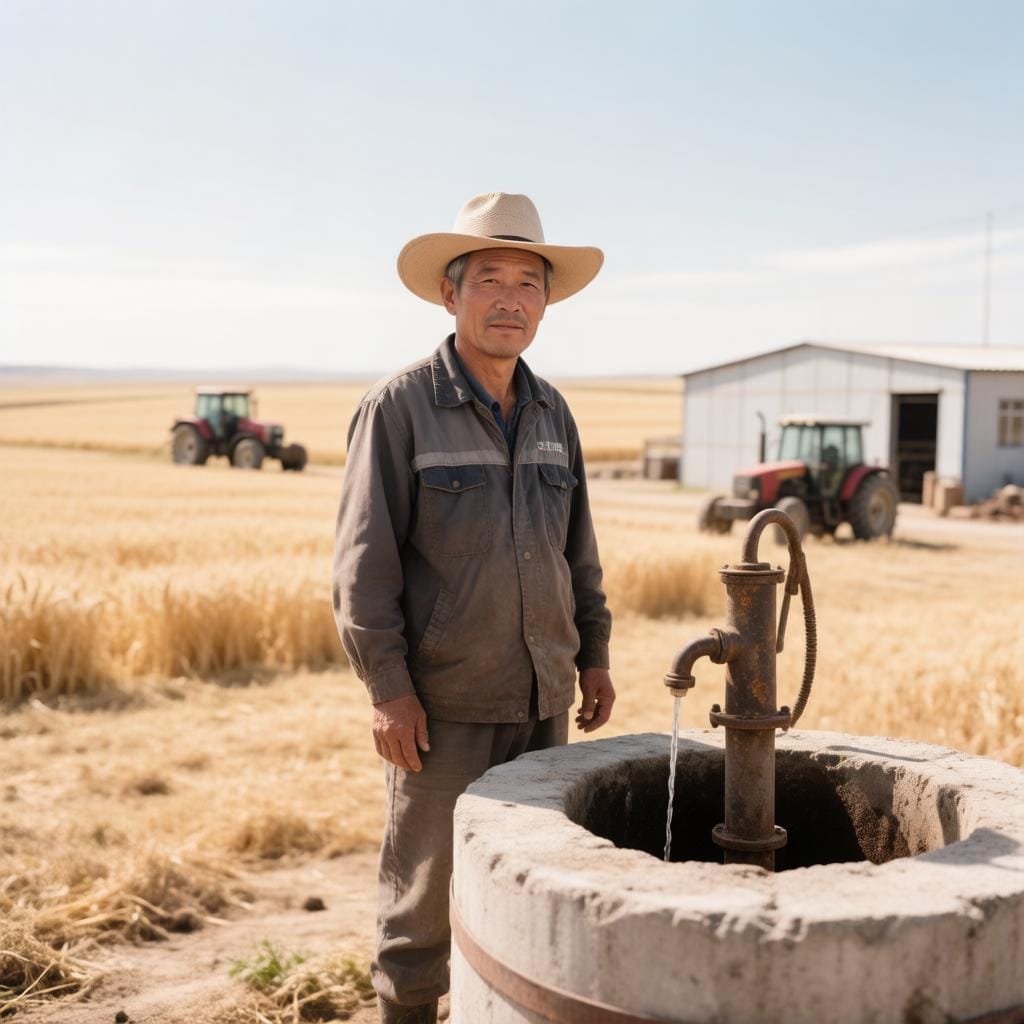
The idea looks logical on paper — expanding irrigated areas through a practically unused resource — but environmentalists warn that cheaper extraction without stronger oversight could result in an uncontrolled growth in the number of wells.
The gist
- The tax on groundwater extraction for agricultural producers is proposed to be cut nearly fivefold — to 2.6 tenge per cubic meter, and farmers who use water exclusively for irrigation may be exempted from the subscription bonus.
- Kazakhstan has approved operational groundwater reserves of about 15.7 km³ per year across more than 4,000 explored deposits, but actual use of these reserves does not exceed 3.6%, and in irrigation it is even lower.
- Drilling a single well costs a farmer 100–200 million tenge — it is this entry cost, not the tax itself, that remains the main barrier for now, but reducing the tax burden could change the economics of such investments.
- Deputy Prime Minister Serik Zhumangarin, who reviewed the initiative, instructed that it be discussed with the scientific community — a final decision will be made only after assessing the impact on the economy and the environment.
The economics for the farmer
Chairman of the management board of the agricultural cooperative "Ertis Agro" Erlan Toktushakov, whose farm grows grains and oilseeds, explained the practical effect of the tax cut.
"In effect, for every cubic meter, the farmer's costs will be reduced by at least 10 tenge. If he is engaged in irrigation and uses at least 5,000 cubic meters per hectare, it is easy to calculate — he saves 10 tenge per cubic meter, and that is already 5 million tenge per hectare, which is serious money," the farmer believes.
According to him, cheaper water means not only a lower production cost but also a potential increase in output volumes — until now, the high cost of drilling wells has held many farmers back from investing in their own water sources.
Why groundwater is barely used
The scale of underuse of the resource is striking: with approved operational reserves of 15.7 km³ per year, actual use does not exceed 3.6% of explored volumes, and specifically for irrigation purposes — even less. Previously, a similar initiative was submitted to Prime Minister Olzhas Bektenov by deputy Pavel Kazantsev, who noted that implementing such measures would create economic incentives for the efficient use of water resources, improve their accounting, and reduce the shadow turnover of water consumption — a formulation that echoes a broader picture: Kazakhstan has already nearly halved its Syr Darya quotas due to insufficient filling of cascade reservoirs, and any additional, not yet tapped water source takes on strategic importance amid the growing shortage of surface water. This is not the only reform aimed at reducing unproductive water losses in agriculture: in parallel, the Ministry of Water Resources is promoting the idea of irrigation condominiums — joint ownership by farmers of irrigation canals, where up to 50% of water is currently lost due to dilapidated infrastructure.
The authorities' budget calculation
The Ministry of Water Resources and Irrigation has already calculated the effect of the initiative using a specific example.
Head of the groundwater department division at the Ministry of Water Resources and Irrigation of the Republic of Kazakhstan Nurbol Itemen provided the calculation: "For example, if we take corn, on average corn requires 5,000 cubic meters per hectare per year, so through corn alone we could increase the budget by 1.8 billion tenge at a reduced tax rate of 2.5 tenge."
The ministry's logic is as follows: even with a lower tax rate, an increase in the number of farmers willing to invest in wells and expand irrigated areas could increase total tax revenues through higher extraction volumes — although in the short term the budget will inevitably lose some revenue due to the rate cut itself.
Environmental risks
Not all experts share the unequivocal optimism.
Environmentalist Chingiz Lepsibaev emphasized the uneven distribution of groundwater resources across the country: "Each individual case needs to be calculated separately, because you cannot say the situation is the same everywhere. In each specific case, each specific water inspection must determine that here many wells can be drilled, but here it is absolutely forbidden."
According to him, for safe expansion of drilling, water inspections must measure the condition of specific aquifers and determine the permissible number of wells and water intake capacity for each territory separately — without such targeted oversight, cheap water risks leading to the depletion of aquifers that recharge more slowly than expected.
Author's conclusion
The initiative to reduce the groundwater tax balances between two reasonable but potentially conflicting goals: relieving scarce surface water resources by tapping into practically unused groundwater reserves, and not turning cheap water into an incentive for uncontrolled drilling where aquifers cannot withstand it. The fact that a decision will be made only after discussion with the scientific community and an assessment of environmental consequences is a proper procedural step, but it is the quality of subsequent regional oversight, not the tax rate itself, that will determine whether this measure results in sustainable irrigation expansion or a new problem for the country's water balance.
Comments ()