Kazakhstan to Extend Beef Export Restrictions for Another Six Months
Kazakhstan's Agriculture Ministry plans to extend quantitative restrictions on cattle meat exports for another six months. The draft order is published for public discussion.
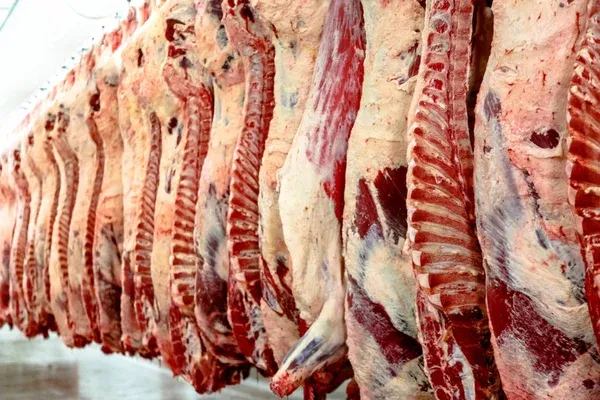
The document was published for public discussion on the Open NLA website on June 26, 2026. If the order is adopted, the export of fresh, chilled, and frozen beef — both to third countries and to EAEU member states — will be limited by a quota of 25 thousand tons for a period of 6 months.
In a Nutshell
- The Ministry of Agriculture of the Republic of Kazakhstan proposes extending the beef export quota of 25 thousand tons for a period of 6 months. The restrictions apply to fresh, chilled (code 0201), and frozen (code 0202) beef.
- The quota applies to supplies to both third countries and exports to EAEU member states — Russia, Belarus, Kyrgyzstan, and Armenia.
- The basis is the decision of the Interdepartmental Commission on Foreign Trade Policy dated June 26, 2026.
- Objectives of the restriction: saturating the domestic market, curbing beef prices, providing raw materials for domestic meat processing enterprises, and increasing high-value-added processing.
- The draft is open for public discussion until July 1, 2026.
Why Now
The initiative emerged in a specific context: Kazakhstan's beef exports have been steadily growing in recent years, primarily to China, the Middle East, and Russia. Active exports put pressure on the domestic market — retail beef prices rose noticeably in several regions, and domestic meat processing enterprises reported a shortage of raw materials.
In this case, quota setting acts as a temporary balancing tool: the state does not completely close exports but sets a ceiling, allowing the domestic market to "breathe."
What Changes for Exporters
The key point is that the quota is unified for all export destinations. This means exporters working with both distant foreign markets and EAEU partners will face the same restrictive conditions. The distribution of the quota among market participants is a separate issue that will be regulated by by-laws after the order is adopted.
For halal exporters focused on the Middle East and Southeast Asian markets, the introduction of the quota means the need to secure contract volumes in advance and plan shipments within the allocated limit.
Processing as the Main Goal
The officially stated goal of the restrictions goes beyond simply curbing prices. The Ministry of Agriculture directly points to a strategic objective: increasing the depth of meat processing within the country, boosting added value, and creating additional jobs at meat processing enterprises.
The logic is familiar from other sectors of the agro-industrial complex: exporting raw materials is more profitable in the short term, but selling finished products with high added value abroad is more beneficial for the economy as a whole. Quota setting for raw material exports creates an economic incentive for investment in processing.
Author's Conclusion
The introduction of export quotas on beef is not an emergency measure but an element of industrial policy. Kazakhstan is consistently moving towards a model where agricultural exports are formed not by raw materials but by processed products. The temporary restriction on beef exports provides domestic processors with a guaranteed raw material base — the question now is whether they will use this window to actually increase capacity or simply lock in temporary profits from cheap raw materials.
Comments ()