Kazakhstanis can get up to 25 соток of land for free — how it works
Kazakhstan reminds citizens of a little-known right: land for personal subsidiary farming can be obtained free of charge, with no registration requirement in a specific village.
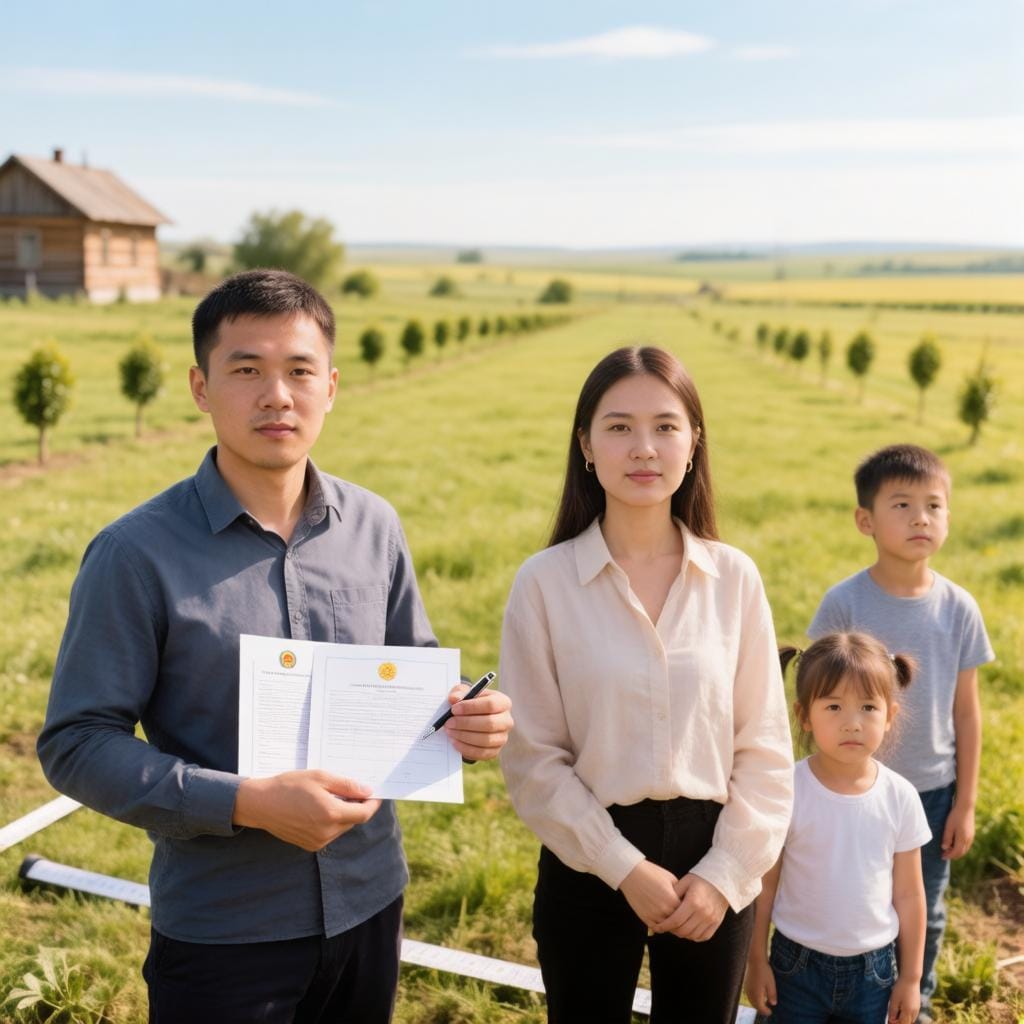
True, between the formal right and an actual plot in hand, there may be a queue stretching for decades.
The gist in brief
- Citizens of Kazakhstan have the right to receive free of charge into private ownership up to 0.25 hectares of non-irrigated or 0.15 hectares of irrigated land for personal subsidiary farming — registration in the specific populated locality where the plot is located is not required.
- The application is submitted to the akimat at the plot's location, stating the purpose of use, estimated size, location, and form of right; the legislation does not provide for a separate queue specifically for land for personal subsidiary farming.
- Since August 27, 2026, the application procedure itself has changed — the familiar portal e-license.kz no longer works for such plots; instead, a new service has been introduced: "Provision of a land plot from the lands of a settlement or village."
- The Ministry of Agriculture did not provide nationwide statistics, but in certain suburban districts demand is colossal: in the Besagash rural district alone near Almaty, 97,176 people are on the waiting list for land for individual housing construction and personal subsidiary farming.
Who can get land and how
As reported by tengrinews.kz, under the Land Code, citizens of Kazakhstan are granted land for personal subsidiary farming from the lands of rural populated localities — meaning one can apply for a plot even without registration in that village or settlement. The application is submitted to the akimat at the location of the plot itself, not at the applicant's place of residence. It must state the purpose of land use, its estimated size and location, the desired form of right — ownership or use — as well as information on whether the applicant already has other land. A refusal may be issued if the plot is already included in the list of lands put up for auction, and receiving land for personal subsidiary farming free of charge a second time is not allowed, with certain exceptions expressly provided for by the Code.
Three types of free plots — what's the difference
The Land Code provides for three types of free plots, and they are easy to confuse. Land for individual housing construction (IHC) — up to 10 ares, only in cities, with the possibility of registration and subsequent sale or mortgage. Plots for gardening and dachas — up to 12 ares, usually without developed infrastructure and permanent registration. And land for personal subsidiary farming — up to 25 ares on non-irrigated land and up to 15 on irrigated land — is provided specifically in rural areas: one can build a house, erect utility structures, grow crops, and keep livestock on it. It is the personal subsidiary farming plots that are most often concentrated in suburban settlements and former villages now incorporated into city limits — for example, in Almaty, many such lands are located in the Alatau, Bostandyk, and Nauryzbai districts.
Rule changes since late August
A practical detail that is important to know right now: since August 27, 2026, the previous method of submitting applications through the e-license.kz portal for rural land plots has ceased to operate. Instead, a new government service has been introduced — "Provision of a land plot from the lands of a settlement or village," which must now be processed under the updated procedure. For those who had already been preparing documents under the old scheme, this means having to re-familiarize themselves with the current submission procedure before approaching the akimat.
Why queues stretch for decades
The formal right to free land does not by any means always translate into its swift acquisition. According to the public cadastral map, in the Besagash rural district alone near Almaty, the queue for plots for individual housing construction and personal subsidiary farming stands at 97,176 people — meaning that even with regular land distribution, some applicants may wait for decades, and in some places akimats simply do not have available state land to distribute. In this situation, the market for intermediary services has also grown: companies offer to find available plots and handle paperwork for a fee, although government bodies explicitly warn that intermediaries have no authority to influence akimat decisions and cannot expedite the land allocation procedure.
Author's conclusion
The right to free 25 ares is a genuinely functioning legal provision, not an empty declaration, but its practical value depends heavily on the specific region and the availability of free land locally. The Ministry of Agriculture honestly admits that it has no nationwide statistics, and the real picture only emerges at the level of akimats — and it is there, not to the ministry, that one should turn for up-to-date information about the chances of obtaining a specific plot. As long as this system remains fragmented across regions, the gap between the formal right to land and its actual acquisition will continue to fuel demand for intermediary services, against which the state simultaneously warns.
Comments ()