Kurultai approves meat labeling and new livestock slaughter rules in first reading
The Kurultai approved in the first reading a bill on veterinary issues.
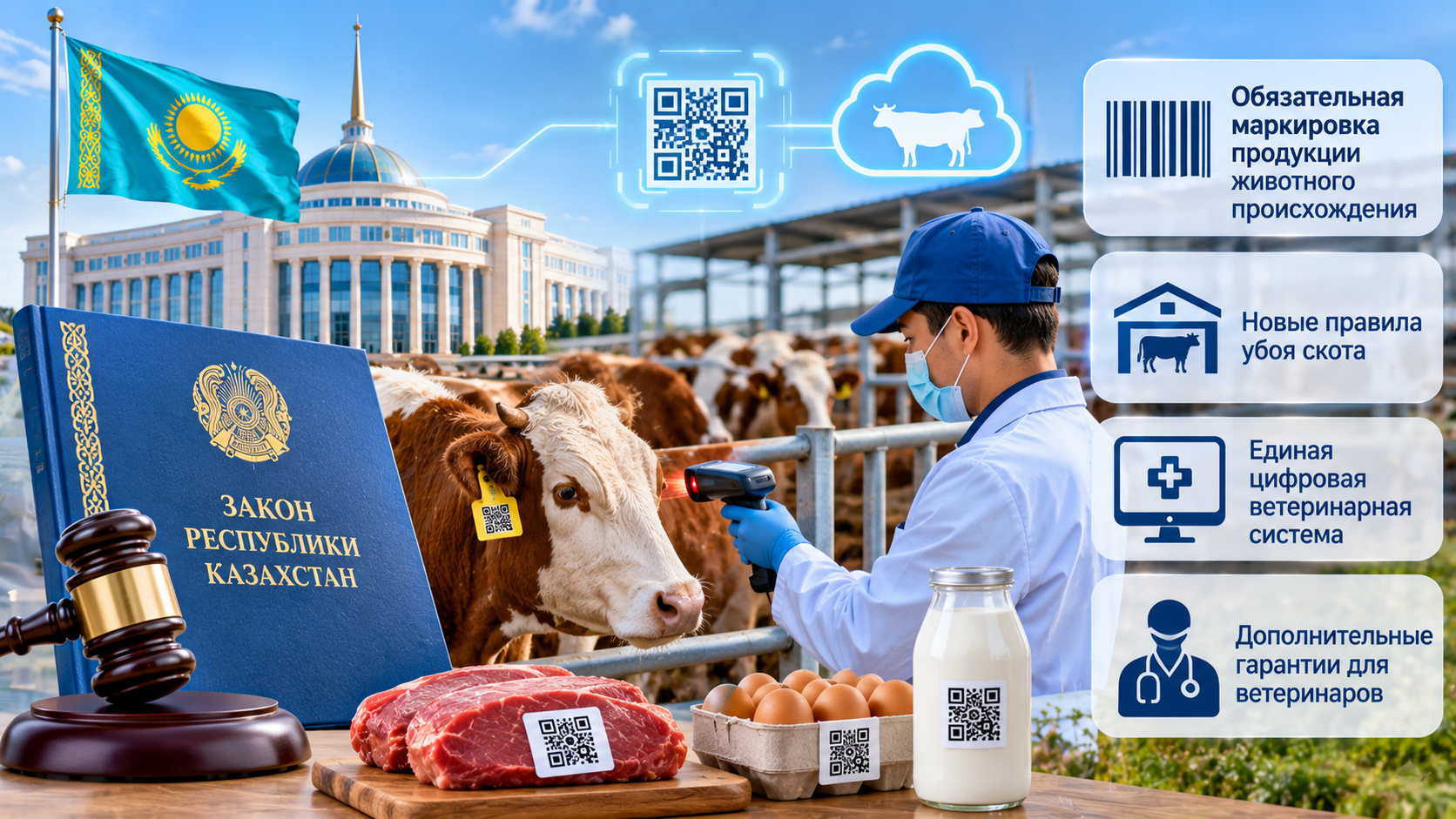
It introduces mandatory labeling of products of animal origin, changes the rules for slaughtering livestock, and creates a unified digital veterinary system. This is reported by Kazakhstan Today.
The essence in brief
- The draft law was approved on November 4, 2026 in the first reading; before coming into force, it must pass the remaining stages.
- Labeling will become mandatory for products and raw materials of animal origin, as well as for veterinary drugs and feed.
- Slaughter sites will be excluded from the list of permitted locations, and livestock for public catering may be slaughtered only at special facilities.
- For veterinarians, an annual wellness leave of at least two official salaries is proposed, along with the creation of a veterinary chamber.
What will change for farms
Owners of agricultural animals will pay for their identification themselves. Organized farms will need a staff veterinarian or one under contract. The draft law also specifies deadlines for notifying about the sale or slaughter of animals and liability for the loss or damage of identification means. After quarantine, animals must be kept separately.
What will change with slaughter and products
Slaughter sites will be excluded from the list of permitted locations. Animals whose meat is intended for public catering may be slaughtered only at special facilities. It will be prohibited to use such products without veterinary inspection and pre-slaughter examination.
In livestock farming, it is proposed to ban growth stimulants and antibiotics intended for treating humans. Products and raw materials of animal origin intended for sale or public catering must be labeled. The same applies to veterinary drugs and feed.
How control will be carried out
Permanent veterinary-sanitary control and supervision will be extended to retail facilities, animal burial sites, slaughter and storage sites, as well as to the veterinary business. Data on animals, controlled facilities, inspections, and product movement will be collected in a unified digital veterinary system. This, as noted in the Kurultai, will improve the accuracy of animal records.
The pharmaceutical inspection will monitor the circulation of veterinary drugs and issue certificates confirming that their production meets the requirements of the Eurasian Economic Union. Powers will be redistributed among local executive bodies, the Committee for Veterinary Control and Supervision, the republican anti-epizootic service, and the national reference center for veterinary medicine.
What is proposed for veterinarians
Veterinarians are offered annual paid leave with a wellness allowance of at least two official salaries. For an academic degree at their main place of work, additional payments are proposed: 17 MCI for candidates of sciences and 34 MCI for doctors of sciences. In addition, in the draft law that deputies submitted to the Kurultai in October, it is proposed to create a veterinary chamber that will protect the professional interests of specialists, keep their records, and help them improve their qualifications.
What is happening with veterinary medicine in Kazakhstan
For the material and technical base of veterinary medicine in 2026-2027, 66.2 billion tenge was allocated: the money will go toward the construction and acquisition of 2,399 veterinary facilities. But the Minister of Agriculture criticized the regions for missing deadlines on this infrastructure, naming land allocation and connection to utilities as the main obstacles.
Control in the draft law is also extended to animal burial sites. At the same time, a map of anthrax burial sites was compiled from open data: it shows 625 locations, while the Ministry of Agriculture refused to disclose official information, citing a "for official use" designation.
They are already learning to test the products that are proposed for labeling: scientists at Seifullin University have developed a PCR test that detects meat substitution in sausage. It identifies 17 species of animals and poultry in raw meat, sausage, ham, and canned goods.
Author's conclusion
The main burden under the draft law falls on livestock owners: they pay for animal identification themselves, and meat for public catering will have to be slaughtered only at special facilities. But reports on the first reading contain neither fines nor effective dates, so it is not yet possible to assess the cost of the new rules for farms. These details may appear in the text of the draft law by the next stages of consideration.


Comments ()