Regions with no livestock results will not receive money for new projects
Agriculture Minister Aidarbek Saparov said regions that fail to meet the Comprehensive Livestock Development Plan targets will not be eligible for funding for new projects in 2027.
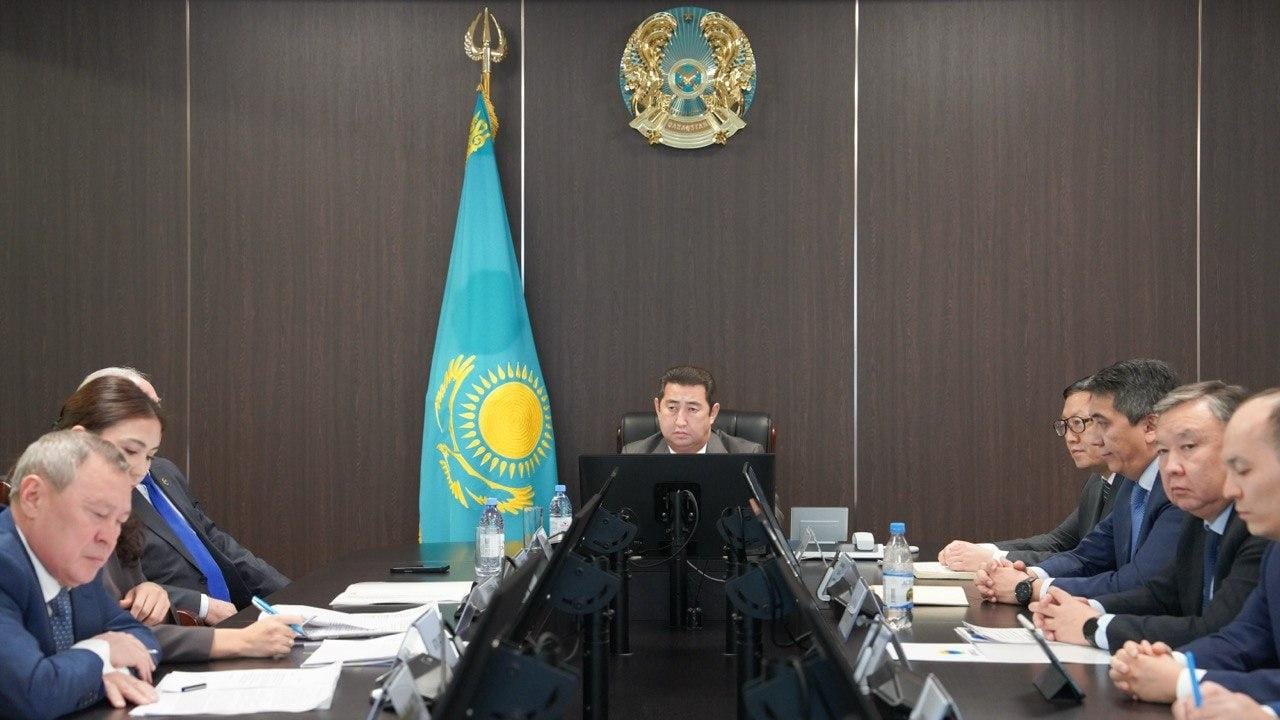
According to the minister, support should go to those farms and regions that demonstrate concrete results. The results of the meeting were reported by the Ministry of Agriculture.
The gist in brief
- Regions that failed to meet the targets of the Comprehensive Livestock Development Plan will not receive money for new projects in 2027.
- 64.2 billion tenge has been allocated for the purchase of breeding livestock in 2026: for 29.6 thousand head of cattle and 15.2 thousand head of small ruminants.
- Good pace on lending programs in Akmola, North Kazakhstan and West Kazakhstan regions; in a number of other regions it was deemed insufficient.
- 24.3 million tonnes of grain have been threshed, and the oilseed harvest is 91% complete.
What condition was set for the regions
The meeting was held on the development of the agro-industrial complex (AIC) and the implementation of the Head of State's instructions. It was attended by heads of subordinate organizations and financial institutions, as well as deputy akims of regions.
Saparov demanded strict control over every livestock project at all stages: from accepting an application to the actual delivery of animals to the farm. According to him, investments must produce concrete results: increase livestock numbers and production volumes, improve animal productivity and expand export potential. He also emphasized that "every tenge of state support must work toward increasing production."
Following the meeting, akimats were instructed to place special control over achieving physical volume index (PVI) targets, full utilization of enterprises, compliance with facility commissioning deadlines and the absorption of funds under the "Igilik," "Bereke" and "Zhaiylau" programs. The minister expects from the regions "not formal execution of instructions, but concrete results and personal responsibility of managers."
How much was allocated for breeding livestock
This year, 64.2 billion tenge has been allocated for the purchase of breeding stock. With this money, they plan to buy 29.6 thousand head of cattle and 15.2 thousand head of small ruminants.
The akimats of Akmola, North Kazakhstan and West Kazakhstan regions are actively working on lending programs. The minister criticized insufficient pace in a number of regions, but which specific regions are meant is not stated in the report.
What was instructed on prices and vegetables
Saparov recalled that in his Address the Head of State set the task of curbing inflation, so preventing unjustified growth in food prices should remain a focus of local authorities. Akimats were instructed to strengthen direct links between producers and retail chains, reduce the number of intermediaries, expand trade infrastructure and hold agricultural fairs more often.
To prevent seasonal increases in vegetable prices, they are being purchased in advance under contracts. Regions have already contracted 101 thousand tonnes of potatoes, 26.8 thousand tonnes of carrots, and 24.9 thousand tonnes each of onions and cabbage. The akimats of Astana, Almaty, Mangystau and Pavlodar regions were instructed to bring the volume of contracted vegetables to at least 30% of the population's three-month needs as soon as possible.
What about harvesting and processing
According to the minister, the main part of the harvesting campaign has been completed. 24.3 million tonnes of grain have been threshed, the oilseed harvest is 91% complete, with 5.1 million tonnes collected. The harvesting of cotton, corn and sugar beets is in its final stage.
Over nine months, food production reached 3.2 trillion tenge, which is 13.8% more than a year earlier. Vegetable oil grew by 25.2%, flour by 13.9%, cheese and cottage cheese by 9.3%. Among the measures to support producers, the ministry cites preferential lending, subsidies and tax preferences.
What is happening with state support for the AIC
The requirement of "support for results" is not new to the sector. In October, Vice Minister Azat Sultanov said that the number of subsidy types in the AIC had dropped to about 30 from 54: measures with questionable effectiveness are being revised, while the overall volume of support remains the same. The 2026 budget provides 588 billion tenge for subsidizing the sector.
The Public Council for AIC Development proposed evaluating support by returns: of 245 financed preferential lending projects, 150 have already been commissioned.
The question of how to measure results also remains contentious. Majilis deputy of the "Auyl" faction Murat Irgibayev asked that the Baqylauda system, which checks whether support recipients meet conditions, be postponed until 2028: in his view, requirements for growth in employee numbers and taxes do not account for the specifics of agriculture. And the "Auyl" faction linked the failure of livestock projects to the fact that livestock prices in state programs are 20-30% below market. This is the deputies' position; the ministry's response is not given in the material.
Author's conclusion
The requirement of results from the regions is not new; what is new here is the punishment: failure to meet the targets of the Comprehensive Plan means denial of money for new projects in 2027. But a region meets its targets through programs whose conditions are set by the center. If the deputies are right and livestock prices in state programs are 20-30% below market, farmers will not be able to buy animals with approved loans, and the region will not fulfill the plan even under strict control. Therefore, it matters whether the ministry will separate the akimats' fault from the shortcomings of the programs themselves; otherwise, sanctions will hit those who are not responsible for the conditions.
Comments ()