Macron intends to stockpile rare earth metals like oil to avoid dependence on China
French President Emmanuel Macron announced the creation of strategic reserves of rare earth elements and "priority metals," modeled on oil reserves.
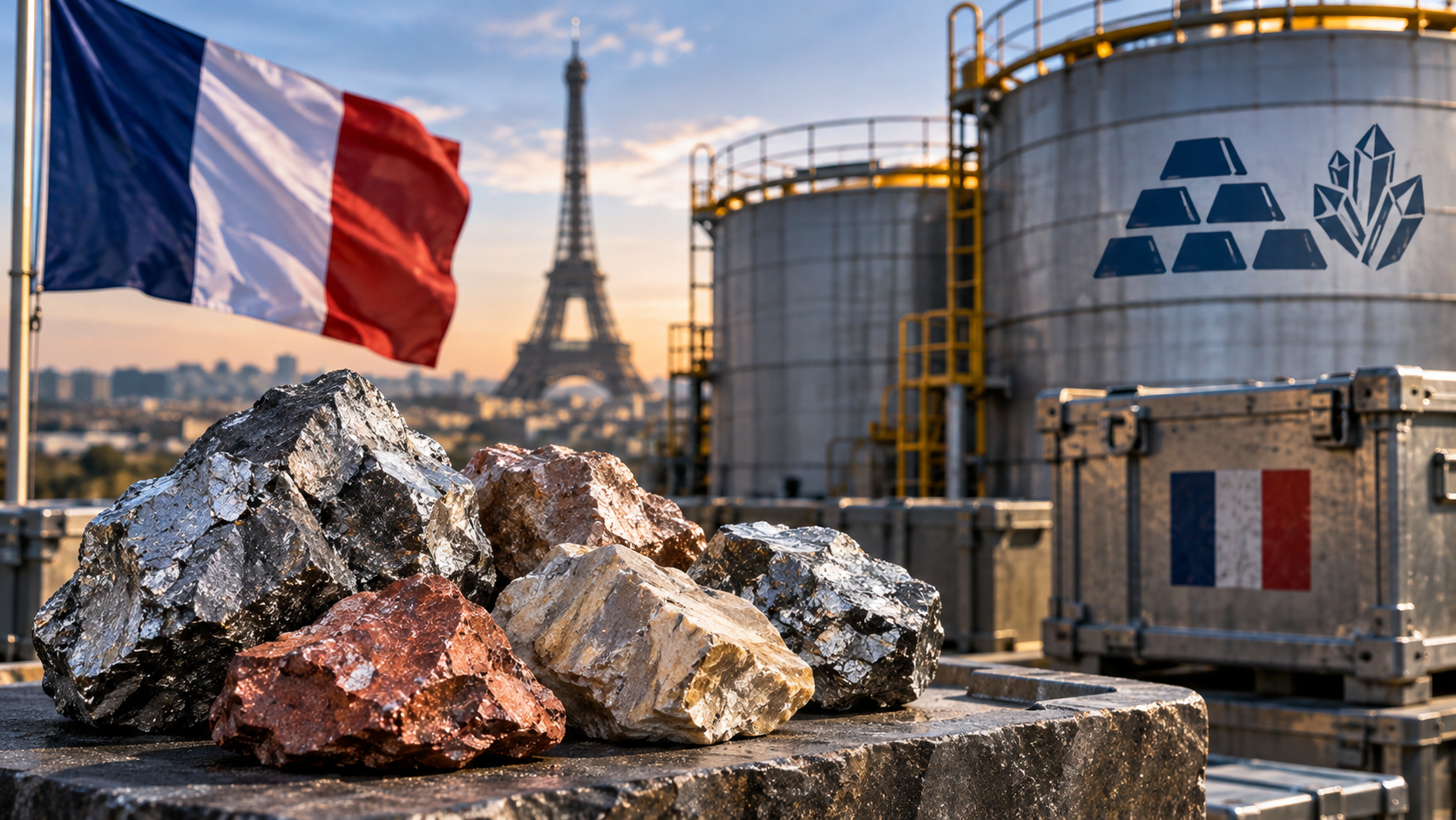
The project is intended to reduce the French industry's dependence on other countries, primarily China, and, as Macron expects, to become operational as early as next year, Euronews writes.
The gist in brief
- Macron announced the stockpiles on November 23 at a closed meeting with industrialists at the Élysée Palace.
- The project will be led by the state financial institution Caisse des dépôts, which will begin negotiations with sectors dependent on these resources.
- The stockpiles will complement a mechanism for joint purchases and price guarantees for producers.
- The defense, aerospace and automotive sectors will receive state support only with a supply diversification plan.
What Macron announced
The president announced the project on Monday, November 23, at a closed meeting with industrialists at the Élysée Palace. The stockpiles are to cover rare earth elements and "priority metals." Macron expects the project to become operational next year. No exact timeline has been presented, and implementation may depend on the outcome of the next presidential election.
How the stockpiles will work
Caisse des dépôts has been tasked with leading the project: the institution will begin negotiations with sectors that depend on access to rare earth and critical metals. The stockpiles will be accompanied by a joint purchasing mechanism. Price guarantees are also envisaged for producers: they are meant to give them benchmarks and activate investment instruments. The volume of the stockpiles and the project budget have not been disclosed. The Élysée Palace called on the European Commission to move in the same direction.
State support for the defense, aerospace and automotive sectors will depend on diversification: to receive assistance, they will have to prepare a vulnerability reduction plan, that is, show how they will reduce dependence on suppliers, primarily China.
What France has already done for rare earth metals
In May, the government presented a national resilience plan for rare earth metals and permanent magnets. State support in it amounted to €180 million, with total investment across projects in Lacq, La Rochelle and Grenoble at around €600 million. By 2030, France aims to cover 10% of global demand for heavy rare earth metals. The stockpiles were not mentioned in that plan.
The idea of reserves has not appeared only in France. In early 2026, the United States announced $12 billion for a rare earth stockpile equal to two months of national consumption. The idea of a national reserve is also part of the program of Jean-Luc Mélenchon, leader of the La France Insoumise party.
What about rare earth metals in Kazakhstan
More than 120 rare earth metal deposits have been identified in Kazakhstan, with projected resources based on 2024-2025 geological exploration estimated at 935,400 tonnes. The country wants to move from selling raw materials to processing: a comprehensive plan for 2024-2028 envisages growth in rare metal production of at least 40% and the launch of five new production facilities. China, meanwhile, controls about 69% of global rare earth metal extraction.
For processing, Kazakhstan is creating a regional research center with the participation of European Union scientific institutes: it will have three laboratories, construction is planned to begin in 2027, and full operation is expected by the end of 2028. In Stepnogorsk, Australia's Lindian Resources will invest $150 million in a rare earth metals plant, but it will process concentrate from Malawi rather than Kazakh raw materials.
The situation with tungsten is different for now: in 2025, Kazakhstan exported ore and concentrate for the first time, 3,700 tonnes worth $71 million, all to China. The Center for Trade Policy Development assures that the priority will be primary processing and localization of production in the country. The topic of stockpiles was also discussed at the G7 level: in June, leaders adopted a declaration on protecting critical mineral supply chains, with measures including processing and strategic reserves. Kazakhstan, meanwhile, joined the U.S. Pax Silica initiative, where it announced the development of mineral processing.
Author's conclusion
Previously, France mainly supported the extraction and processing of rare earth metals; now insurance against supply disruptions, as with oil, is being added to this. The diversification plan condition shifts part of the responsibility onto the companies themselves: without reducing dependence on China, they will not receive state support.
Comments ()