Marble lamb" from Kazakh scientists — a loud press release without a single figure
The Kazakh Ministry of Agriculture has developed marble lamb technology using the Kazakh fine-fleece sheep breed. We analyze a discovery over 100 years old.
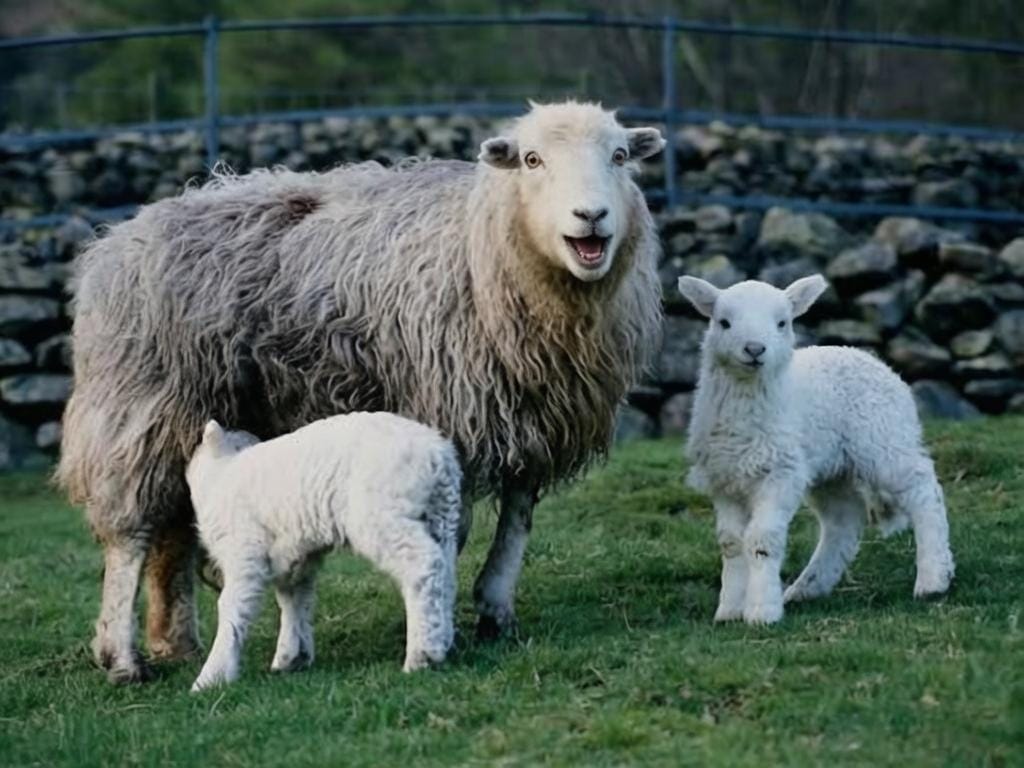
The wording sounds impressive — genetic potential, specialized compound feed, two patents, export potential. But if you break down the press release by substance rather than headlines, the picture is far less convincing.
The gist in brief
- The LLP "Kazakh Research Institute of Processing and Food Industry" under NJSC "NANOC" has announced the development of a technology for intensive fattening of lambs of the Kazakh fine-fleece breed with a specialized grain compound feed to produce "marbled" lamb.
- According to the press release, intramuscular fat content increased to 4–6% versus 2–3% under pasture rearing, which is what creates the "marbling."
- The development is protected by two utility model patents, and the results have been published in scientific journals.
- The technology is touted as a foundation for growing the export potential of Kazakhstan's meat sheep farming.
A discovery more than a hundred years old
Marbling is intramuscular fat. In a lamb, it accumulates from exactly two things: grain concentrate in the diet and sufficient time on feed. This is not a hypothesis; it is the foundation of the feedlot business that operations from Nebraska to Xinjiang have been running on since the mid-20th century. The phrase "developed a system of intensive rearing and a specialized grain compound feed" describes not an invention but the definition of the word "fattening."
The breed was chosen backwards
The Kazakh fine-fleece is a wool breed of the Merino type, selected for eighty years for fleece rather than carcass. "Realizing the genetic potential" of such a sheep in a meat direction is roughly like squeezing a marbled steak out of a Holstein cow. Meanwhile, the country has the Edilbay and other meat-and-fat breeds specifically bred for meat. The choice of the fine-fleece breed is explained not by biology but by which livestock the institute had on hand.
An internal contradiction in two adjacent paragraphs
Either the result comes from the compound feed, in which case the breed is irrelevant. Or it is genetic potential, in which case no specialized compound feed is needed. The text attributes both mechanisms to the same result, which usually means the authors did not separate the effects and had no control group.
Nobody buys marbled lamb as marbled
No export classification system for lamb assesses intramuscular fat. In the EU, carcasses are graded by conformation and fat class; in New Zealand and Australia, by carcass weight and fat thickness at the GR point. A buyer in Iran, the Emirates, or China pays for weight, age, halal certification, and veterinary documentation. The line "meets modern requirements for export products" hangs in the air because the requirements in question do not exist.
Worse, to build intramuscular fat, the lamb must be kept longer. Physiologically, a sheep deposits fat first subcutaneously and in the fat tail, and only last between the muscle fibers. By the time marbling is achieved, the animal is no longer a lamb, and on most markets that is a downgrade in category, not a premium.
The economics are upside down
The only competitive advantage of Kazakh lamb is cheap weight gain on pasture. Switching lambs to grain means competing with Australia and New Zealand on cost, where Kazakhstan is guaranteed to lose, while simultaneously forfeiting the only working marketing story about natural grazing for which the world actually pays a premium.
Two patents instead of data
"Scientific significance is confirmed by two patents" — this is a substitution of concepts. A patent records the formal novelty of an application; significance is confirmed by reproducibility and peer review. A patent for a feeding scheme in Kazakhstan is a reporting metric for grant funding, not a market asset.
Zero numbers
The text contains not a single figure. No percentage of intramuscular fat, no average daily gain in grams, no feed conversion, no dressing percentage, no sample size, no name of the institute, and no author's name. There are subheadings, each of which restates the previous one. "Optimization of all stages" and "high weight gain" are not results; they are filler words.
Author's conclusion
Lamb exports hinge not on marbling but on veterinary status, livestock traceability, slaughter capacity meeting standards, and the cold chain. None of these barriers is removed by compound feed. The press release offers a solution to a problem that does not exist in order to avoid talking about the problems that do.


Comments ()