Nearly record-expensive copper lies mainly in the US, while China lacks it
Copper holds near record above $14,000/t, but the market is split: most global stocks sit in the US while China faces a shortage.
The situation is described by Reuters columnist Andy Home in a column following the London Metal Exchange (LME) week on October 26.
The gist in brief
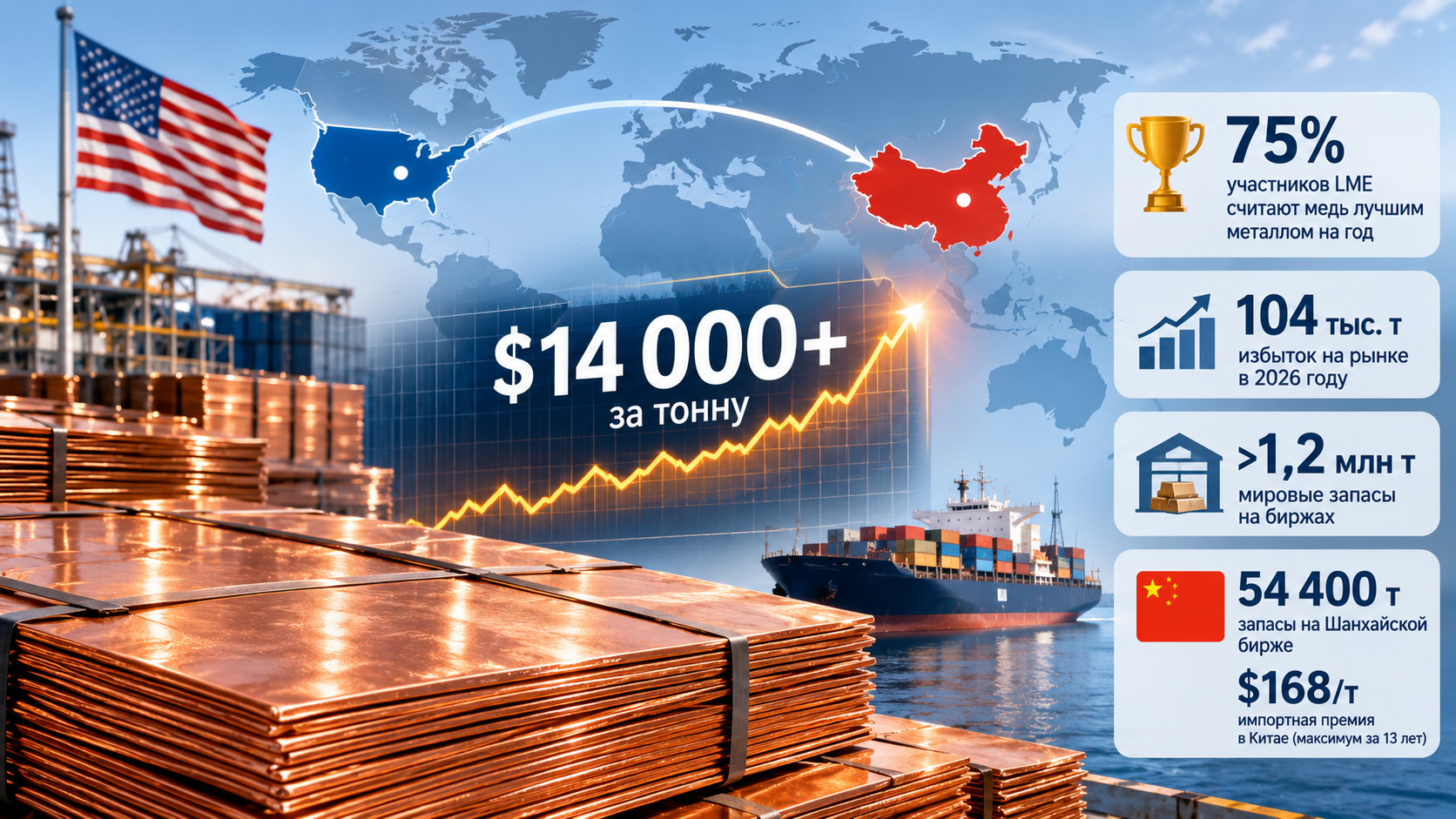
- Copper is trading above $14,000 per tonne, with about 75% of LME seminar participants naming it the best metal for the next 12 months.
- Globally the market is in surplus: the International Copper Study Group (ICSG) expects a surplus of 104,000 tonnes this year and 368,000 tonnes next year.
- Global exchange stocks exceed 1.2 million tonnes, twice as much as a year ago, but the bulk is held in the United States.
- In China, Shanghai exchange stocks stand at just 54,400 tonnes, while the Yangshan import premium has reached $168 per tonne, a 13-year high.
Why the copper market has split
Demand for copper, according to Trafigura co-founder Saad Rahim, is felt everywhere at once, while supply is fragmented by government policy. There is no global deficit: the ICSG expects a surplus this year and next. But global exchange stocks, which exceed 1.2 million tonnes, are mostly held in the United States due to uncertainty over whether President Donald Trump will impose import tariffs.
What is happening in China
Other buyers, primarily China, are experiencing a shortage of metal. Stocks on the Shanghai Futures Exchange stand at 54,400 tonnes, and the Yangshan import premium, a surcharge on the LME price for deliveries to China, has risen to $168 per tonne.
Mercuria's head of research Nicholas Snowdon said: "The Chinese copper market is currently in the tightest state I have seen in my entire career."
CME Group's head of metals Jin Hennig believes that a single price for everyone is inefficient under such conditions.
What about aluminium, nickel and cobalt
The regional split is also visible in the aluminium market: physical premiums differ sharply, which is linked to the US 50% import tariffs. Harbor Aluminum founder Giorgio Vazquez estimates the probability of a revision of tariffs on Canadian metal at 75%. In that case, US premiums would fall sharply, while European ones could nearly double and exceed $1,000 per tonne over the LME price.
The outlook for nickel, according to CRU analyst Nikhil Shah, depends on Indonesia's policy: whether it restricts access to ore and whether the market returns to surplus. Cobalt prices are supported by export restrictions from the Democratic Republic of Congo, but these lead to stockpiling within the country, which CRU analyst Thomas Matthews called a "Pandora's box."
What is happening with copper in Kazakhstan
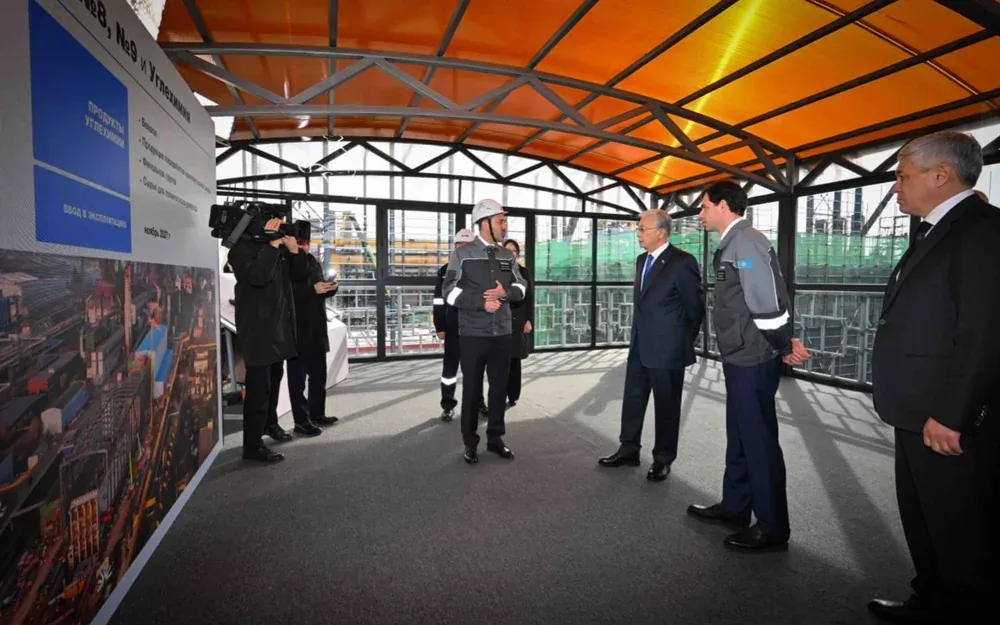
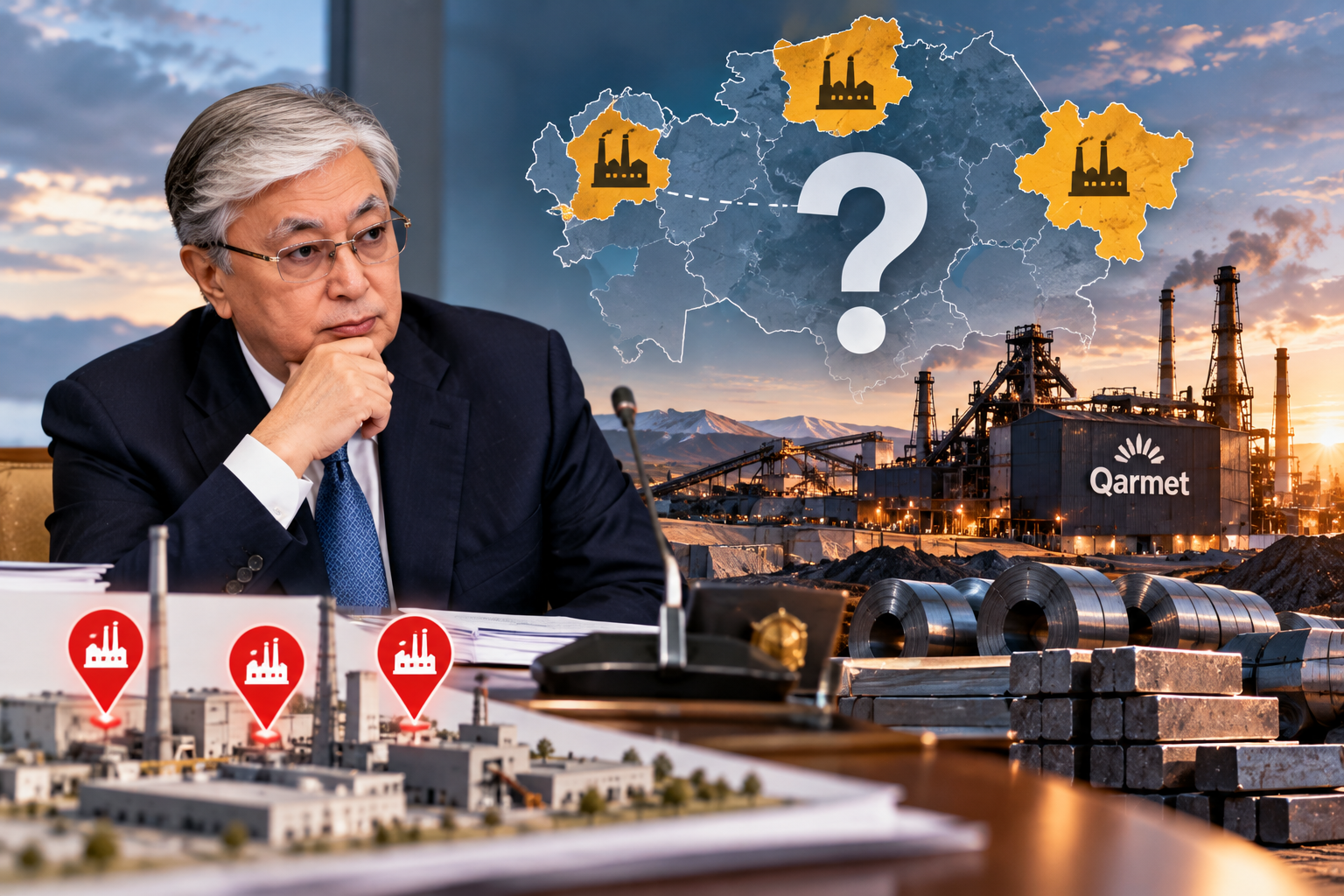
Kazakhstan is betting on processing copper domestically. President Tokayev gave the start to construction of the Aktogay copper smelter in the Abai region: it is designed for 300,000 tonnes of cathode copper per year, with investments of about $1.8 billion, and the first cathode is planned for 2030. At the same time, in his Address the head of state questioned whether the products of new metallurgical plants that three more regions want to open will be in demand.To keep raw materials in the country, the Ministry of Industry is working on an export duty on copper concentrate, and the authorities want to double copper ore production by 2030.
For now the country exports a lot of copper: in January-July 2026, 278,600 tonnes worth $3.4 billion were shipped, with Turkey the main buyer. At the same time, ore production grew 4.3-fold, while copper output grew 1.3-fold.
Author's conclusion
The main point of the column is that copper no longer has a single price and a single balance: the market is dividing into regions where there is too much metal and regions where there is not enough, and the borders are drawn by policy, not geology. With a global surplus of 104,000 tonnes, China pays a premium of $168 per tonne because the metal it needs is sitting in the United States. For Kazakhstan, which plans to increase both production and processing, this means that what matters is not only the world exchange price, but also which market the metal ends up in and under what tariffs.
Comments ()