AI data centers will require less copper than expected, while China slows demand growth
Metal market experts believe AI data center copper demand was overestimated due to a calculation error. Meanwhile, China's copper demand growth is expected to slow to 1-1.5% per year by 2030.

This was discussed by participants of the Triland Global Metals Outlook conference during London Metal Exchange (LME) Week, S&P Global reports.
The gist in brief
- LSEG Data & Analytics Director of Metals Research Bruce Alway believes a calculation error overstated data centers' copper demand.
- China's copper demand growth will slow to 1-1.5% per year by 2030, and the country could become a net exporter of copper.
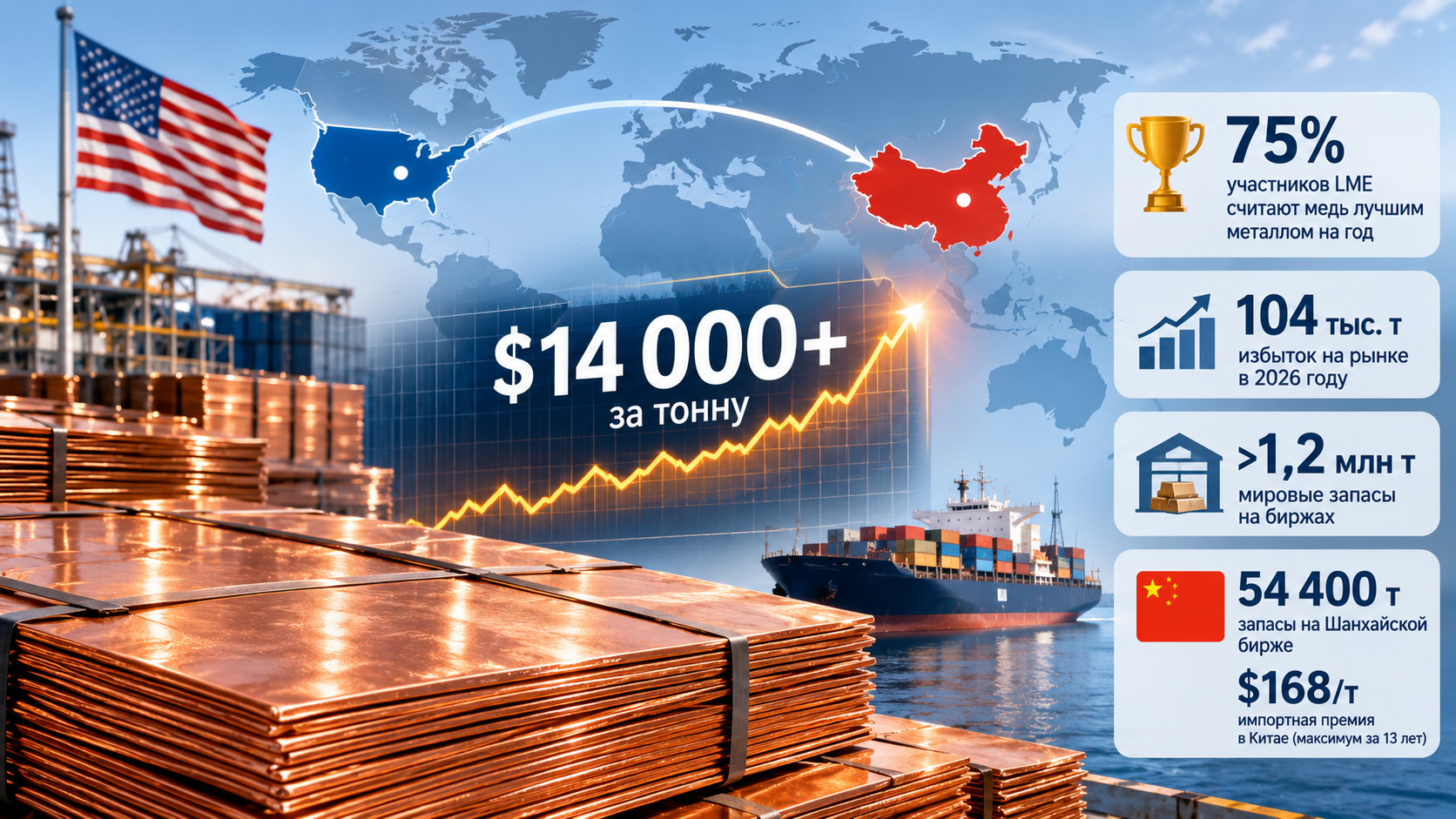
- When the price rose above $14,000 per tonne, buyers stopped fulfilling orders.
- Copper is now 4.8 times more expensive than aluminum, while substitution began at a 3-to-1 ratio.
What they say about data centers
According to Alway, an error in calculating copper consumption by data centers overstated their need for the metal. He cited a recent statement by analyst Andy Home. In addition, fiber-optic technologies are reducing copper use inside data centers.
The expected supply deficit, Alway added, drove copper prices to records, above the level justified by real demand.
What about China and India
China's market is slowing: demand is falling from construction and household appliances, where a lot of metal is consumed. In August, the business activity index in manufacturing of electronics, AI and batteries reached a record 59.7, while in construction it fell to 42.9. Annual copper consumption growth is forecast to slow to 1-1.5% by 2030, and China could become a net exporter.
India, which proponents of higher prices call "the next China," is unlikely, according to Alway, to repeat the historical level of per capita metal consumption: its infrastructure is less metal-intensive, and its economy is more cyclical. China, meanwhile, controls about 25% of global copper mining through joint ventures, while Chile and Peru account for 60% of its copper imports.
How the price scared off buyers
Tanya Winter of the German metals processing company Aurubis said that at a price above $14,000 per tonne, clients stopped fulfilling orders. Clients often have to wait 60, 80 or 120 days for payment, and some manufacturers have switched to monthly payments. State power grid projects are being postponed while buyers wait for prices to fall.
The historical threshold for substituting copper with aluminum was a price ratio of 3 to 1; now copper is 4.8 times more expensive. Aluminum conducts electricity about 60% worse than copper, and, according to Alway, substitution will accelerate sharply at a ratio of 6-7 to 1. Air conditioner manufacturers are already using thin-walled aluminum tubes. Winter believes the current shift is driven by flawed logic and panic, especially in precision components.
What about supply and processing
From May 2025 to August 2026, concentrate supplies were disrupted by a rare snowfall in the Atacama Desert, a mudflow at the Grasberg mine and seismic activity at Kamoa-Kakula. The International Copper Study Group (ICSG) expects production growth in Mongolia, Indonesia and Russia in 2026, as well as expansion at China's Yulong and Peru's Antamina. Traditional concentrate supply will decline, but the industry does not expect major disruptions in 2027.
Smelters are forced to pay miners $1,500 per tonne of copper, and Winter calls this an "unhealthy" situation. Western smelters rely on revenue from by-products: precious metals and sulfuric acid. Refined copper typically contains less than 14% recycled material, while finished products contain slightly more than 30%.
What about copper in Kazakhstan
Kazakhstan is mining more and more copper ore. In 2025, mining reached 163.7 million tonnes versus 38.5 million tonnes in 1990, while refined copper output grew only 1.3 times, to 471,800 tonnes. The authorities want to double ore mining to 300 million tonnes per year by 2030. For processing, construction has begun on a copper smelter with a capacity of 300,000 tonnes of copper per year in the Abai region, and the Ministry of Industry is considering an export duty on copper concentrate to keep more raw material in the country.
Author's conclusion
The copper market was driven up by deficit expectations: the price is above $14,000 per tonne, and the ratio to aluminum has risen from 3 to 1 to 4.8 to 1. Buyers are already responding by cutting orders, so a significant part of the AI-demand forecast remains just a forecast for now.


Comments ()