North Kazakhstan region became a testing ground for aviation fuel from camelina.
While the world debates future jet fuel, the answer is already being grown in test fields near Petropavlovsk.
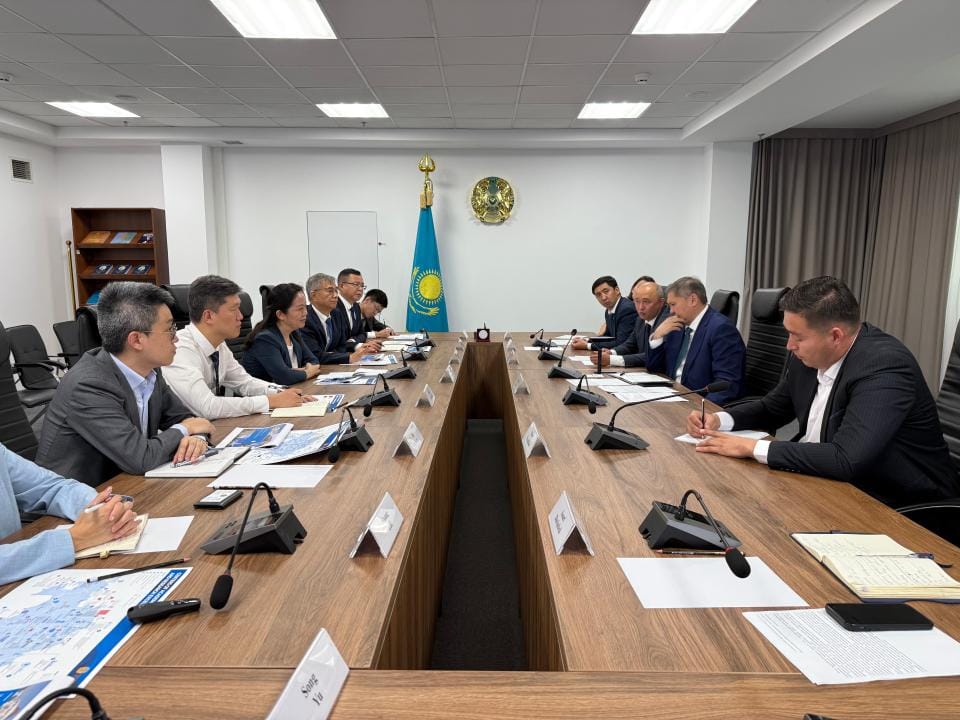
Minister of Science and Higher Education Sayasat Nurbek held a meeting with representatives of Chinese investment companies implementing two projects at Kozybayev University — from testing wheat and corn varieties to producing sustainable aviation fuel from the little-known oilseed crop camelina, the Ministry of Science and Higher Education of the Republic of Kazakhstan reports.
The gist in brief
• Kozybayev University, together with the state corporation of China's Henan Province — Henan Agricultural Investment Group — is establishing a Kazakhstan-China scientific and technological center in the North Kazakhstan Region; the regional akimat has allocated 72.5 hectares of land for the project.
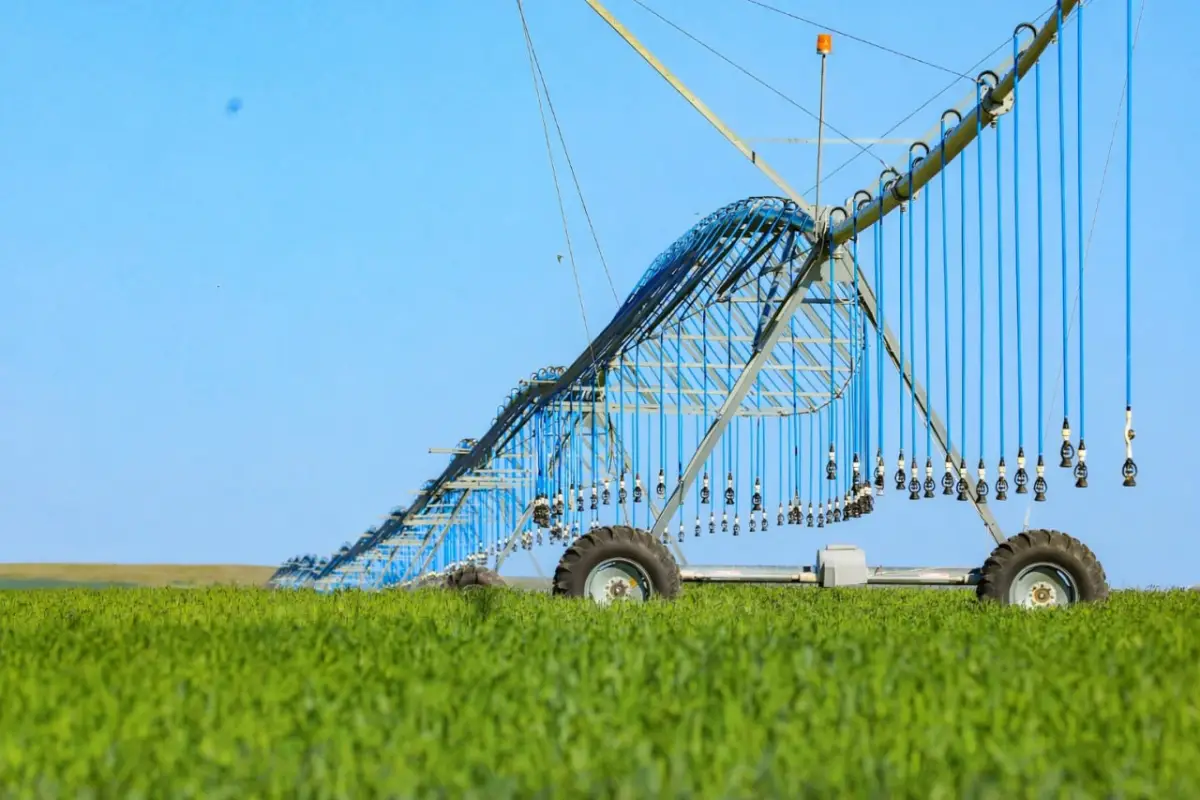
- This year, 4 wheat varieties and 18 corn varieties have already been sown on the university's demonstration fields.
- A separate project with Hong Kong's Henderson Land Group aims to create a full-cycle production of sustainable aviation fuel (SAF) based on the oilseed crop Camelina sativa — camelina.
- If the experimental stage succeeds, the parties plan to expand sown areas, establish a raw material storage and processing system, and build a production complex for SAF output.
Two projects, one university
Both agreements grew out of the same logic — leveraging the agricultural potential of the North Kazakhstan Region for projects with foreign investment and technology. The first project with Henan Agricultural Investment Group involves creating full-fledged scientific and educational infrastructure on the allocated 72.5 hectares: a laboratory complex, dormitory, logistics center, greenhouse complex, and demonstration fields, where four wheat varieties and eighteen corn varieties are already being tested this season. The second project, with Henderson Land Group, is structured differently — it is not an infrastructure campus but a production chain of "cultivation – raw material collection – processing – aviation biofuel production," in which the region's Kazakh agricultural enterprises act as raw material suppliers.
Why camelina specifically
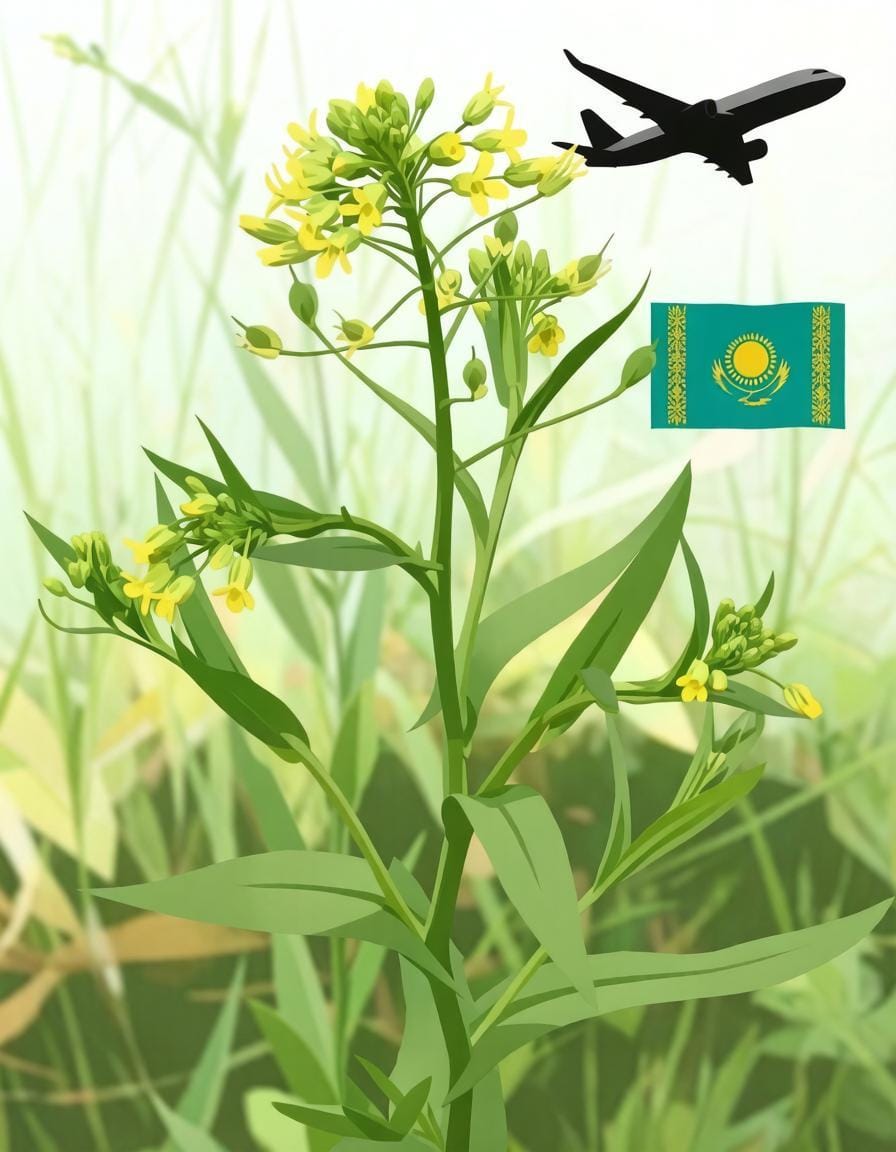
Camelina sativa — a once nearly forgotten oilseed crop from the Brassicaceae family — has been experiencing a rebirth in recent years precisely as a feedstock for aviation fuel. Its key advantage over other oilseeds is its ability to grow on poor, eroded, and drought-resistant soils without competing for the best agricultural land needed for food crops. From one ton of camelina seeds, approximately 200–230 liters of aviation fuel can be obtained, depending on the oil content of the feedstock, which typically ranges from 38–47%. This is why the crop is already being grown for SAF in the United States — in 2025, Delta Airlines flights at Minneapolis-Saint Paul airport were fueled with camelina-based fuel — and it is also being tested in Scotland and on degraded lands in southern Europe. For the North Kazakhstan Region, with its steppe climate and drought risks, this makes camelina a logical candidate for experimental sowings, which have already been established this year at the university's demonstration base.
Global demand for SAF
Interest in such projects is fueled not only by scientific curiosity but also by quite specific regulatory requirements. The European Union, under its ReFuelEU Aviation program, obliges airlines to gradually increase the share of sustainable aviation fuel in total refueling volumes, while the International Civil Aviation Organization (ICAO) promotes its own CORSIA system for offsetting carbon emissions in the industry. For aviation, where electric or hydrogen aircraft remain a distant prospect, replacing part of conventional kerosene with SAF is one of the few realistic ways to reduce the carbon footprint in the coming years. This creates growing global demand for feedstocks like camelina, and it is precisely this niche that the Kazakhstan-China project is trying to enter.
Not the first scientific bridge with foreign universities
Kozybayev University is generally building a network of international scientific and technological partnerships around itself rather than limiting itself to a single direction. Earlier, President Kassym-Jomart Tokayev at the Forum of International Strategic Partners in Astana specifically noted the university's cooperation with the University of Arizona (USA) — together they developed a technology for processing sulfur into innovative polymers, significant both for the chemical industry and for addressing environmental problems. The Chinese projects in agricultural technology and bioenergy logically fit into the same strategy: turning a regional university into a point of attraction for foreign investment and technology, not just an educational institution.
Author's conclusion
Both projects are still at the earliest, experimental stage — demonstration fields and trial sowings, not industrial production. But the choice of crops is telling: wheat and corn test the adaptability of conventional food varieties to local conditions, while camelina is a far riskier bet on a niche that is only just taking shape globally but promises to grow alongside tightening aviation decarbonization requirements. If the Kazakh camelina experiment proves successful, the country will gain a rare opportunity to occupy a niche in the production chain where competition among raw material suppliers is still far from saturation.

Comments ()