Slovenia also reduced nuclear power output due to heat — following Hungary and Romania.
European nuclear plants hit by summer heat grow again.
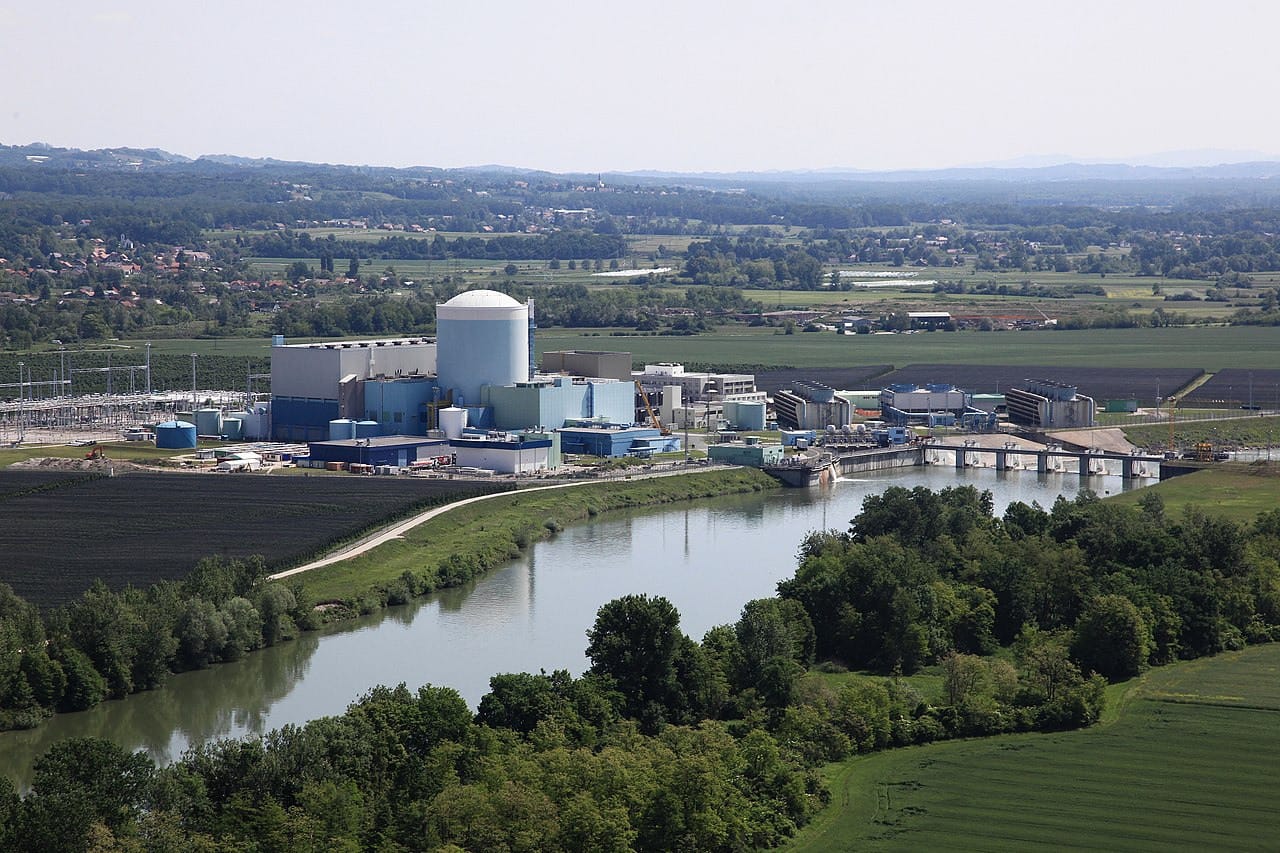
Slovenia's only nuclear power plant in Krško is reducing its capacity to 80% — for the same reason as its neighbors on the Danube, except this time the river itself is not to blame, but its tributary, European Pravda reports. At the same time, the crisis has hit where it was least expected — Moldova, which is not directly connected to the Danube.
The gist
- Slovenia's only nuclear power plant in Krško is reducing output to 80% capacity due to low water levels and high water temperature in the Sava River — a tributary of the Danube; this is the first time this has happened since 2003.
- In Romania, one unit at the Cernavodă nuclear power plant has already been shut down (–10% of the country's electricity generation), with a second under threat; authorities plan to sink four barges near the plant to raise the Danube's water level.
- Hungary reported a 1.5 cm rise in water levels after emergency measures, but the reactor at the country's only nuclear power plant remains under threat.
- Moldova faces the risk of an electricity shortage due to the shallowing of the Dniester and problems among its neighbors — authorities have called on the population to save electricity during peak hours.
Krško joins the list
The reason for the capacity reduction at the Slovenian plant is the low water level and high water temperature in the Sava River, the largest tributary of the Danube, which is used to cool the reactor. The restriction is expected to take effect overnight from Wednesday to Thursday, and further deterioration of hydrological conditions could lead to an even more serious reduction in output. The last time such a situation occurred was in 2003 — the plant then operated at reduced capacity for about three months. The fact that the current episode is described as the first in more than twenty years in itself shows how atypical this summer has been for the region's hydrology.
Romania raises the river level with barges
The situation around the Cernavodă nuclear power plant continues to escalate. After Romania blasted rocks on the Danube's bed to redirect water flow toward the plant, the country's authorities are preparing a new measure — sinking four barges directly in the area of the plant, hoping to artificially raise the river's level in the right spot. One unit at the plant has already been shut down, reducing Romania's electricity generation by 10%, and the fate of the second unit directly depends on whether these engineering measures work.
The domino effect reaches Moldova
The most unexpected development is that the crisis has affected a country that is formally not in the Danube basin. Moldova faces the risk of an electricity shortage due to the shallowing of its own Dniester River, combined with problems among its neighbors whose generation has also declined. The minister in charge has called on households to save electricity during peak hours to avoid emergency outages — meaning the consequences of the Danube crisis have reached the household level in a country that itself has nothing to do with that river but depends on the region's overall energy balance.
Why this matters for Kazakhstan
By now, the list of energy systems affected by the summer heat has grown to five countries and at least two different rivers — the Danube with its tributaries (Romania, Hungary, Slovenia) and the Seine with the Rhône (France), plus the domino effect has reached Moldova's energy system, while the Netherlands has closed canals and drinking water due to the same heat wave. This is no longer a single failure but a systemic picture: the more tightly a region's energy and water management are tied to the same rivers, the faster a local drought turns into a chain reaction that reaches even countries not physically adjacent to the affected river. For Kazakhstan, where the construction of a nuclear power plant near Balkhash — a closed body of water without an inflow on the scale of the Danube — is being prepared, this European season serves as a clear set of scenarios for the future: water that is too warm, water levels that are too low, and a domino effect on neighboring energy systems — three different mechanisms of the same risk.
Author's conclusion
None of the five cases individually would look like a systemic problem — France, Romania, Hungary, Slovenia, and the Netherlands could each tell their own local story of a hot summer. But taken together, within a single season, they form a clear demonstration that European energy and water management were designed for a climate that no longer exists. For countries that are only now designing new energy infrastructure, including Kazakhstan, this is less a reason for immediate alarm and more a reason to build such scenarios into calculations already at the design stage, rather than observing them after the fact.
#NuclearPowerPlant #Slovenia #Danube #Kazakhstan #Energy
Comments ()