Sweet Captivity of Charming Agricultural Subsidies
Kazakhstan spent nearly a trillion tenge on agricultural subsidies from 2011 to 2023, but the effectiveness of this funding raises serious doubts.
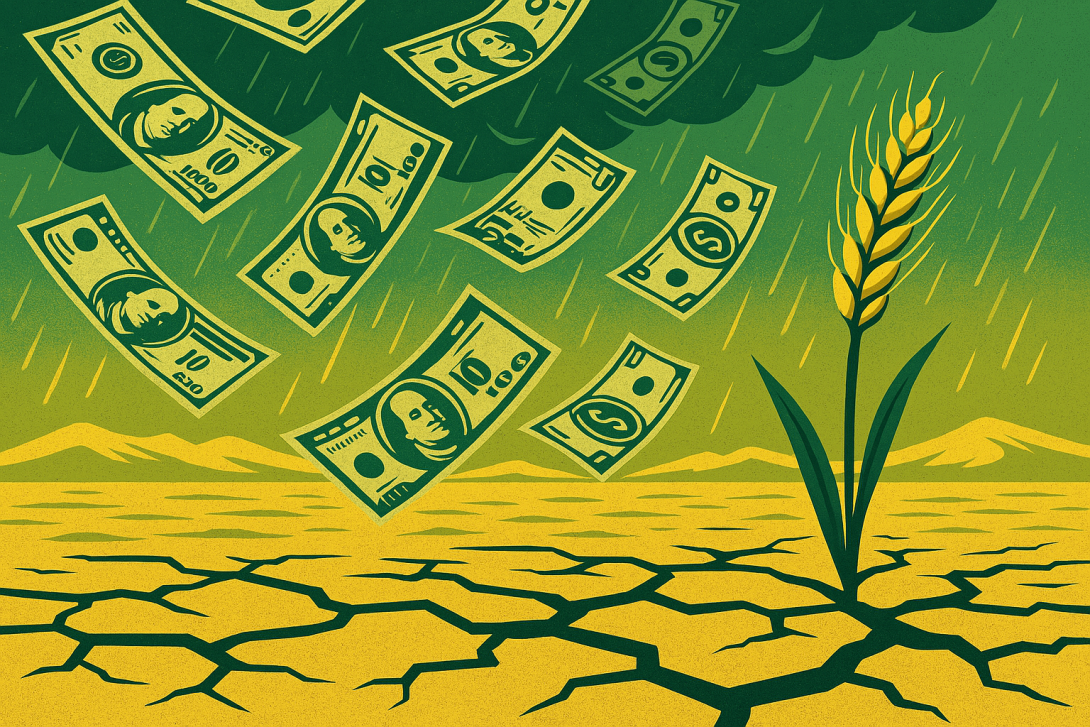
Nearly a trillion tenge or three billion dollars in agricultural subsidies
Well, let's continue the comprehensive analysis of the agricultural sector, its brilliant failures and fantastic incompetence in management.
And today we have the sweet part — subsidies.
Kazakhstan's agriculture has been the largest recipient of state subsidies for many years. In 2023 alone, 500 billion tenge was allocated to support the agro-industrial complex, of which 318.1 billion tenge was directed to crop production and financial instruments. However, the main problem is that with such huge investments, yields remain extremely unstable, and the effect of subsidies is questionable.
Chronicle of failures: throwing money at the problem
Looking at the numbers, the dynamics of crop production subsidies are indeed impressive: from 2011 to 2023, 952.9 billion tenge was allocated for crop subsidies, or converted at different exchange rates of different periods — $2.94 billion.
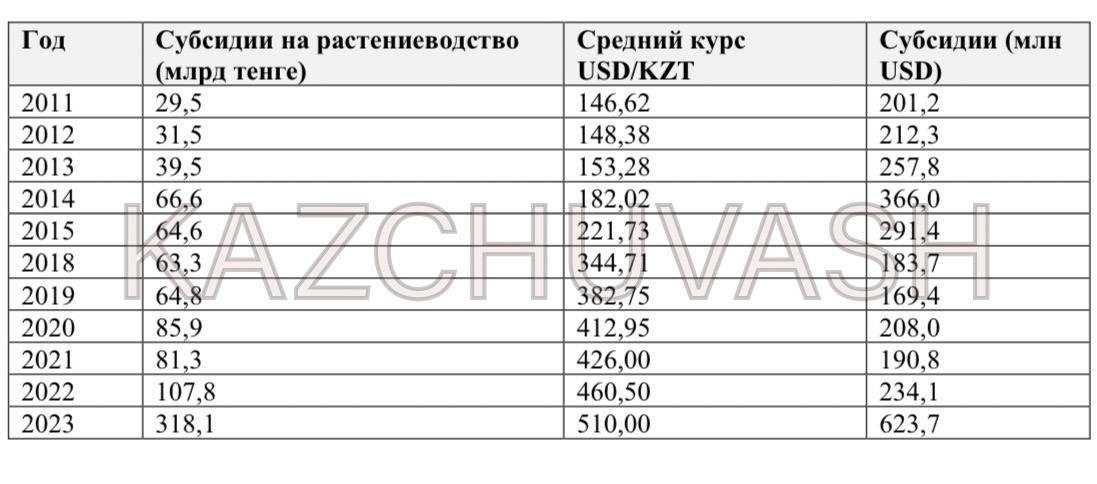
These figures show that government spending on crop production is increasing many times over. However, no proportional increase in yields is observed.
In the yield ranking, we are somewhere between Angola and Cameroon
Analyzing global wheat yield indicators, it becomes obvious that Kazakhstan is seriously lagging behind leading agricultural countries. While the Netherlands (93.9 c/ha), Belgium (90.6 c/ha) and the United Kingdom (85.9 c/ha) demonstrate advanced indicators, Kazakhstan, with a yield of 12.7 c/ha, is stuck somewhere between Angola (8.8 c/ha) and Cameroon (13.1 c/ha). This is far from a position that can be called worthy for a country with vast agricultural lands.
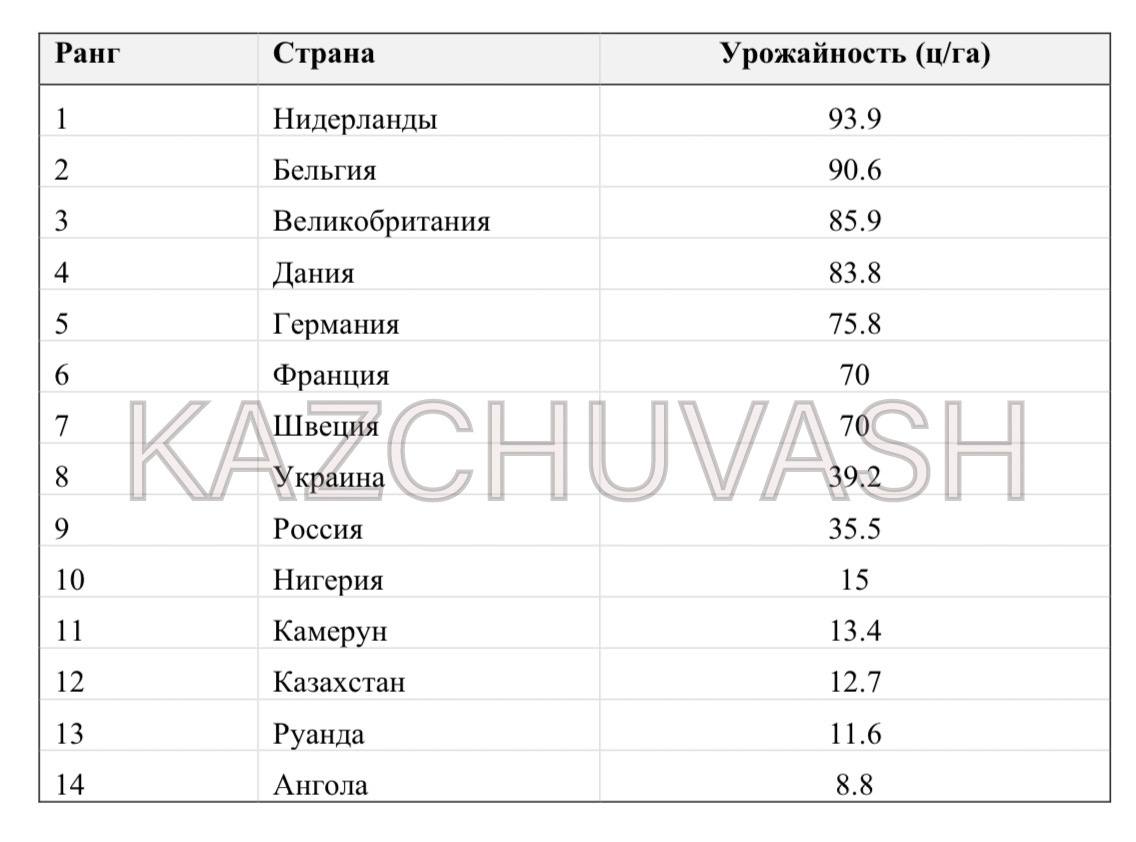
Instead of gradually increasing its competitiveness in the global agro-industry, Kazakhstan continues to remain in the group of countries with low wheat productivity. This is the result of many years of lack of systemic reforms and the absence of a real strategy for adapting to climate change.
Given the current situation, Kazakhstan risks finally becoming entrenched in the category of agricultural outsiders, despite the billions of tenge allocated annually to support the industry.
Collective farm "30 years without a strategy"
Over three decades of independence, one could have at least noticed that our agriculture is slightly more dependent on the climate than we would like. But instead of reflection and planning — an eternal ritual of surprise. First a drought, then downpours, then the wind blows from the wrong direction, then there's no price, then it's jinxed, then a witch cast a spell. And every year the Ministry of Agriculture looks at the sky as if it's all happening for the first time.
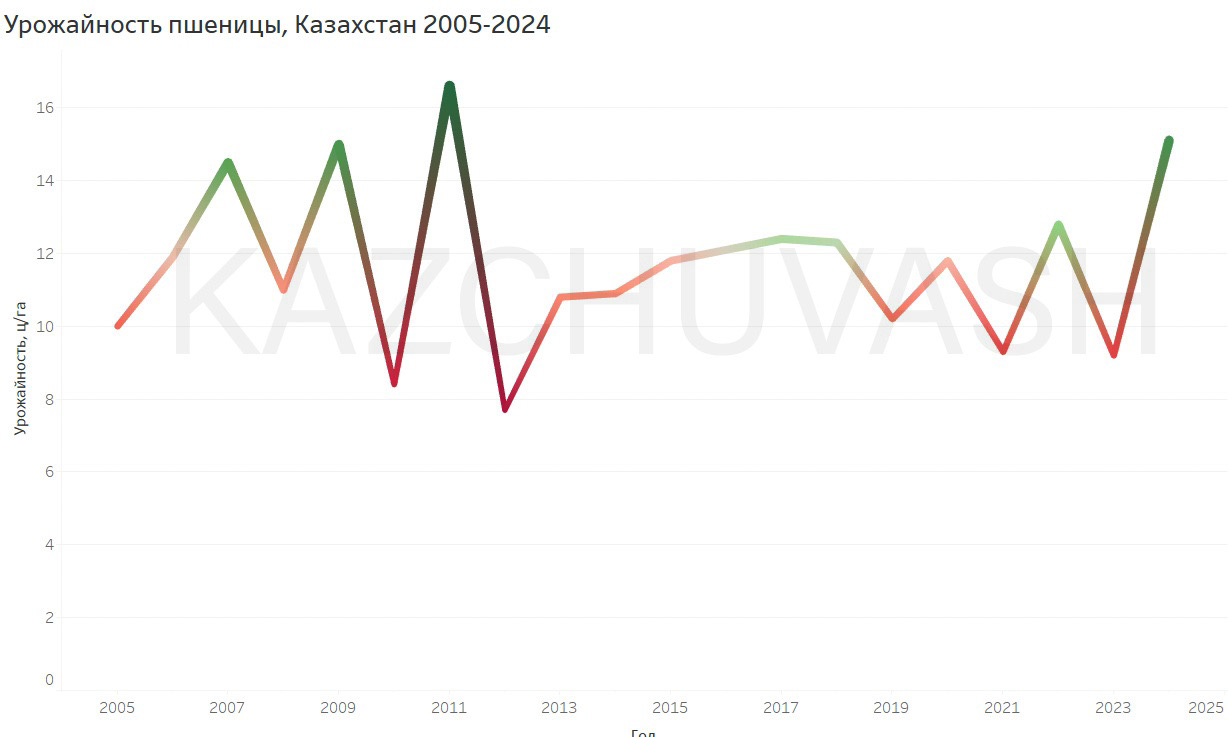
The Ministry of Agriculture's reaction to such situations is standard: crisis — subsidies to large farmers, flood — subsidies to large and medium-sized ones, drought — "strengthening measures" to support large, small and medium-sized ones.
But not a strategy. Not a system. Not an attempt to adapt. Just patching holes.
As a result, farmers get used to not looking for ways to improve efficiency, but thinking about how to reliably beg for support. Harvests are unstable, food security hangs by a thread and depends on external conditions.
The next crop failure wave is not "sudden," but "on schedule." And it will hit harder.
Subsidies burned, no harvest — let's keep sowing!
A typical development of agriculture the Kazakh way: expand the sown areas, no matter where and what to sow, the main thing is that the reports look pretty.
Here, for example, are the yield maps for 2023 and 2024. If you like the color red — you'll love them. As I said earlier, when analyzing and assessing the harvest, last year 2024 was not indicative due to the flood.
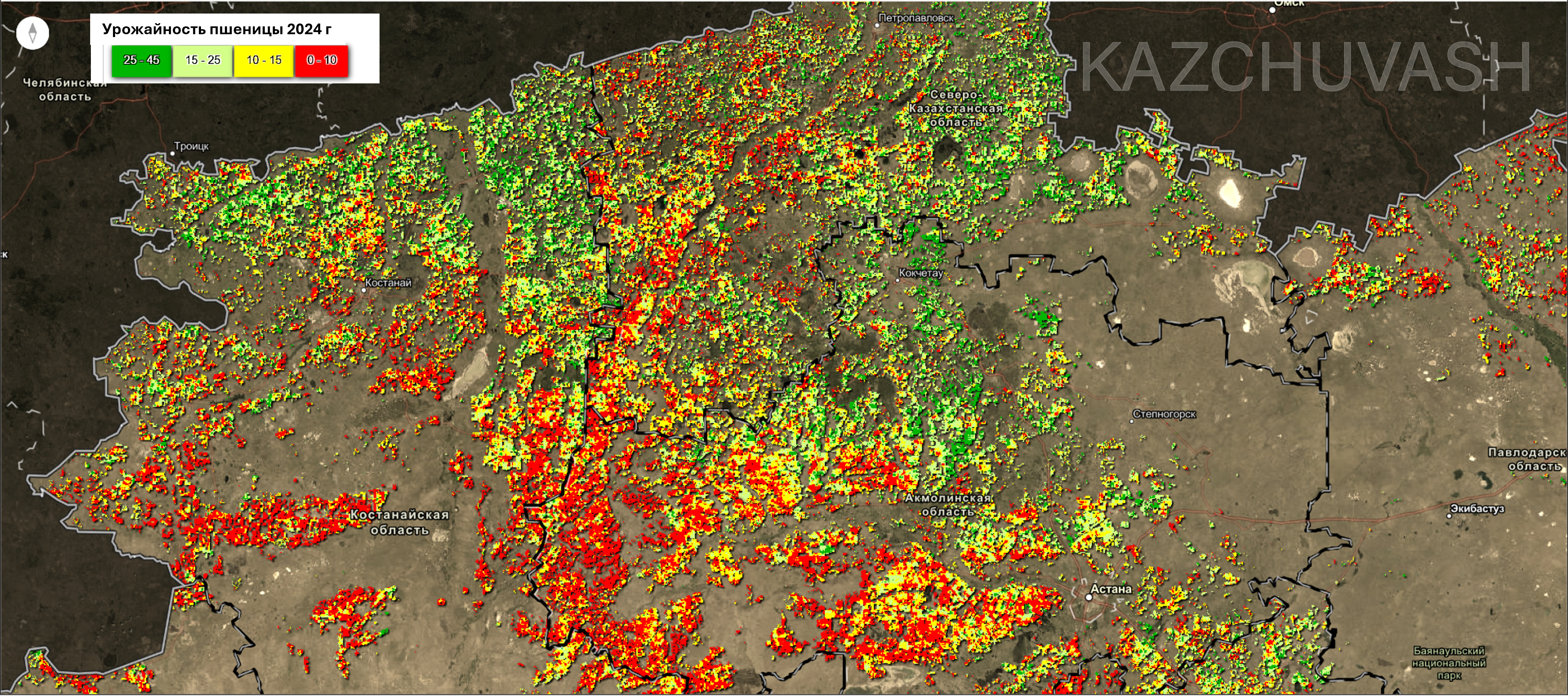
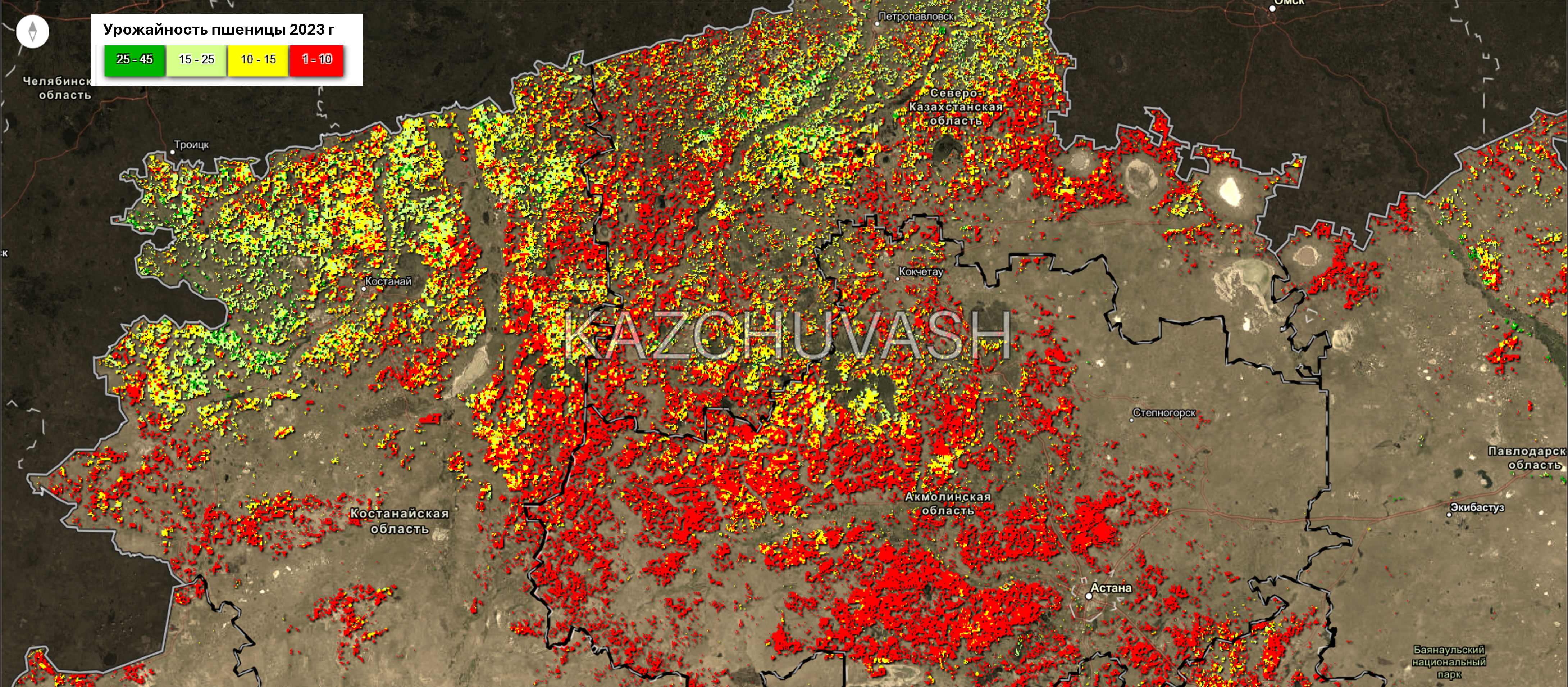
But 2023 is quite indicative. Almost the entire country below 10 centners per hectare. Beautiful, but useless.
Wheat continues to be planted in regions with chronic drought, where there is almost no humus, and in some places where there is less rainfall than there are ideas in the minds of officials.
Economics? No, never heard of it.
Money flies away into dust, soil is depleted, farmers become dependent on subsidies, and the Ministry of Agriculture proudly reports on "increasing support for agricultural producers."
The only question is: why? Why sponsor deliberately unprofitable farming every year, instead of: a) investing in drought-resistant crops, b) redirecting subsidies to where things actually grow, c) cutting off funding to those who "sow for the sake of the report."
And now the question: who benefits from all this? Who is so stubbornly pushing wheat where it doesn't grow, and why is this still considered the norm? Why, despite the entire inefficiency of the sector, is this particular segment still being pumped with money?
This is the question that a new agricultural policy should start with. If, of course, anyone ever gets around to writing one.

Comments ()