The EU restricts imports of Brazilian meat due to new veterinary requirements.
Brazil removed from EU list of countries meeting food safety standards.
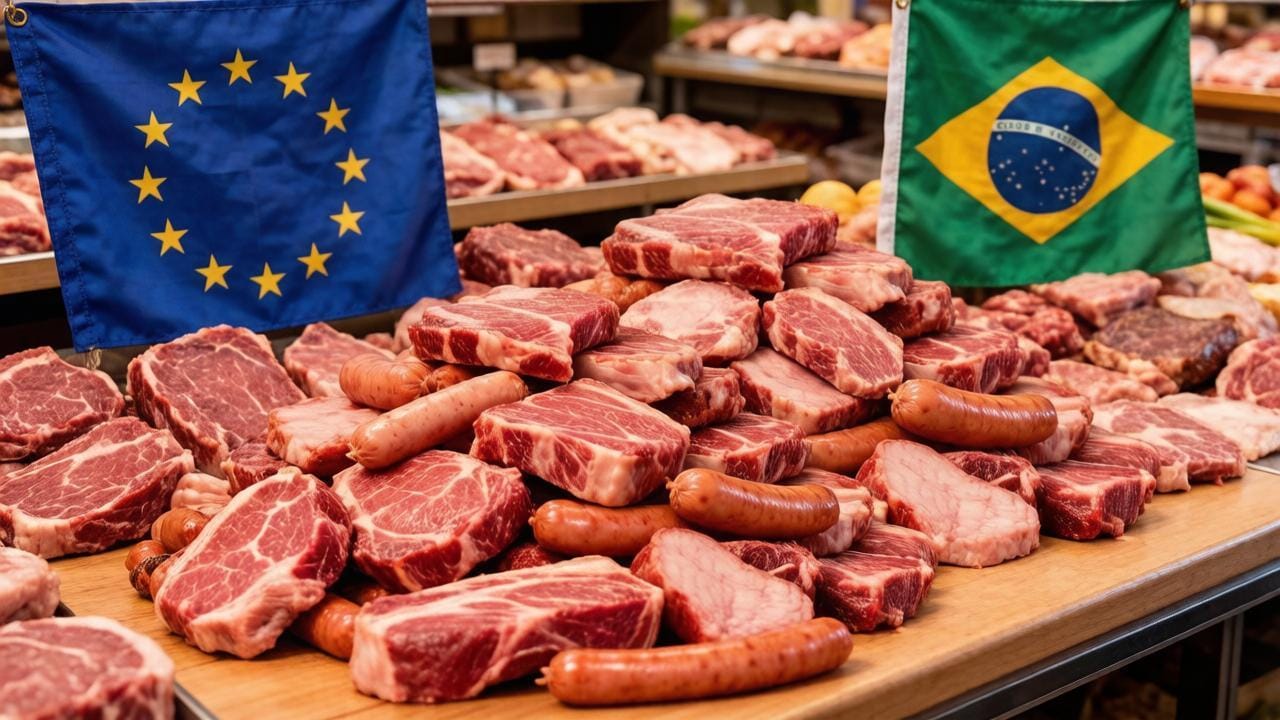
From September 3, 2026, the European Union is closing its market to Brazilian meat, poultry, eggs, and a number of other livestock products, reports Euronews. The reason is Brazil's use of antimicrobial drugs to stimulate livestock growth — a practice banned in the EU. For Kazakhstan, which is increasing its export ambitions in the agro-industrial sector, this decision is not an unrelated story.
The Gist
- The committee of experts from EU member states unanimously voted to remove Brazil from the list of countries meeting the European Union's sanitary standards.
- The ban takes effect on September 3, 2026 and covers cattle, horses, poultry, eggs, aquaculture products, honey, and casings.
- The decision came two weeks after the EU-Mercosur free trade agreement entered into force, which European farmers had vehemently opposed.
- Kazakhstan, which aims to export halal meat and grain to premium markets, receives a signal: compliance with sanitary standards is a mandatory condition, not an option.
How Brazil Ended Up Under the Ban Despite the Trade Agreement
The paradox of the situation is that the ban followed almost immediately after the historic EU-Mercosur trade agreement, which provisionally entered into force on May 1, 2026. The deal liberalized agricultural trade between the European Union and four South American countries — Brazil, Argentina, Paraguay, and Uruguay. However, just two weeks later, Brussels clearly demonstrated: trade preferences do not override sanitary requirements.
Brazil became the first country to be removed from the register of states authorized to export livestock products to the EU. The formal reason is the use of antimicrobial drugs to accelerate animal growth. European Commission spokesperson Eva Hrnčířová directly stated that trade agreements do not change the Union's sanitary rules, and both European and foreign producers are obliged to comply with them.
What's Behind the "Meat" Dispute
Behind the technical decision lies a political logic. European farmers opposed the EU-Mercosur agreement from the moment it was announced, fearing unfair competition. Latin American meat production operates under looser regulations and significantly lower production costs. Brussels, by simultaneously introducing protective quotas and mechanisms to monitor potential market disruption, is trying to resolve this contradiction.
The ban on Brazilian imports is part of the same logic: a demonstration that the EU is ready to apply the rules in practice, not just declare them. As one EU diplomat explained, the ability to ensure compliance with standards is necessary for trust and a level playing field. At the same time, the door is open for Brazil — as soon as it confirms compliance with the requirements, imports will resume under the same preferential conditions as for other Mercosur countries.
A Lesson for Kazakhstan's Agro-Industrial Sector
In recent years, Kazakhstan has been actively developing meat exports — primarily halal beef and lamb — to the Persian Gulf countries, China, and potentially Europe. The situation with Brazil clearly shows: access to premium markets is determined not only by production volume and logistics, but also by strict compliance with the sanitary standards of the importing country.
The Ministry of Agriculture of the Republic of Kazakhstan reports growth in livestock numbers and processing volumes, but the issue of veterinary certification and adherence to international norms — in particular, Codex Alimentarius standards — remains a weak point for the industry. The use of growth hormones and antibiotics in livestock farming in Kazakhstan is not yet regulated at a level comparable to European requirements.
Author's Conclusion
The ban on Brazilian meat is not an isolated trade incident, but a systemic signal of how modern food markets operate. Access to them is determined by regulatory compliance, not just price and geography. For Kazakhstan's agro-industrial sector, this means one thing: without bringing veterinary and sanitary standards in line with international norms, export ambitions will remain mere declarations. The Brazilian precedent is worth studying — preferably before a similar situation affects domestic producers.

Comments ()