The Strait of Hormuz revealed a weak point in the global agri-food sector.
The military crisis near the Strait of Hormuz has again reminded the world how vulnerable the global food production system remains.
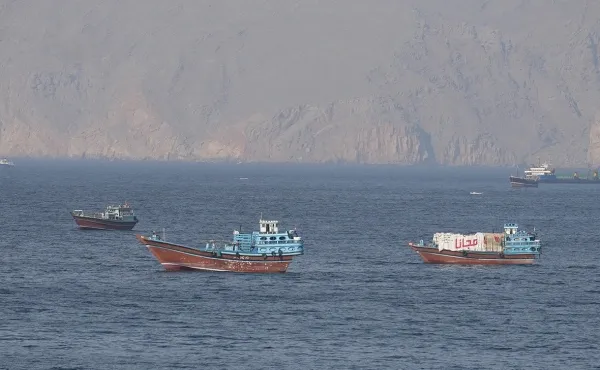
The closure of the Strait of Hormuz in late February 2026 halted not only oil and gas but also a third of global fertilizer trade — at the worst possible time: in the midst of planting season in the Northern Hemisphere. Fertilizer prices in certain categories have doubled or tripled. Farmers from India to Brazil are being forced to make planting decisions under conditions that did not exist just three months ago, Reuters reports. Kazakhstan, dependent on imported fertilizers and expanding its grain exports, has found itself in the direct line of fire.
The Gist
- Tanker traffic through the Strait of Hormuz collapsed by more than 90% in the first days after the escalation. The strait handles about 35% of global oil exports, 20% of LNG, and up to 30% of global fertilizer trade.
- Fertilizer prices rose by 20–30% in the first month of the conflict. Insurance premiums for tankers in the Hormuz area increased 10-fold from pre-conflict levels.
- According to FAO estimates, grain producers could lose up to 5% of their income in 2026, with long-term consequences lasting until 2030. Farmers face a choice: reduce fertilizer application, switch to other crops, or absorb the sharply increased costs with the risk of bankruptcy.
- Unlike oil, for which strategic reserves exist, G7 countries have no strategic fertilizer reserves. No replacement mechanism is in place.
- Kazakhstan annually imports a significant share of its mineral fertilizers. Rising prices are already squeezing the profitability of grain production on the eve of the harvest campaign.
The Uninsured Bottleneck
The Strait of Hormuz is one of the most critical chokepoints in the global economy. Before the conflict, it handled about 35% of global oil exports, 20% of LNG, and up to 30% of fertilizers — including sulfur, which is essential for producing phosphate fertilizers.
Unlike oil and gas, for which alternative routes and strategic reserves exist, no such infrastructure exists for fertilizers. The Saudi pipeline bypassing the strait is designed for oil, not ammonia. G7 countries do not build strategic fertilizer reserves — unlike their oil stockpiles. A ship captain risking passage past drone strikes will prefer to carry oil rather than fertilizers.
Cascading Shock: From Energy to Harvest
The world is entering an era of shocks, where crises are no longer isolated events but interconnected disruptions with global consequences. COVID-19 exposed the vulnerability of supply chains. The war in Ukraine shattered food and energy markets. The Hormuz crisis has shown how tightly intertwined the markets for energy, fertilizers, and food are.
The mechanism of shock transmission is straightforward: it starts with a spike in energy prices and logistical disruptions, followed by a fertilizer shortage and reduced crop yields, and then, months later, rising food prices and market volatility.
The head of Norway's Yara International — the world's largest fertilizer producer — warned that reduced fertilizer availability could lead to the loss of "up to ten billion portions of food" on a global scale.
The Farmer Between Price and Yield
Agricultural production operates on biological timelines that cannot be postponed. Planting season proceeds regardless of the geopolitical situation. This is why the crisis has hit particularly hard: farmers in the Northern Hemisphere faced a choice with no room for a pause.
There are three options — and each is painful. First: reduce fertilizer application and accept lower yields. The relationship between fertilizer dose and yield is non-linear; even a moderate reduction in dose leads to a disproportionately large drop in harvest. Second: switch to alternative crops — less fertilizer-intensive ones, such as legumes. Third: absorb the sharply increased costs with the risk of financial collapse.
It is this third scenario that is already playing out in Brazil: the rise in imported fertilizer costs, combined with weak grain production margins, has become one of the main causes of a wave of bankruptcies and farm auctions, as Reuters reported in mid-June.
A Moment for Rethinking
In the long term, the FAO recommends investing in sustainable, resource-efficient agriculture, scaling up alternative fertilizer production technologies — such as green ammonia — and treating food systems as strategic infrastructure.
FAO Chief Economist Máximo Torero puts the essence of the moment bluntly: the world has entered an era of interconnected shocks. The task is not just to survive the current crisis, but to build systemic resilience — through diversifying ports, roads, railways, warehouses, and logistics hubs; through creating strategic fertilizer reserves; and through developing alternative trade corridors.
The Kazakhstan Context
For Kazakhstan, the Hormuz crisis has a dual dimension. On one hand, it is a direct blow to production costs: the country annually imports a significant share of its mineral fertilizers, including nitrogen fertilizers, some of which historically came through supply chains linked to Middle Eastern producers. The 20–60% rise in fertilizer prices directly squeezes the profitability of grain production.
On the other hand, it presents a geopolitical opportunity. Kazakhstan has its own natural gas reserves — the primary feedstock for nitrogen fertilizer production. Expanding domestic fertilizer production could reduce import dependence and open up new export markets amid a global shortage.
Finally, the Hormuz crisis directly impacts the transit routes that Kazakhstan is actively developing through Iran — including the recently agreed-upon use of the Shahid Rajaee port. The opportunities and risks of this partnership look very different today than they did just six months ago.
Author's Conclusion
The Hormuz crisis has exposed what economists have been warning about for years: the global food system rests on a few critical chokepoints — and no one has built safety nets for fertilizers the way they have for oil. Kazakhstan, aspiring to be a regional food hub, has received a stark lesson: the strategic resilience of the agricultural sector begins not with crop yields, but with independence from fragile global supply chains.
Comments ()