Uzbekistan strengthens support for livestock farming and sets a benchmark for Central Asia
Uzbekistan launches a new livestock support package, including tax breaks, subsidies, soft loans, and industry digitalization.
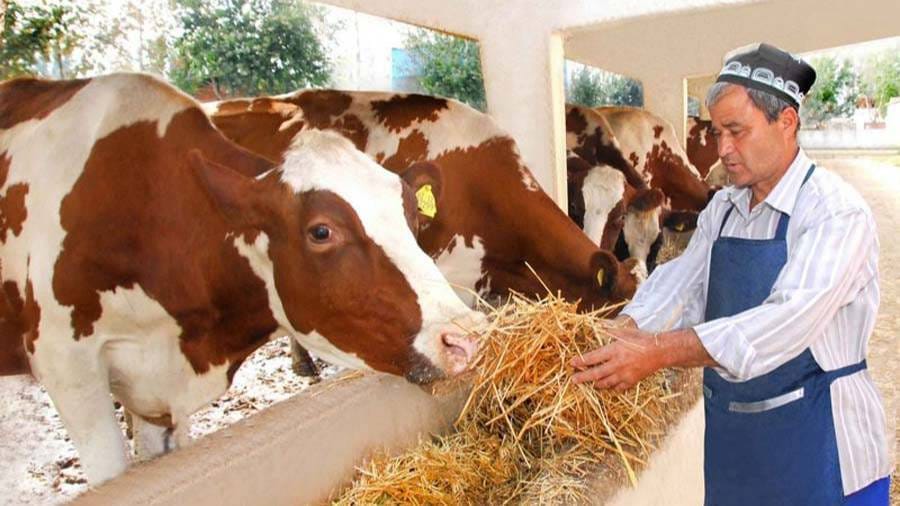
The resolution signed by President Shavkat Mirziyoyev may affect not only the country's domestic market but also the competitive situation across the entire Central Asian region, including Kazakhstan.
The Gist
• Imports of breeding livestock, sheep, and goats into Uzbekistan will be exempt from VAT until January 1, 2029.
• Farmers will be able to receive subsidies of up to 700,000 soums for developing breeding livestock.
• Preferential loans with terms of up to 10 years are being launched for the industry.
• Authorities aim to increase the processing of meat and dairy products to 50% by 2028.
Focus on Breeding Livestock
The signed resolution provides for an exemption from value-added tax on imports of breeding cattle, sheep, and goats from June 1, 2026 to January 1, 2029. At the same time, new mechanisms are being introduced to stimulate the reproduction of breeding stock.
From July 1, 2026, subsidies for breeding calves obtained from identified cows in household farms will come into effect. Payments for artificial insemination and embryo transplantation are also provided. The amount of support can reach 700,000 soums depending on the technology used.
New Loans and Digital Control
One of the key directions of the reform will be expanding access to financing. Preferential loans with terms of up to 10 years are provided for entrepreneurs in the livestock industry, and financing for individual projects on breeding livestock can reach 5 billion soums.
Simultaneously, the authorities intend to implement a unified digital system for recording livestock numbers, breeding stock, and investment projects. This should increase the transparency of the industry and the efficiency of distributing state support.
Why This Matters for Kazakhstan
For Kazakhstan, the initiatives of the neighboring country are of interest primarily from the perspective of competition for investments and the development of the export potential of livestock farming. Uzbekistan is consistently expanding its tools for supporting the industry, combining tax incentives, direct subsidies, and affordable financing.
Special attention should be paid to the emphasis on breeding livestock and product processing. These areas are currently considered among the most important for increasing added value in the agricultural sector and reducing dependence on imports of genetic material. In Kazakhstan, similar tasks are also among the priorities of state agricultural policy.
Goal — Growth in Processing and Productivity
According to the plans of the Uzbek authorities, by 2028, the level of industrial processing of meat and dairy products should reach 50%, and the share of breeding cattle should reach 90%. To achieve these targets, a specialized agency for the development of livestock farming and pasture management is being established under the Ministry of Agriculture of Uzbekistan.
Such measures indicate the country's desire to accelerate the modernization of the industry and increase its competitiveness in the regional market.
Author's Conclusion
Uzbekistan is betting on a comprehensive modernization of livestock farming, combining tax incentives, subsidies, affordable financing, and digital control. For Kazakhstan, this is a signal that competition for the markets of meat, milk, and breeding livestock in Central Asia will intensify. The countries that will benefit are those that can not only increase their livestock numbers but also develop deep processing, selection, and export of high-value-added products.
Comments ()