Uzbekistan wants to lease 50,000 hectares of land in Kazakhstan for livestock farming.
At the Uzbek-Kazakh business forum, a proposal emerged that could reshape meat trade: raise livestock for Uzbekistan's market directly on Kazakh soil, rather than just selling finished meat.
The idea was voiced by the Chairman of the Chamber of Commerce and Industry of Uzbekistan Davron Vakhabov, reports Inbusiness.kz.
The gist in brief
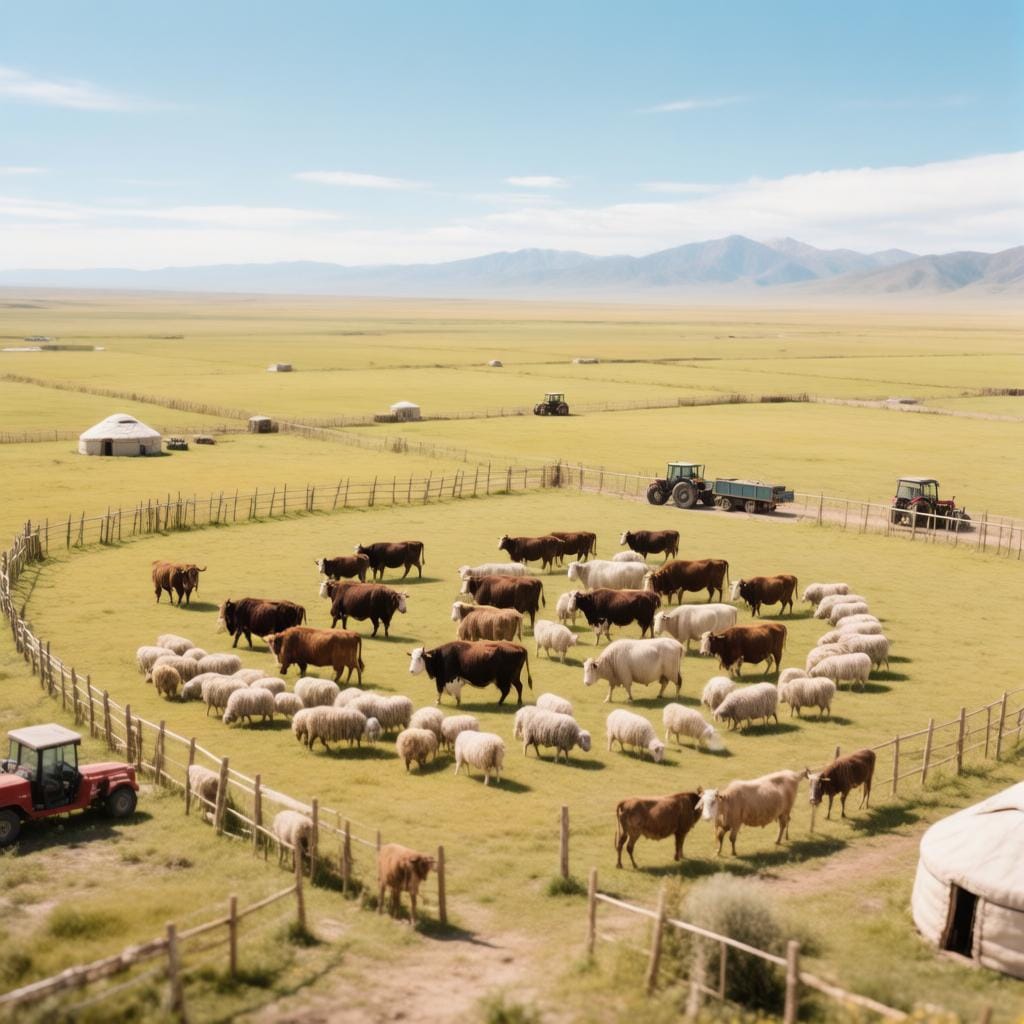
- Uzbekistan has proposed implementing an industrial livestock project in Kazakhstan: Uzbek investors would purchase young cattle, establish a feed base, and fatten the livestock on Kazakh land, then export the animals to Uzbekistan once they reach a market weight of over 400 kg.
- For the project, it is proposed to allocate up to 50 thousand hectares of land for cattle fattening; the location, terms of land provision, and procedure for admitting investors have not yet been determined.
- Uzbekistan is already the main sales market for Kazakh meat — in 2025, 32 thousand tons of beef and 34 thousand tons of lamb were exported there for about $300 million, accounting for over 90% of all Kazakh meat exports.
- Uzbekistan's annual meat demand has reached 2.15 million tons, while domestic production amounts to about 1.6 million tons — the resulting deficit has to be covered by imports.
What exactly Uzbekistan is proposing
According to Vakhabov, the scheme should work as follows: Uzbek investors gain access to Kazakh land, independently purchase young cattle, build a feed base, and organize fattening of the animals on site, then transport them to Uzbekistan once they reach a market weight of over 400 kg. Formally, this is no longer trade in finished meat, but the transfer of part of the production cycle — from raising to the pre-sale stage — directly onto Kazakh territory. Following the forum, the parties agreed to continue discussions, but there are no specifics yet — where exactly the project will be located and on what terms the land will be provided.
Why Uzbekistan needs this
The logic of the initiative is directly linked to demographics and the structural meat deficit in Uzbekistan itself. With a population that continues to grow, the country's annual meat demand has reached 2.15 million tons, while domestic production covers only about 1.6 million tons — the gap of 550 thousand tons is covered by imports. Kazakhstan is the most advantageous partner for Uzbekistan for a number of reasons: geographical proximity, developed logistics, and both countries' participation in a single regional economic space reduce costs compared to more distant suppliers.
An already established dependence
The proposal to allocate land for cattle fattening is not the beginning of trade relations but their deepening. Even without the new project, Uzbekistan absorbs over 90% of all Kazakh meat exports, and Kazakhstan already plays the role of a key supplier of meat products to the neighboring country. The initiative with 50 thousand hectares effectively offers Kazakhstan the chance to become not just a seller, but a production platform for the Uzbek market — with deeper integration of the supply chain and, likely, more predictable demand for years ahead, if the parties bring the negotiations to concrete agreements.
A parallel from the other side of the counter
While Uzbekistan is proposing to increase Kazakh meat production for its own needs, Kazakhstan itself, on another trade front, is going in the opposite direction — the country has become one of the largest importers of Russian meat, increasing purchases by 36% in 2025. This creates a dual picture: Kazakhstan is simultaneously increasing meat exports to Uzbekistan almost monopolistically and increasing meat imports from Russia — that is, it is embedded in the regional meat market from both sides at once, not just as a pure supplier or a pure buyer.
Author's conclusion
The initiative on irrigation condominiums showed that Kazakhstan is looking for ways to use its own water more efficiently; Uzbekistan's proposal shows that regional neighbors see Kazakh land and logistics as a resource that can be used to solve their own food problems. So far, the project remains at the level of an idea voiced at the forum, without concrete parameters — but the very framing of the question is telling: for its Central Asian neighbors, Kazakhstan is increasingly acting not only as a source of finished products, but also as a platform for relocating production capacity.
Comments ()