What is wrong with Kazakhstan's agriculture (part 2) - livestock farming
Challenges and solutions in livestock farming.
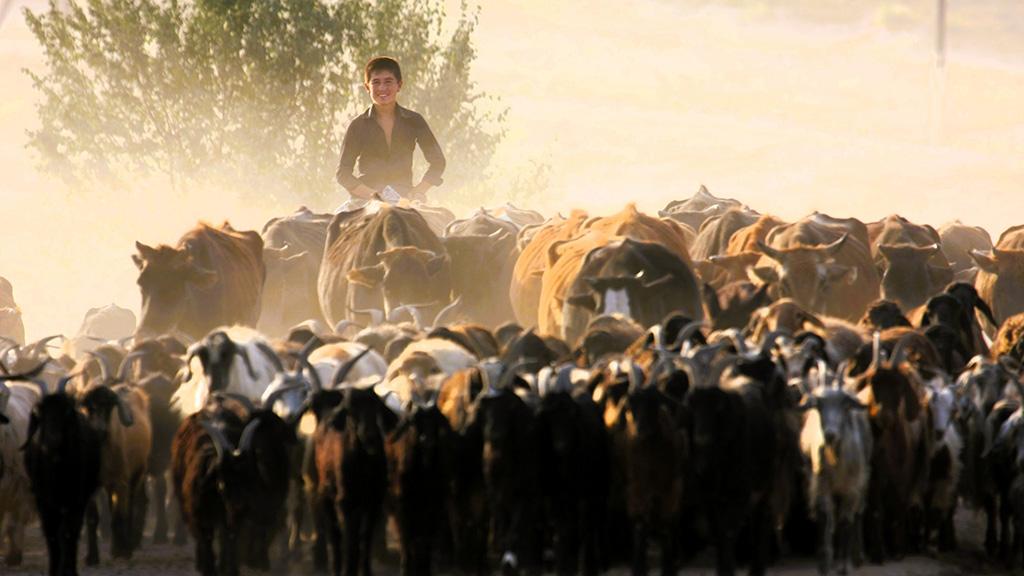
If we consider Kazakhstan as a country of steppes and nomadic heritage, it would be logical to assume that livestock farming should be a leading industry. In reality, everything works on the principle of "plenty of cattle, but not enough meat and milk."
Let's figure out why Kazakhstan did not become a second Argentina, where the main failures lie, and why veterinary medicine in the country is less developed than in medieval Mongolia.
Livestock Numbers and Productivity: Extensive Farming Without Progress
Officially, Kazakhstan owns a huge number of livestock: Over 9 million head of cattle, 21 million sheep and goats, 4 million horses, and 300 thousand camels.
Sounds impressive, but there are nuances. Average productivity is very low. For example, milk yields are on par with African countries: an average of 2-3 thousand liters per cow per year, while in Europe it's 6-8 thousand liters. In Chuvashia, a cow recently set a world record - 18 tons of milk per year. We also have weak genetics – the majority of the herd consists of local mixed breeds not adapted to intensive production. The import of foreign breeds is slow, and most small farmers don't want to hear about breed improvement.
Feed is problem #1. In dry years (and such years will now be frequent), mass livestock mortality begins because there is no feed base. Moreover, livestock begins to die in places where it shouldn't be raised at all, for example, in Mangystau. Remember the saying "zhem - elu, shop - elu" (eat - die, grass - die).
Kazakhstan could become a world leader in meat, but instead exports live cows to Uzbekistan and Tajikistan, where they are slaughtered, processed, and sold back to Kazakhstan already in the form of sausages and wieners.
We Have Virtually No Deep Meat Processing
In developed countries, meat is not just raw fillet, but a huge processing industry. Here, it's the opposite – Kazakhstan exports live animals or carcasses, not finished products. This is all because there is no processing of hides, horns and hooves, blood, intestines, and everything else.
Meat processing plants supposedly exist, but they are either idle or underutilized. Because of this, Kazakhstan cannot compete with Russia, Belarus, or China.
This year, meat prices will rise faster than wages – because even within the country, logistics and processing remain expensive. And prices haven't been raised for 4 years; farmers are starting to leave livestock farming and sending their herds to slaughter.
The question: why a country with millions of heads of livestock cannot provide its citizens with affordable meat is more about the income of the population than about farmers working at a loss.
Veterinary Medicine: A National Catastrophe
Now for the fun part – the veterinary system, which still operates according to standards that have been banned in Europe since the 18th century.
Epidemics and quarantines here are like a lottery – you might get lucky.
Every year, outbreaks of brucellosis, foot-and-mouth disease, and anthrax flare up in Kazakhstan. In some regions, 20-30% of livestock may be sick with brucellosis, but authorities pretend everything is fine. Brucellosis among workers on infected farms is growing rapidly, and it is almost impossible to cure in humans.
Due to poor animal registration, if an epidemic breaks out, finding the source is almost impossible.
Add to this the rampant corruption in vaccination. Mrs. Isaeva spent 2.5 billion euros on veterinary safety. Where are they (the safety and Isaeva)?
The state purchases millions of doses of vaccines, but half either turn out to be ineffective because they bought water bottled in Africa, or they disappear in a fantastical manner.
Vaccinations are often done "on paper," but in practice, the livestock is not protected. Or, if the vaccine is of poor quality, healthy livestock become infected with the very thing they were being vaccinated against.
Small farmers often refuse vaccination because they do not trust government drugs.
We also have terrible meat quality control. Any veterinary certificates can be bought. There is no clear control over antibiotics – meat on the market may contain dangerous doses.
Slaughterhouses operate on a "whatever works" principle; sanitary conditions in most slaughterhouses are at the level of a horror movie. In Karabulak, I personally saw three-tier feedlots where livestock are fed straw and anabolic steroids with water.
The question: how can a country with millions of livestock be so negligent about animal health?
Feed Grain and Fodder: Nothing to Eat?
Livestock farming cannot be efficient without good feed. Our situation is such that 70-80% of feed is hay and straw, not complete compound feed. Compound feed is expensive because the country exports feed grain instead of processing it domestically. You can count the number of feed mills on the fingers of one hand.
Pastures are degrading because livestock graze without rotation.
The result is that animals grow slower, meat is more expensive, and productivity is lower.
The question: why export grain if you can process it domestically?
Why Do We Import Milk and Meat?
With all this system, Kazakhstan, an agricultural country, imports meat and dairy products! You can see this clearly on store shelves.
Dairy products – imported from Russia, Belarus, and Kyrgyzstan.
Chicken meat – from Russia and Belarus.
Beef – even imported from Kyrgyzstan and the Russian Federation in finished form, even though we have millions of heads of cattle.
Why is this?
Expensive domestic production. High cost due to poor logistics and lack of processing. Problems with veterinary medicine – export to normal countries is impossible, meaning serious players won't enter the market.
The question: how can a country with so much land and livestock depend on imports of milk and meat?
Possible Solutions and What Can Still Be Done?
To make livestock farming not a problem but a competitive advantage, three key things are needed:
1. Veterinary Reform
✅ Digital livestock registration – every cow must have an electronic passport.
✅ Honest vaccination – without schemes and kickbacks.
✅ Strict control over meat quality – ban on trade without certified laboratories.
✅ Involve private laboratories like Olympus or Invitro for conducting analyses, primarily for people working with livestock.
2. Processing and Compound Feed Production
✅ Construction of modern meat processing plants with deep processing.
✅ Processing of hides, horns and hooves, and wool.
✅ Development of compound feed production – use feed grain domestically instead of sending it abroad.
3. State Policy, Not Simulation of Work
✅ Subsidies for those who actually work (not just lobbyists).
✅ Development of genetics and breeding – improvement of livestock breeds.
✅ Introduction of modern fattening methods – intensive technologies instead of "traditional grazing."
✅ Close down NANOC (National Agrarian Science and Education Center) and fire all the lazy idlers calling themselves agricultural scientists, and create a real vertically integrated agrotechnological hub on its basis.
Kazakhstan's livestock farming has enormous potential, but for now, it's operating with the handbrake on.
If nothing changes, Kazakhstan risks remaining a country where livestock graze on millions of hectares, but the stores sell Belarusian sausage.

Comments ()