84% of countries failed to meet commitments on environmentally harmful subsidies — Kazakhstan disclosed only part of its own
Of 134 countries submitting national reports to the Convention on Biological Diversity (CBD), only 21 (16%) fully identified their harmful nature subsidies by the 2025 deadline.
In 2022, almost the entire world signed up to a commitment to by 2025 identify all government subsidies harmful to biodiversity, and by 2030 to reduce them by at least $500 billion per year. A fresh analysis by Carbon Brief shows that virtually all countries missed the deadline, and among the few that did report even partially was Kazakhstan — with a single line of data that barely reflects the true scale of such subsidies in the country.
In a nutshell
- Of the 134 countries that submitted national reports to the Convention on Biological Diversity (CBD), only 21 (16%) fully identified their nature-harmful subsidies by the 2025 deadline.
- The 32 countries that disclosed at least some data spend a total of around $270 billion per year on such subsidies — according to experts, this is just the "tip of the iceberg": the global estimate reaches $1.7–3.2 trillion.
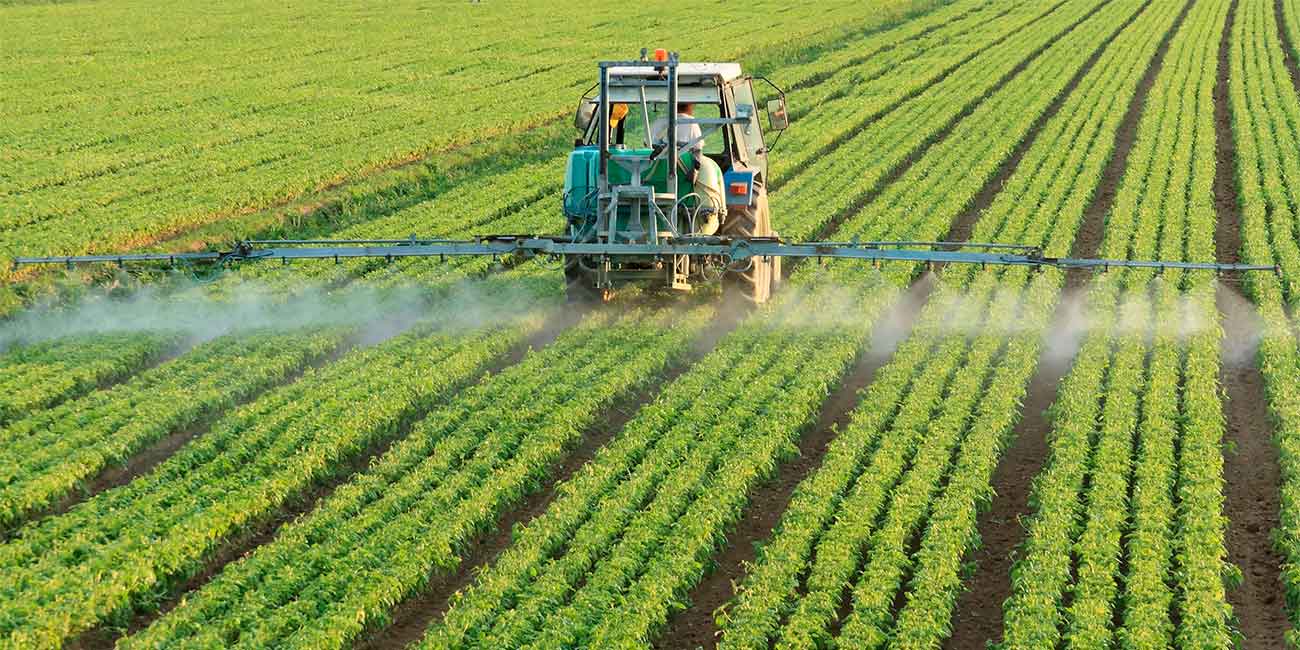
- Kazakhstan listed only one type of subsidy in its report — 50 billion tenge (about $98.8 million) on plant protection products, classified under the agricultural sector.
- For comparison, neighboring Uzbekistan reported in more detail — subsidies totaling nearly $1.07 billion across five sectors: agriculture, energy, water, infrastructure, and transport.
The commitment almost no one fulfilled
The requirement to identify subsidies harmful to biodiversity is Target 18 of the Kunming-Montreal Global Biodiversity Framework, adopted in 2022 at the CBD Conference of the Parties.
The wording obligated countries by 2025 to identify subsidies and other incentives harmful to nature — in agriculture, fossil fuels, forestry, mining, and fisheries — and then to progressively eliminate or reform them, reducing them by a total of at least $500 billion per year by 2030.
Analyzing 134 national reports submitted to the CBD by July 1, 2026, analysts at Carbon Brief found that only 21 countries fully met this requirement, and of the world's 17 "megadiverse" nations, only five did so.
Who reported and who didn't
The picture for the remaining countries is as follows: in addition to the 21 countries with full disclosure, another 11 countries and the European Union provided figures for only certain sectors, 66 countries mentioned that the process had begun but provided no figures, and 68 countries did not address the topic at all in their reports.
Another 62 countries — parties to the convention — had not submitted a national report at all by the time of the analysis. Among the disclosed subsidies, nearly half are for fossil fuels, with about another quarter for agriculture and fisheries. Eva Zabey, Executive Director of Business for Nature, calls the identified $270 billion just the tip of the iceberg and emphasizes that subsidy reform should be seen as an economic necessity, not a checkbox on an environmental to-do list.
What Kazakhstan disclosed
Kazakhstan's national report features a single item — 50 billion tenge spent on subsidizing plant protection products, i.e., pesticides, classified as an agricultural subsidy.
For a country with a long and well-documented history of large-scale agricultural sector subsidies — according to official data alone, hundreds of billions of tenge were spent on agricultural subsidies from 2011 to 2023 — this looks like a fragment of a much larger picture, not its complete description. Left out are, for example, preferential lending to farmers (in 2025, a record 1 trillion tenge was allocated for this), subsidies for fertilizers, irrigation, and mineral fuel for agricultural machinery — precisely the categories that appear as separate line items in the reports of other countries (Uzbekistan, Finland, Norway).
Why official figures are almost always underestimated
Carbon Brief provides an illustrative example from Australia: an independent study by the Australian National University estimated the country's biodiversity-harmful subsidies at $26.3 billion for 2022–2023 — just over 1% of the country's GDP. Meanwhile, in its official national report, Australia listed only $155 million, primarily in the agricultural sector. Paul Elton, author of the independent assessment, calls this gap an indicator that reporting is becoming a formal procedure for officials in environmental agencies, rather than an independent assessment. Similar logic applies to any country, including Kazakhstan: one line about pesticides in the official report is likely far from a complete list of ecosystem-harmful incentives received by Kazakhstan's agricultural sector and other industries.
What's next
The issue of harmful subsidies will be a key item on the agenda of the upcoming COP 17 summit (17th Conference of the Parties to the UN Convention on Biological Diversity) on nature, to be held in Yerevan in October 2026. It is there that countries will need to report on progress towards all goals of the Kunming-Montreal Global Biodiversity Framework, including Target 18. For now, if we rely solely on official national reports, the world is missing at least half of the reduction promised by 2030 — even though the true scale of nature-harmful incentives, according to various estimates, is 6 to 12 times greater than the already disclosed $270 billion.
Author's conclusion
For Kazakhstan, the discrepancy between a single line in an official report and the much broader practice of agricultural subsidization is not so much a violation of an international commitment as it is a reflection that accounting for the impact of state support on ecosystems in the country has yet to be established. While the country reports on pesticides, neighboring Uzbekistan has already shown that subsidies can be broken down across five sectors — and this raises the question of what portion of Kazakhstan's agricultural and energy state support should actually be considered harmful to nature, if the work on this were carried out just as systematically.


Comments ()