A company extracting copper from Konrat tailings is looking for new reserves in Kazakhstan
UK's Central Asia Metals (CAML) is exploring several sites in Kazakhstan. It now extracts copper from old dumps at the Kounrad deposit in the Karaganda region, its main profit source.
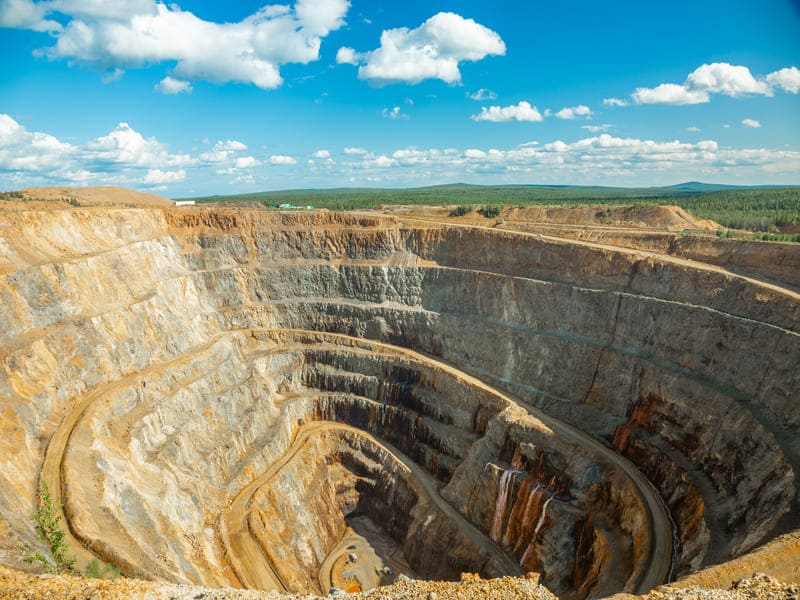
New projects should reduce dependence on a single mine.
The gist in brief
- In the third quarter of 2026, Kounrad produced about 3,500 tonnes of copper, 4.5% less than a year earlier.
- Over nine months, 9,760 tonnes of copper were produced, 0.8% more than last year. The annual plan is 12,000-13,000 tonnes.
- At the Yuzhnoye site in the Chingiz-Tarbagatai belt, copper mineralization was found; total reserves are not yet known.
- Kounrad brought the company $80.8 million in the first half of the year and accounts for more than half of its revenue.
What the results showed
According to Kursiv.media, citing CAML's report on the London Stock Exchange, in the third quarter of 2026 Kounrad produced about 3,500 tonnes of copper, 4.5% less than a year earlier. Over nine months, output amounted to 9,760 tonnes, 0.8% higher than last year. Sales matched production volumes. Management believes the company is on track for its annual plan of 12,000-13,000 tonnes.
The decline in quarterly output was partly offset by high copper prices, notes Arman Bataev, author of the Finmentor.kz channel. It was previously reported that in the first half of 2026, Kounrad brought CAML $80.8 million, and the Kazakh asset provides more than half of the group's revenue.
Where copper is being sought
The most notable result is at the Yuzhnoye site in the Chingiz-Tarbagatai belt. There, copper mineralization was traced over more than 1 km, significant intervals were encountered in five drill holes, the most powerful being 311 m with a copper grade of 0.22%. Reserves have not yet been estimated: for this, 12 drill holes with a total length of about 3,600 metres are planned.
In the Karaganda region, at the Shaiyndy site, about 3,550 metres of drilling is planned for spring 2027 to check whether there are commercially significant metal grades. In the Teniz basin in the Akmola region, a subsidiary conducted geochemical and geophysical surveys and identified several horizons of copper-bearing sandstones; further work is planned.
In parallel, CAML is acquiring Australian Cygnus Metals with the Chibougamau copper-gold project in Quebec (Canada). To issue new shares, CAML required permission from the Kazakh authorities: the deal was delayed because of this, and on October 13 the company announced that approval had been received. A court hearing in Perth, which must approve the deal, is scheduled for October 14, with closing on October 27. The timelines are indicative and depend on the court's decision.
Two stories of one Kounrad
The name has two different histories, and they are easy to confuse. The Kounrad deposit (more often Kounrad in documents) near Balkhash has been developed since the 1930s. The open pit belongs to Kazakhmys: in 2021, the liquidation project envisaged that closure would begin in 2045, and in July 2024 the media wrote that Kazakhmys planned to mothball the mine for two years and return to work in 2026 under a plan for 2026-2043. These are the mining company's plans, and they have changed.
CAML works at the same deposit differently: it does not open up the ore, but leaches copper from the eastern and western dumps of old open pits, accumulated mainly in 1936-2005. The company has owned the project entirely since 2014, with mining underway since 2012. According to CAML, the reserves in the dumps will last at least until 2034, about 75,400 tonnes of recoverable copper remained, and in 2025 13,300 tonnes were produced.
What this means for Kazakhstan
Kazakhstan wants to increase its own copper production, and the search for new reserves is needed for this no less than mines. The authorities are working on an export duty on copper concentrate so that Kazakhmys receives raw materials within the country. The country's copper reserves are also growing: in 2024-2025, the increase amounted to 122,700 tonnes, but registration is not the same as extraction. Other companies are also interested in searching for copper in the Karaganda region: Hong Kong's Yaohua Group is preparing geological exploration for copper and molybdenum about 40 km north of Balkhash. CAML's exploration results are still preliminary: before estimating reserves at Yuzhnoye and drilling at Shaiyndy, it is too early to talk about a new mine.
Author's conclusion
A company that lives off a single asset is looking for new ones, and Kazakhstan remains its main area of exploration. But between an interval with 0.22% copper and an operating mine lie reserve estimation, drilling and investment, so the results will be tested by 2027 and subsequent reports.
Comments ()