An enrichment plant is planned to be built at the Zhuantobe field, discovered in 1851
Capital Stroy V plans to build an processing plant at the Zhuantobe polymetallic deposit in Bayanaul district, Pavlodar region.
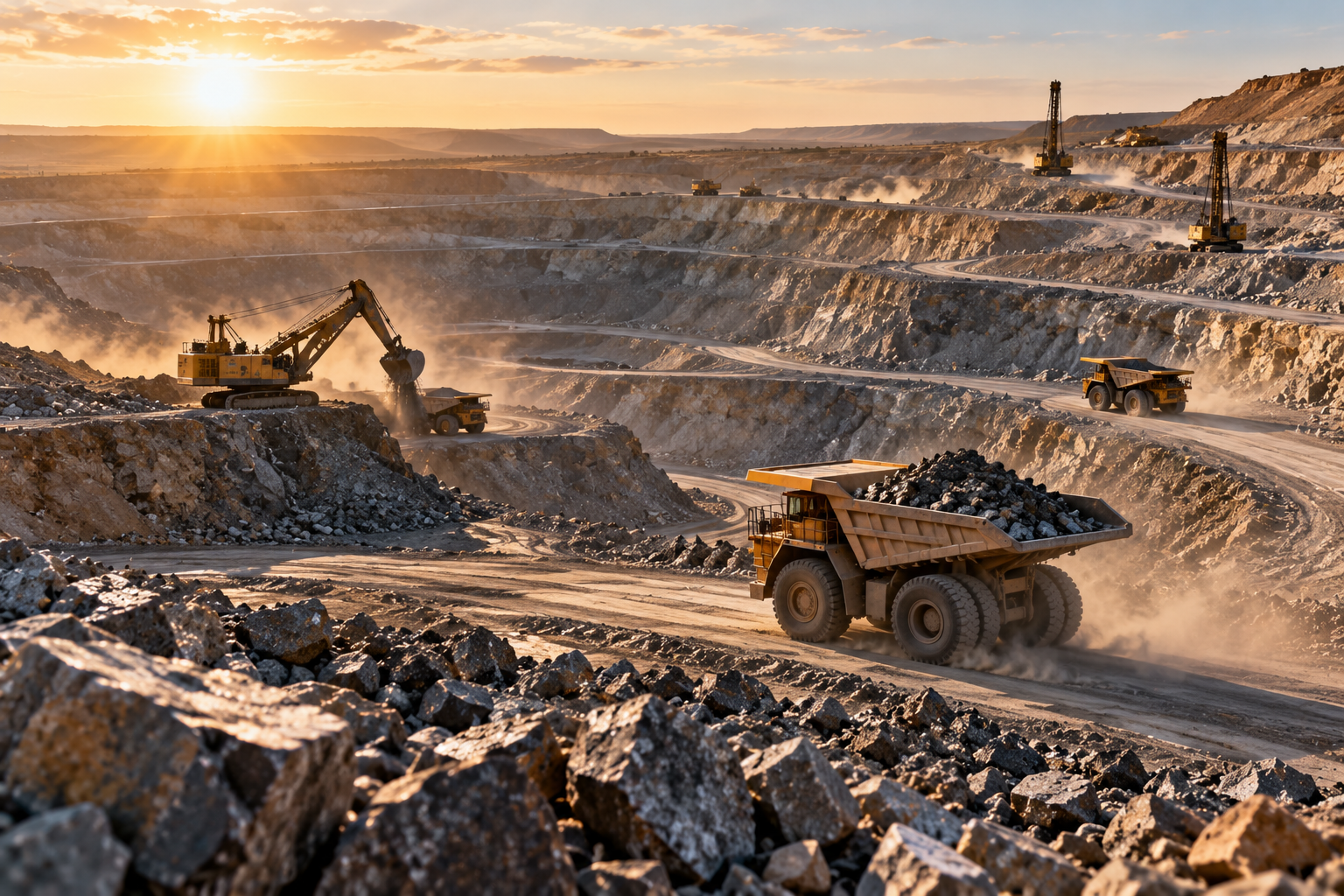
The deposit was discovered in 1851, but there has still been no processing plant at it. It will be able to process up to 500 thousand tonnes of ore per year and produce copper-lead and zinc concentrates. Public hearings on the project will be held in mid-November in the village of Akmektep, Qazba.kz reports.
The essence in brief
- The plant's capacity is up to 500 thousand tonnes of ore per year, the main beneficiation method is flotation.
- They plan to produce about 7.3 thousand tonnes of copper-lead and about 3.5 thousand tonnes of zinc concentrate per year.
- Construction will take about ten months, operation is designed for approximately 11 years, and more than 150 jobs will be created.
- Copper reserves are estimated at almost 10 thousand tonnes; this is a small deposit.
What they plan to build
The plant will be built 15 km from the village of Akmektep and 50 km from the district centre of Bayanaul. The project includes the main building, a crushing and sorting complex, a laboratory, a rotational camp, warehouses, a 1.8 MW coal boiler house, a modular filling station and treatment facilities. Over 11 years, the tailings storage facility will receive about 5 million tonnes of tailings, that is, beneficiation waste. The nearest railway station is Ekibastuz, 85 km to the south-west.
More than 150 people will work at the plant, with priority given to local residents. Akmektep, the nearest village, is home to 149 people. According to the agencies, there are no groundwater, forest fund lands, specially protected natural areas or historical and cultural heritage sites in the area, and the production facilities are located outside the water protection zones of the Ashchysu River and Lake Shagan. The project does not affect Bayanaul National Park. The area is part of the Maikainskoye reserve hunting grounds.
What the reserves are
As of the beginning of 2025, the deposit's reserves amount to 2,161.5 thousand tonnes of ore. They contain about 9.99 thousand tonnes of copper (grade 0.46%), about 5.59 thousand tonnes of lead, about 11.08 thousand tonnes of zinc, 266.7 kg of gold and 71.5 tonnes of silver. Another 566.8 thousand tonnes of ore are classified as inferred resources, containing about 1.79 thousand tonnes of copper. For comparison, the British company Central Asia Metals, which extracts copper from the Konrat dumps, plans to produce 12-13 thousand tonnes of copper in 2026, that is, more than all the copper estimated at Zhuantobe.
The deposit's long history
The deposit was discovered in 1851 by the industrialist Popov at the site of ancient workings. In 1918-1929, copper reserves were assessed for the first time, and in 1942 the Maikainzoloto trust tested the deposit for gold, but the grade turned out to be non-commercial. In 2020-2024, Capital Stroy V conducted geological exploration. Now the company is moving on to the plant project.
What this means for Kazakhstan
The plant will produce concentrates, not finished metal. For copper concentrate, the authorities are working on an export duty so that the raw material remains inside the country and goes to Kazakh plants. The material does not say where the company intends to sell the concentrates.
Author's conclusion
The project is small in terms of reserves, but a plant at a deposit discovered 175 years ago will be built for the first time. The main questions are the outcome of the public hearings in mid-November and who will get the concentrates.

Comments ()