A meat processing plant worth 2.5 billion tenge opened in Kegen district
A meat processing plant, KegenMyasProm, has opened in the Kegen district of the Almaty region.
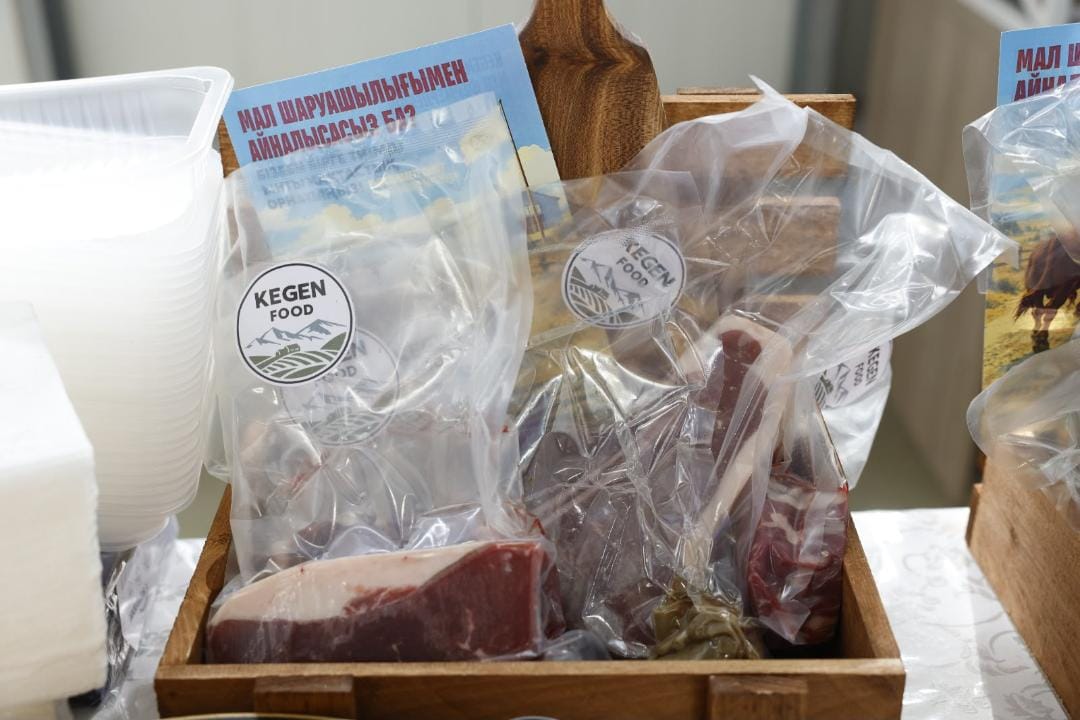
The investment volume is 2.5 billion tenge; the enterprise currently employs about 50 local residents. According to Kursiv.kz data, the ultimate owner of the plant is Pavel Belovich, the son of the founder of Bazis A.
The essence in brief
- The plant is designed to process up to 10 tonnes of meat per day and produce 20 types of semi-finished products.
- Investments — 2.5 billion tenge, about 50 local residents employed.
- Next to the complex, a feeding lot for 5,000 head of livestock is planned.
- Products will be supplied to major retail chains and production workshops.
What was opened
According to the akimat's data, the plant provides for the feeding and processing of 120 head of cattle, 100 head of small ruminants and 20 horses per day. Finished products will be supplied to major retail chains and production workshops. Specialist training has been organized at the enterprise. The project, as the akimat notes, is aimed at developing processing and increasing the volume of domestic products on the domestic market.
What was said at the opening
The regional akim Chingis Arinov noted that the main advantage of the complex is that residents of the district will be able to fatten livestock and sell it on site.
"The main advantage of the modern complex lies in the fact that local residents will be able to fatten livestock and sell it on favourable terms directly in their own settlement, without transporting animals over long distances. Therefore, we must support entrepreneurs working in this direction and create the necessary conditions for the implementation of new investment projects. We are confident that the new meat processing plant will make a significant contribution to the socio-economic development of the Kegen district," emphasized Chingis Arinov.
The director of KegenMyasProm LLP, Svetlana Kozubakova, said that the decision to open a meat processing plant specifically in the Kegen district was driven by the natural conditions of the region.
"The nature of this region is ideally suited for livestock breeding. The meat of animals raised on lush pastures is distinguished by excellent taste and environmental purity. The new enterprise is fully equipped with modern equipment. The state also provided significant support — in particular, subsidies were provided for the purchase of machinery. In the future, we plan to open a feeding lot for 5,000 head of livestock next to the production complex," the head of the enterprise said.
Who is the owner
According to Adata registry data cited by Kursiv.kz, the plant belongs to Bazis Holding Company. Its founders are Bazis Development and an investment and production company, both fully owned by Pavel Belovich.
What else is happening in the sector
The plant is also designed to process horses. According to FAO data for 2024, Kazakhstan ranks fourth in the world by horse population: 4.4 million head. At the same time, the country so far mainly sells animals live: in January-May 2026, as we wrote, 17.9 thousand horses were sent abroad, 42.5% more than a year earlier, almost all to Uzbekistan. The next step, as noted in the material, could be the export of processed products.
The situation with cattle is more complicated. The Auyl faction in the Kurultai links a possible disruption of livestock projects to the fact that the price of livestock set in state programmes is 20-30% below the market price. The deputies sent a request to the Minister of Agriculture asking to revise the methodology. There are no supporting calculations in the publication, nor is there a response from the ministry. It also states that the share of breeding livestock in the country is about 12%: 994 thousand head out of 8.2 million.
Author's conclusion
The plant was opened in a remote district where livestock usually had to be transported for processing outside the settlement. How much meat and semi-finished products it will actually produce will become clear from the first months of operation: the statement names only planned capacities.
Comments ()