Europe's agriculture in crisis due to abnormally hot summer
All summer we watched abnormal heat stop reactors, dry up rivers, and burn forests across Europe. Now it's clear it's also hitting the continent's food system at its core—crops, milk yields, even poultry farms.
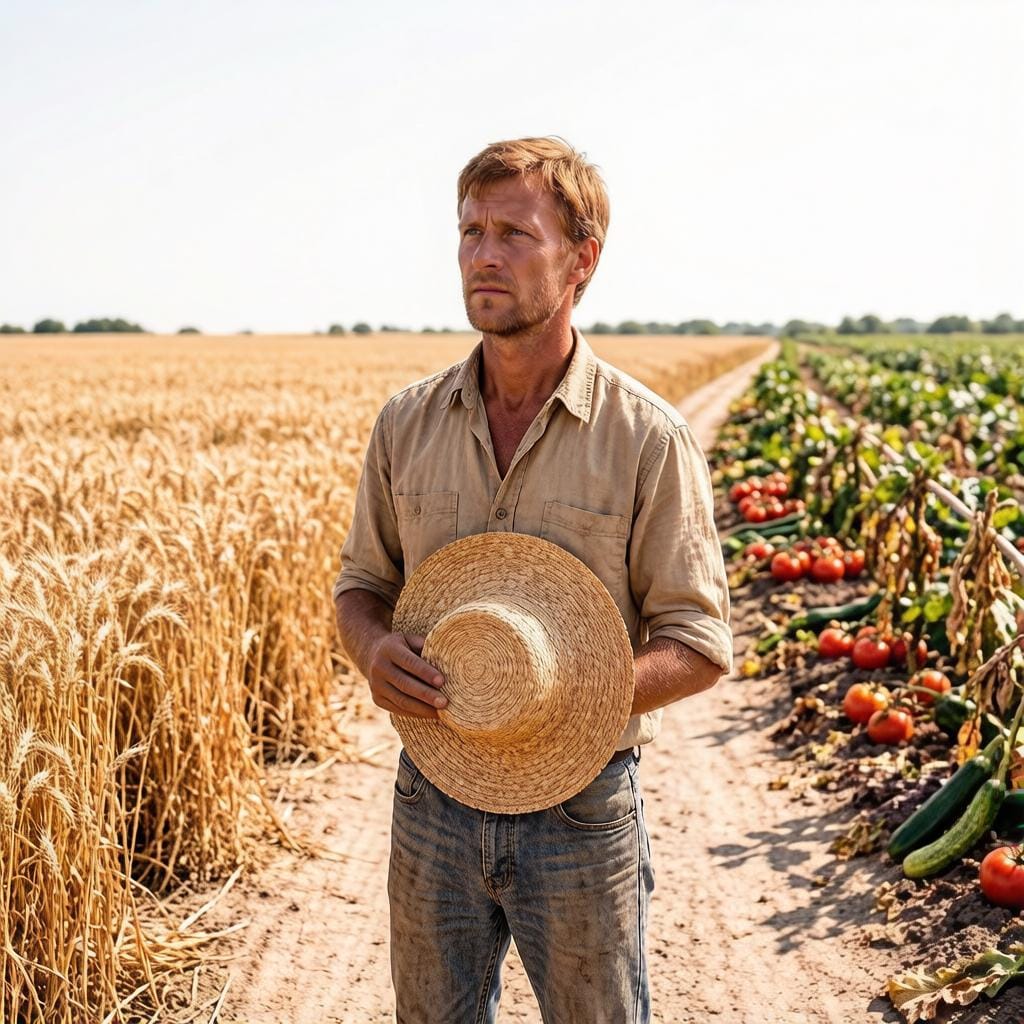
Vegetable and grain producers in France, Italy and the UK are warning of "catastrophic" losses, and authorities are already allocating emergency aid to affected farmers, The Guardian reports.
The gist
- French vegetable production has fallen "by a very significant amount" compared with previous years, with shortfalls of 25% for courgettes, 35% for lettuce, 40% for peas, 60% for broccoli and between 50% and 100% for artichokes.
- The corn harvest in France — Europe's largest grain producer — will fall by 35% compared with 2025, to around 9 million tonnes, the lowest since 1980.
- In Italy, according to the country's largest farming organization Coldiretti, about 60% of agricultural land is currently suffering from drought of varying severity, milk production has fallen by 20%, and total damage to the sector has exceeded €3 billion.
- Accelerated global warming and a powerful El Niño event this summer have scorched fields across Europe amid temperatures regularly exceeding 30°C, and often 35°C, with almost no rainfall.
Vegetables are suffering simultaneously in all regions
The organization Prince de Bretagne, which unites more than 1,300 vegetable producers in Brittany, said: "The vegetable sector is experiencing a historic crisis," and called for "urgent action" to address the sharp decline in crop yields and quality.
Éric Legras of the French association of canned and frozen vegetable producers, which has 4,400 members, told Le Monde what is fundamentally different about the current season: "Usually one region fares better, which helps offset losses. This year all our main production areas have been affected, and it happened at the same time" — meaning the usual mechanism of internal compensation between regions simply did not work this year.
Grain, milk and eggs — a blow to the entire chain
France's Ministry of Agriculture attributes part of the corn harvest decline to farmers switching to other crops such as sunflower, but stresses that severe summer heatwaves caused serious damage to this crop precisely at critical growth stages. The ministry's statistical service Agreste reported that hay production for winter livestock feed is about 30% below the 1989–2018 average, and this shortfall is worsening, affecting more and more regions.
Dairy cows typically begin to suffer from heat stress at temperatures above 25°C, and many French producers report milk yields falling by 10–15%, while also fearing a shortage of feed for winter. Even poultry farming has been affected: according to the French national council for egg promotion, due to catastrophically high mortality in poultry houses during the June heatwave, egg production is currently about one million eggs per day below normal.
Italy and the UK — the same picture
In Italy, according to Coldiretti, the country's largest farming organization, about 60% of agricultural land is currently suffering from drought of varying severity, from moderate to severe. Yields of corn, rice, soybeans, vegetables and fruit have noticeably declined, milk production has fallen by 20%, and total damage to the sector, including the effects of wildfires and severe storms, has exceeded €3 billion. In the UK, the scale of the problem has already triggered a political response: under pressure from Labour, £65 million was announced for farmers affected by drought — a concrete example of how the climate crisis in agriculture is quickly turning into a budget issue for governments.
Part of the same heatwave
The agricultural crisis is a logical continuation of everything we have already covered this summer. The same heatwave stopped France's nuclear reactors due to overheated water in the Seine and Rhône and led to more than 10,000 excess deaths in just one week, shrinking rivers hit record lows from the Thames to the Po, and wildfires claimed dozens of lives and reached Germany. According to calculations by Triodos Bank, the combined economic damage from heat and fires could cost the EU economy around €180 billion. The direct mention of El Niño among the causes of this agricultural crisis is also no coincidence — we have already written that NOAA has raised the probability of the current event reaching record strength to nearly 70%, and its effects are being felt from African farms to the California coast.
Author's conclusion
The agricultural crisis is the point where all the other consequences of the European summer of 2026 converge: heat directly hits vegetables, grain, milk and even eggs, and the usual mechanism of compensation between regions has stopped working because all major production areas were affected simultaneously. For Europe, this raises a question not only of a market nature but also of an institutional one — emergency tranches such as the £65 million in the UK mitigate damage that has already occurred, but do not answer the question of what to do if such seasons become the norm rather than the exception.



Comments ()