About 6.3 billion cubic meters of gas found in Tanzania, first time since 2015
Tanzania announced a gas discovery in the Mnazi Bay block in the south. This is the country's first new gas find since 2015, Energy Minister D. Homera said.

The government estimates the find at approximately 223 billion cubic feet, or about 6.3 billion cubic meters, Neftegaz.RU reports.
The gist in brief
- The gas was found by the Kasa-1X ST2 well, which state-owned TPDC drilled together with France's Maurel & Prom.
- The government estimates reserves at 223 billion ft³ (about 6.3 billion m³), Maurel & Prom at approximately 200 billion ft³ (about 5.7 billion m³).
- According to Energy Minister D. Homer, the well could produce about 0.85 million m³ of gas per day for at least 10 years.
- Maurel & Prom plans to start production from the new well in November 2026.
What was found and where
Drilling of the Kasa-1X ST2 well began in mid-June 2026. It is located in the Mnazi Bay block, where Tanzania already has commercial gas production. The drilling was carried out by Tanzania Petroleum Development Corporation (TPDC), the country's state oil and gas company, together with Maurel & Prom. TPDC's share in the license increased from 20% to 40% in 2024, while Maurel & Prom retained 60%.
How much gas and when production will start
The estimates differ. The government cites about 223 billion cubic feet (6.3 billion m³), while Maurel & Prom in its nine-month 2026 operating report cites about 200 billion cubic feet (5.7 billion m³). Taking into account its 60% share, the company attributes approximately 120 billion cubic feet to itself.
Homer estimated that the well is capable of producing about 30 million cubic feet of gas per day (0.85 million m³) for at least ten years. Maurel & Prom plans to start production in November 2026. Earlier, wells MB-5 and MS-2 added more than 65 million cubic feet per day to the block: their test flow rates were 47 and 50 million. The block's potential has approached 200 million cubic feet per day.
Where the gas will go
More than 80% of the gas produced in the block goes to power plants of the state energy company Tanesco in Mtwara and Dar es Salaam. The minister linked the discovery to the reliability of energy supply and growing electricity demand.
Separately, TPDC is negotiating with four investors on small-scale liquefied natural gas (LNG) production. Three projects, as the minister stated, are planned to be implemented in the Mtwara region. Capacities, investments and timelines have not yet been disclosed.
What about gas and geological exploration in Central Asia
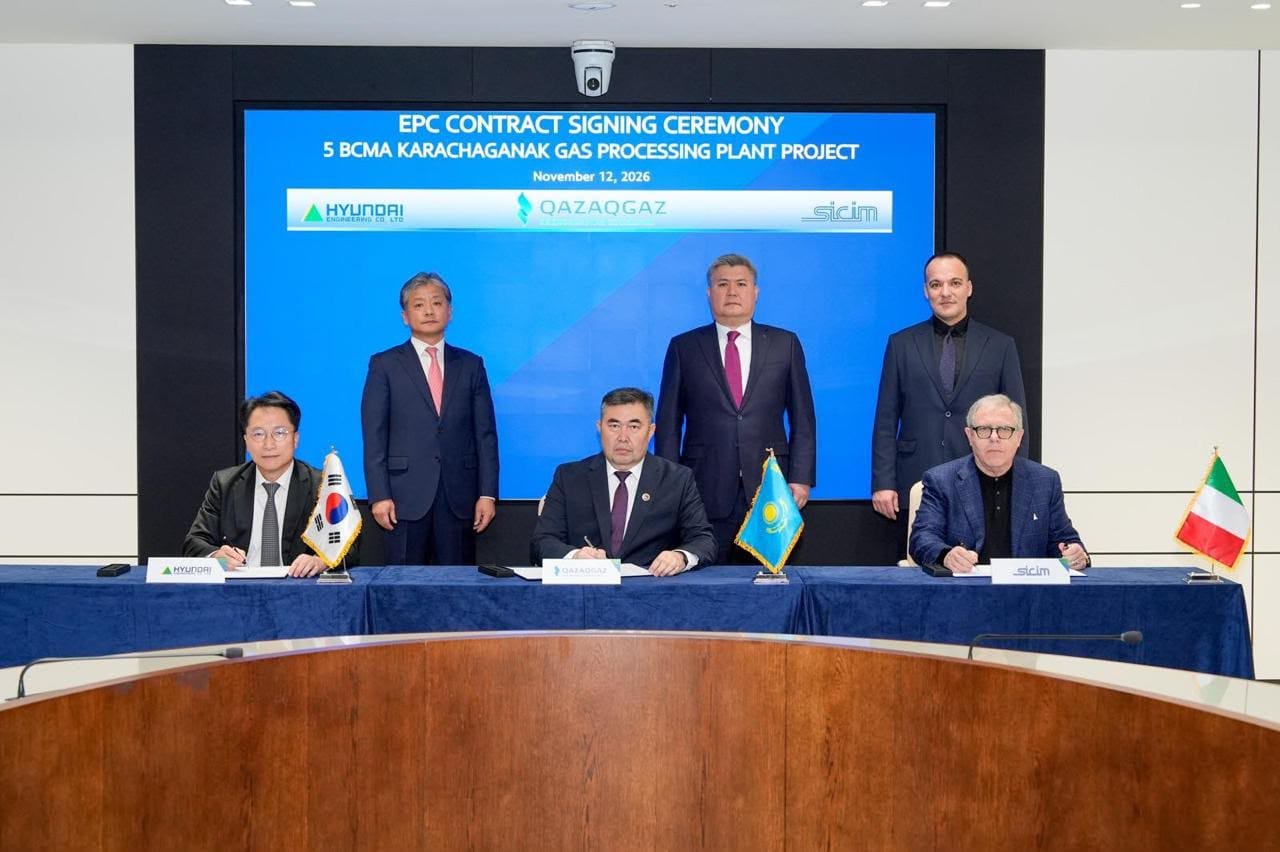
Global gas demand in 2025 reached a record 4.2 trillion m³. In Kazakhstan, the gas industry development program envisages growth of the resource base by 10% by 2029, while new gas processing capacities at Karachaganak and Kashagan could yield about 7.5 billion m³ of marketable gas per year. The search for new reserves is also underway in the oil sector: KazMunayGas is creating a consortium with Shell, Chevron, Sinopec and CNOOC for seismic exploration and deep drilling in the Caspian region.
Uzbekistan is also stepping up exploration. In the Kashkadarya region, the Borisoy gas condensate field was discovered with a flow rate of 300-400 thousand m³ per day, and in Ustyurt, Koratau was found, the country's fifth gas discovery in 2026. But, as we wrote, this does not yet solve the problem: production in January-August amounted to 24.2 billion m³, 16.3% less than a year earlier. Russian gas goes to Uzbekistan in transit through Kazakhstan, and according to the Ministry of Energy, the transit volume in 2025 could have amounted to 7.3 billion m³.
Author's conclusion
The find in Tanzania is an addition to an existing block where gas is already being supplied to power plants, rather than the development of a new region. The discrepancy in estimates is small: 223 billion cubic feet from the government versus about 200 billion from Maurel & Prom. Production from the new well, according to the operator's plan, will begin as early as November 2026, that is, a few weeks after the announcement.

Comments ()