Armenia chooses between the US, France, China, Russia and South Korea for a new nuclear power plant.
While Kazakhstan has settled on a single partner for its future nuclear plant, Armenia chose the opposite strategy—holding parallel talks with five countries at once.
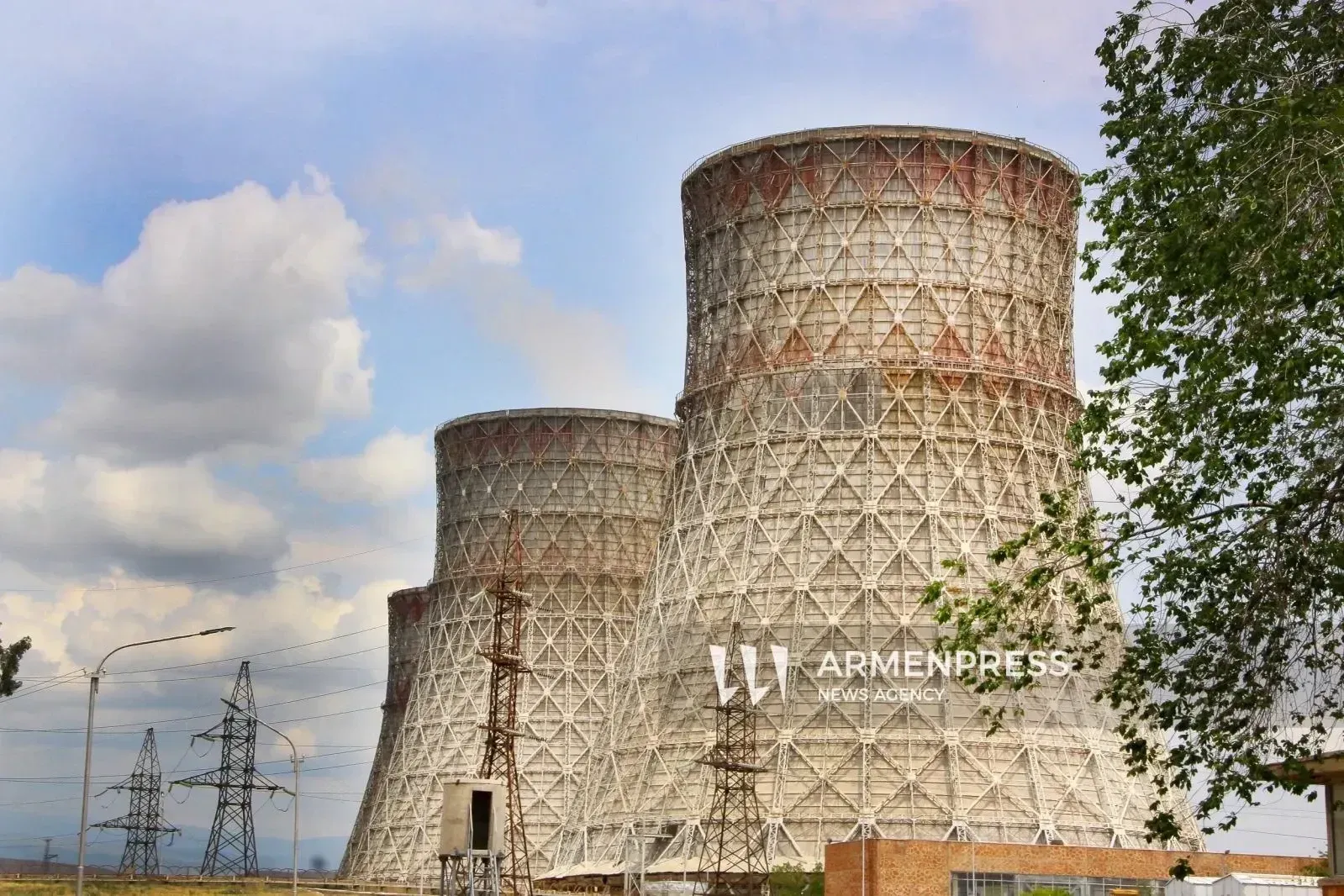
The operating Armenian Nuclear Power Plant in Metsamor will continue operating until its maximum technical service life in 2036, and the country is already laying the groundwork for what will replace it.
The gist
- The operating Armenian NPP will be operated until 2036 — this is the maximum technically permissible period of physical operation of the plant, determined by regulatory documents rather than a political decision.
•Armenia is negotiating the construction of a new nuclear power plant with five countries at once — the United States, France, China, Russia, and South Korea; a modular construction principle has already been selected for the new plant.
- The 2017 Comprehensive and Enhanced Partnership Agreement between Armenia and the EU does not set a closure date for the plant, but it does record the existing timeframe and provides for replacing the plant with a new one of comparable capacity.
- The statement came in response to Azerbaijani President Ilham Aliyev's remarks that Armenia's nuclear capacities "will be closed sooner or later," made in the context of the announced power transmission line project through Armenian territory.
Five countries to choose from
Member of the parliamentary faction "Civil Contract" Arman Yeghoyan emphasized that the plant's service life is not a matter of political bargaining: "A nuclear power plant has an operating period. This period is not determined by the Armenian government, nor the Azerbaijani government, nor any other government in the world, because it is the maximum permissible period of physical operation of a nuclear power plant."
It is telling that Armenia has not settled on a single partner but is keeping negotiations open with five countries at once — the United States, France, China, Russia, and South Korea. For a small power system, this approach reduces the geopolitical risks of a one-sided choice, but at the same time it stretches the timeline for making a final decision.
Betting on modular reactors
A key detail of the Armenian project is the already-made decision on the modular design of the new plant. Small modular reactors (so-called SMRs) are manufactured at a factory in large prefabricated blocks and assembled on site, rather than being built entirely in place like traditional large power units. This is a fundamentally different technological path compared to classical large-capacity reactors such as the VVER-1200, which Russia is building in Turkey and plans to build in Kazakhstan — the modular approach promises shorter construction times and scalability flexibility, but it does not yet have the same proven track record of serial operation.
Why this matters for Kazakhstan
The Armenian and Kazakh approaches to upgrading nuclear energy represent two different scenarios for countries with relatively small power systems. Kazakhstan has bet on a single partner and a well-proven large-capacity technology — VVER-1200 reactors, which are already undergoing final testing at Turkey's Akkuyu NPP and are expected to provide the Balkhash plant with 2.4 GW of capacity. Armenia is choosing the opposite strategy — competition among several suppliers and a less proven but potentially faster-to-implement modular technology. For both countries, the correctness of the choice will only become clear after the plants are commissioned, but it is already evident: there is no single standard path for expanding nuclear generation in small power systems, and each country chooses its own balance between speed, predictability, and geopolitical diversification.
Author's conclusion
The Armenian deputy's statement is notable not so much for its content as for confirming a trend: nuclear energy in the post-Soviet space is experiencing a wave of renewal in several countries simultaneously — Kazakhstan is building its first plant from scratch, Armenia is preparing to replace its operating one, and nearby Turkey is bringing the lead serial unit of a new generation of reactors to the final testing stage. Watching which strategy — a single reliable partner or competition among five suppliers — proves more effective will be interesting precisely in comparison, not in isolation.
Comments ()