Armenia may extend the operation of its nuclear power plant until 2046.
While Armenia chooses a partner for its new nuclear plant, the operating Metsamor NPP may run far longer than recently expected.
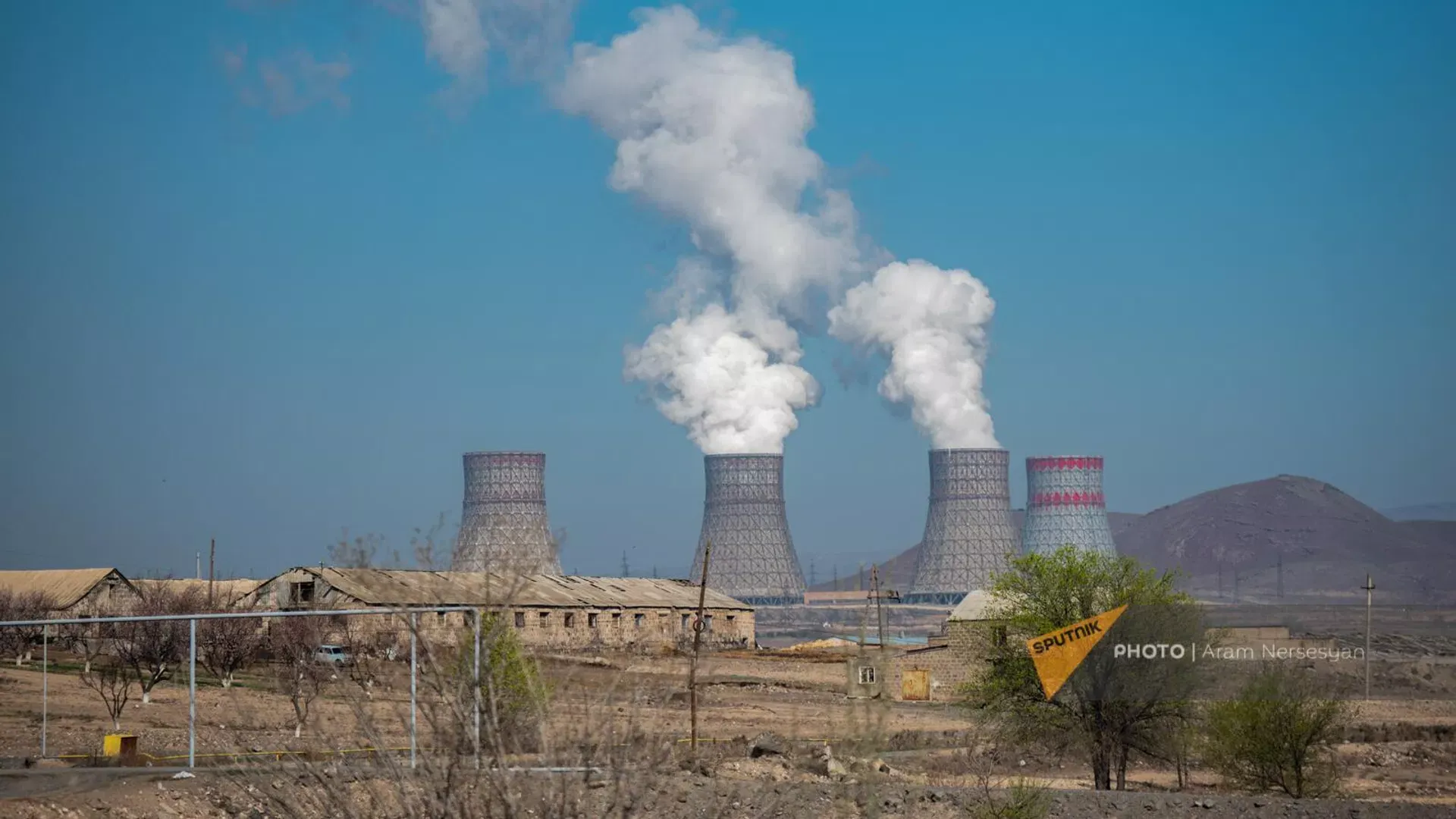
Prime Minister Nikol Pashinyan said that technology allows extending the plant's operation by ten years beyond the already agreed term, Sputnik Armenia reports.
The gist in brief
- Armenian Prime Minister Nikol Pashinyan stated in parliament that the decision to extend the service life of the Armenian Nuclear Power Plant until 2046 will be made only after coordination with the IAEA and other relevant international organizations.
- Previously, the service life of the operating power unit was planned to be limited to 2036; modern technologies, according to the prime minister, potentially allow extending the plant's operation for another ten years.
- In parallel, the authorities are preparing to decide on a new NPP project — it is necessary to select a foreign partner and a model for the future power unit; a decision on this issue is expected by the end of 2027.
- The Armenian Nuclear Power Plant provides about one-third of the country's electricity production; the first power unit was commissioned in 1976, the second in 1980.
From 2036 to a potential 2046
Extending the plant's service life is not a new topic for Armenia: in December 2023, Rosatom Service and the Armenian NPP already signed a framework contract for a set of measures to extend the operating power unit's service life until 2036, and in July 2026 the government allocated a budget loan for these works. Now the question is going even further — extending the plant's service life to 2046. Pashinyan emphasized that Armenia has been studying this possibility for a long time and is holding negotiations with potential foreign partners, but the final decision will be made taking into account the position of the IAEA and other international structures — that is, the extension will not be a purely national decision.
Multi-vector partner selection for the new plant
In parallel with the issue of extending the operating power unit, Armenia continues negotiations with five countries at once on building a new NPP — the United States, France, China, Russia, and South Korea — having already chosen a modular construction principle, unlike the Kazakh approach with a single partner and a large reactor. Pashinyan confirmed that the government program for 2026–2031 provides for selecting a foreign partner and a model for the future power unit by the end of 2027 — that is, Armenia is simultaneously solving two tasks: extending the life of the operating plant while preparing its replacement.
Energy without betting on a single source
Beyond the nuclear topic, Pashinyan also highlighted achievements in renewable energy: the total capacity of solar generation in Armenia has already reached 1,213 MW, and to further grow this sector without creating additional load on the power grid, the authorities plan to deploy industrial energy storage systems — by the end of 2031, their total capacity should reach 800 MW. The prime minister separately mentioned the ongoing study of geothermal energy prospects and green hydrogen production — that is, the country is building its energy balance across several directions simultaneously rather than betting exclusively on nuclear power.
Why this matters for Kazakhstan
The Armenian scenario is a practical example of how a small-scale power system balances between extending the life of existing capacities and building new ones. For Kazakhstan, which has chosen the opposite path — not extending old capacities but building its first plant from scratch — the Armenian experience is useful in another way: it shows that even confirmed NPP service life terms are not set in stone but depend on technology development and the IAEA's readiness to approve extensions. Given that the Kazakh plant at Balkhash is designed for decades ahead, the question of how and when an extension of its own service life might be discussed will sooner or later face Kazakhstan as well — just several decades later than Armenia faces it today.
Author's conclusion
Armenia demonstrates a level of multi-vector energy policy rare for a small country — simultaneously extending the life of its operating plant, selecting a partner for a new one, expanding solar generation, and developing hydrogen and geothermal energy. Formally, each of these decisions is made independently, but together they form a consistent strategy: not to depend on a single energy source and not to lose decades of accumulated nuclear competencies while the next generation of plants is being built.
Comments ()